Tucked into the pretty West Sussex downs just off the A24 not far from Chanctonbury is the Wiston wine estate, one of a number of places now growing grapes for wine in the south of England. The estate currently covers about 12 hectares and their main grape varieties are Pinot Noir, Pinot Meunier and Chardonnay.
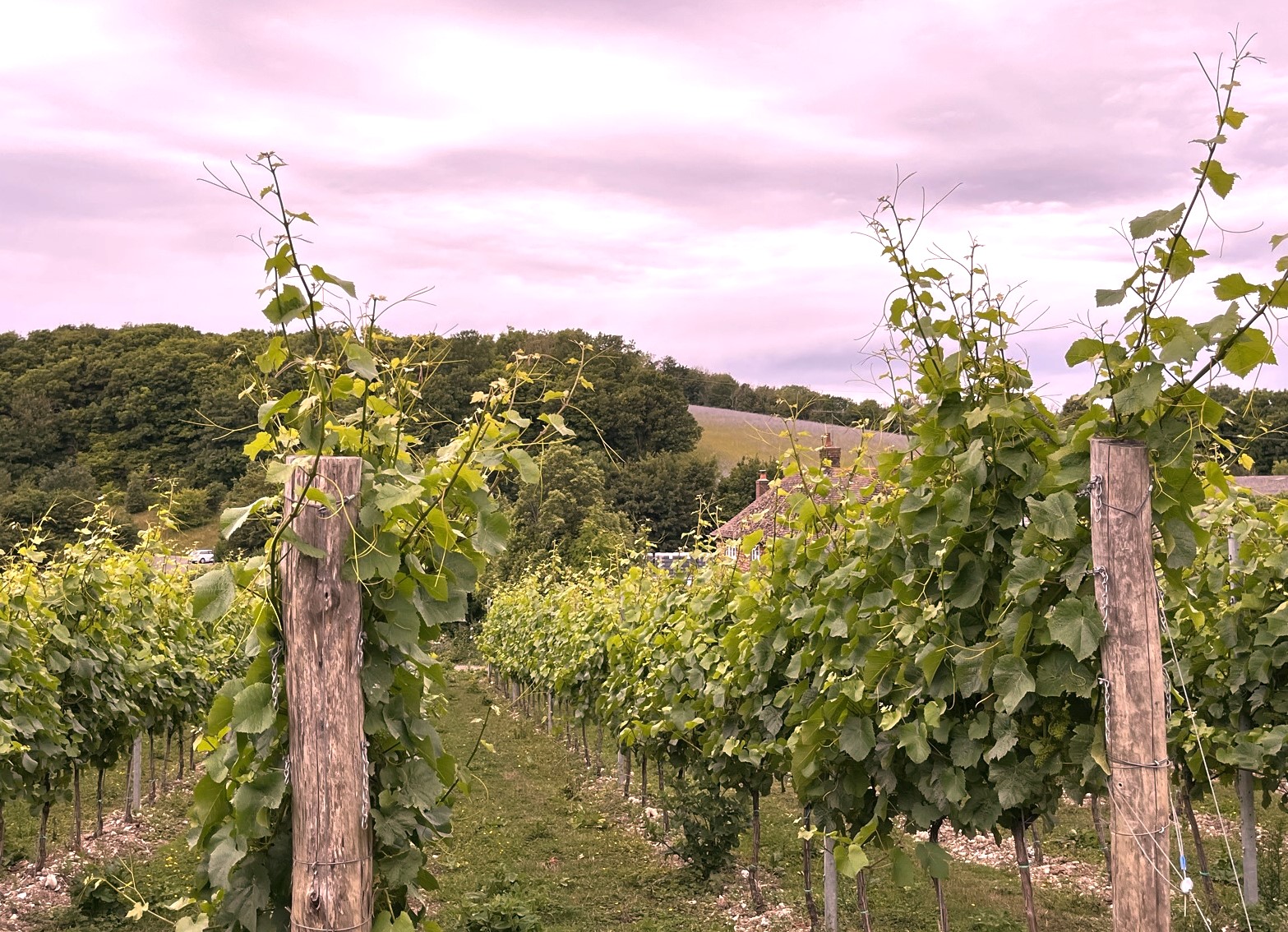
I was fortunate enough to be taken to the estate’s restaurant, Chalk, for dinner recently on a balmy summer’s evening. As a frequent traveller to French wine areas I had a frisson of geographic confusion as we left the pretty village of Washington with its British picture postcard pub scene of drinkers enjoying the warm summer’s evening in the garden (“Cheers, mate”) , then within minutes we were driving past fields of vines and a line of cuves, the great metal tanks where much of the magic of winemaking happens and the sight of which normally means I’m in rural France (“À la vôtre”) . I discreetly checked the map on my phone, and yes I was indeed still in West Sussex, despite the potted olive trees and the warm evening. Phew, no need to find the passport.
The estate itself has been carefully created over recent years with vision and – of course – passion (without passion, who would embark on the immense amount of work and attention to detail needed to establish a vineyard?) from the family that owns it.
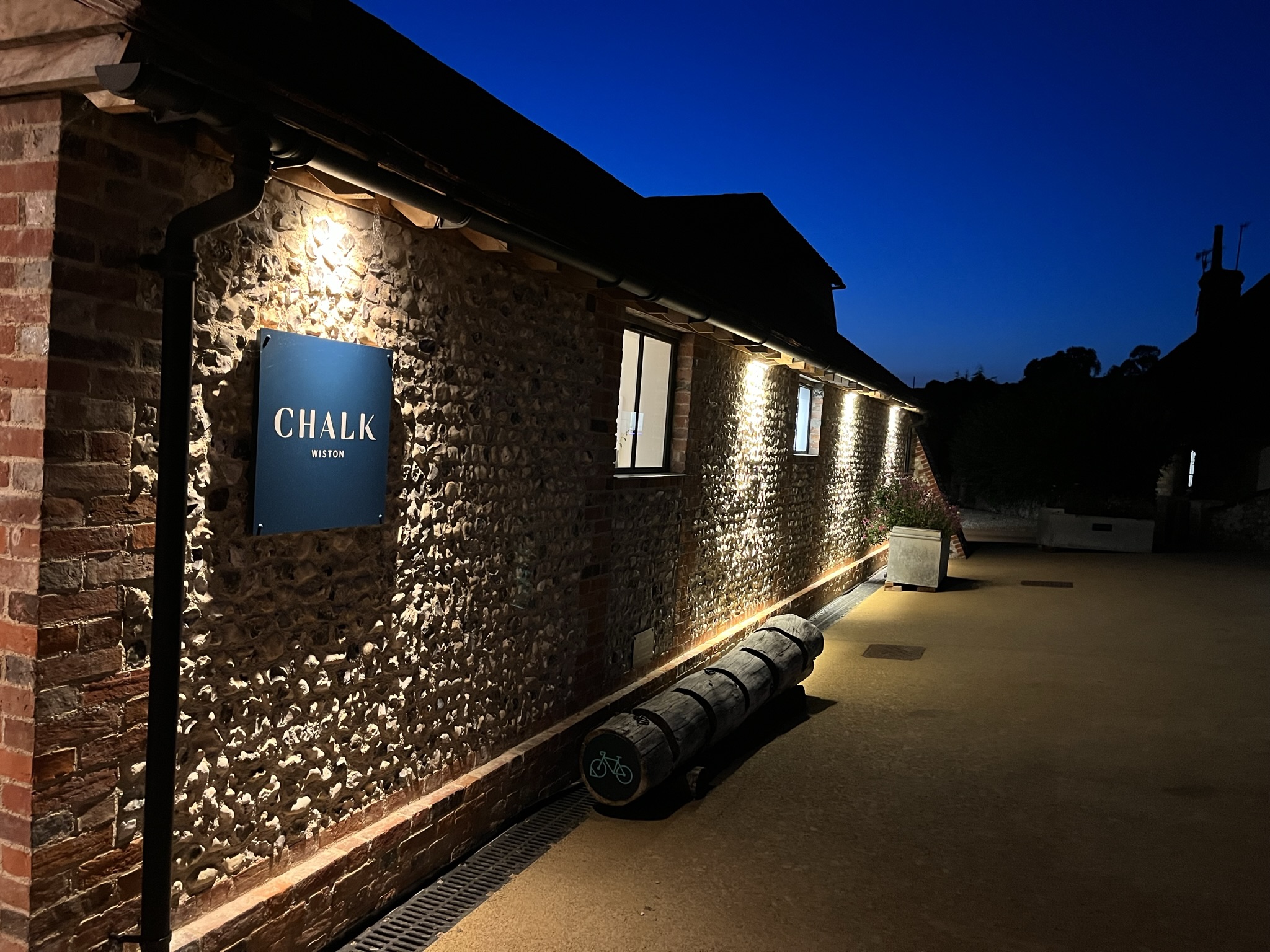
The careful and respectful restoration of old farm buildings to create the restaurant was recognised in 2022 with a Sussex Heritage Trust award, and the beautiful Sussex flint walls are highlighted once night falls by discreet downlighters.
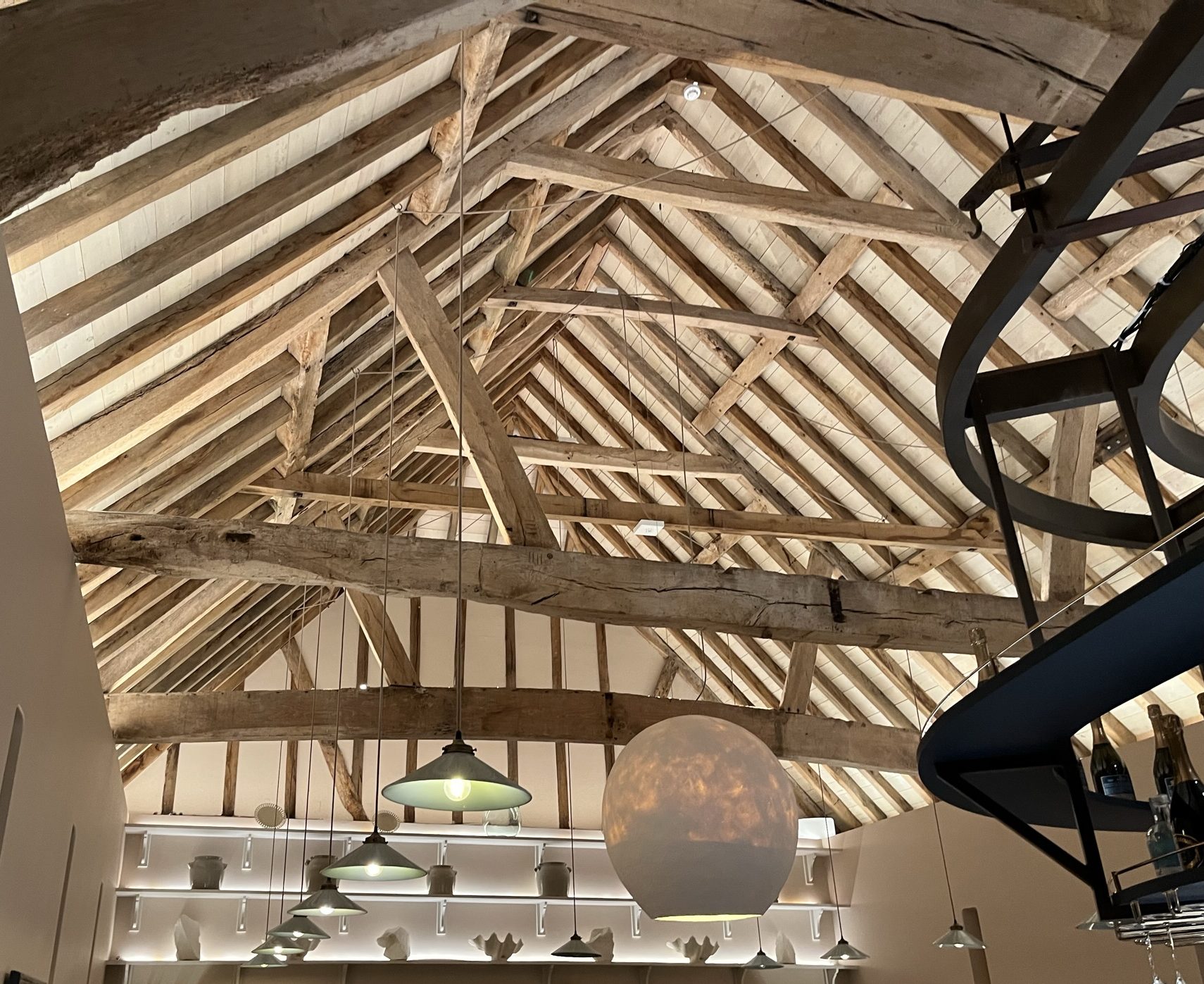
The restaurant tables are mainly in the sensitively converted barn, with rafters beautifully displayed…
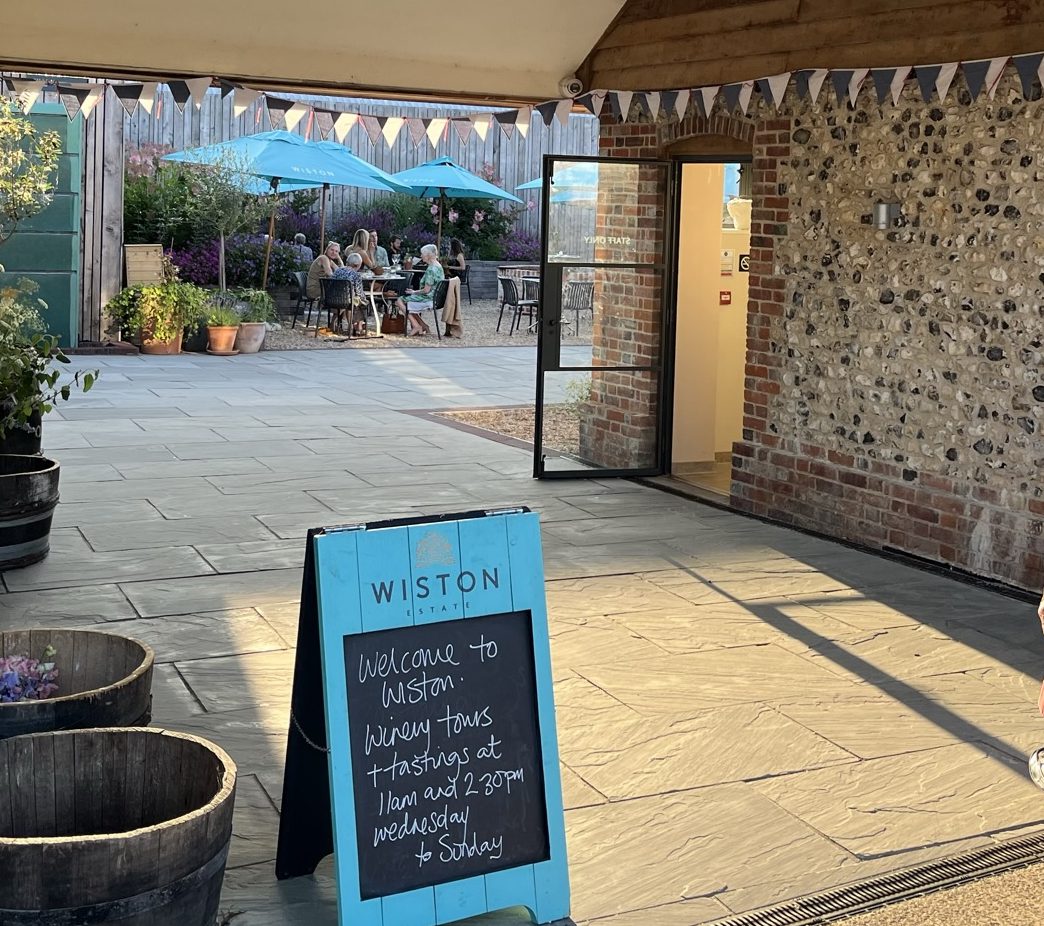
.. but in summer you can eat in the courtyard and enjoy all the award-winning buildings smiling with quiet pride around you.
The staff are charming and mostly helpful (see later for the curious “fresh herbal tea” anomaly….) and the menu is refreshingly concise. The wine list is also interesting, and includes wines from Europe as well as the estate’s own selection. However here we were in a pretty Sussex wine estate, so obviously we went for one of their wines – the 2018 sparkling rosé.
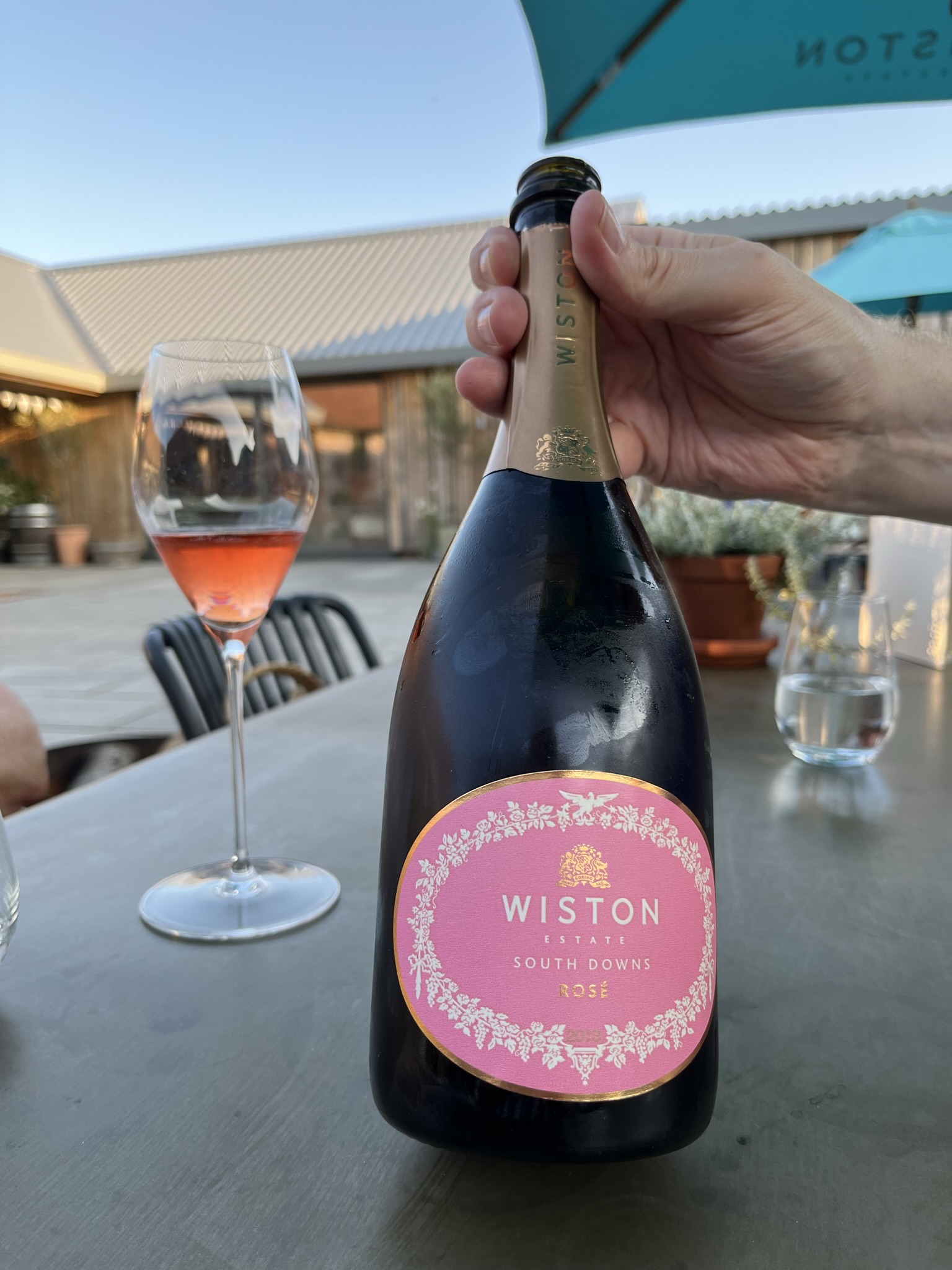
I really want to get on and talk about the food, but I just have to start with the wine. I’ve been trying various English sparkling wines recently but this is the first one that is really to my taste; it is freshly fruity, gently pétillant and very delicious. You don’t get that “I’ve just drunk neat lemon juice” feeling on the tongue, although it’s definitely not sweet. It is (in my opinion) very expensive, which seems to be normal for English wines – why can’t the authorities find a way to support this burgeoning business which in the medium to long term could well provide valuable income for the country as climate/weather change marches on inexorably and various traditional champagne houses are gradually buying up more and more of Sussex and Kent ?
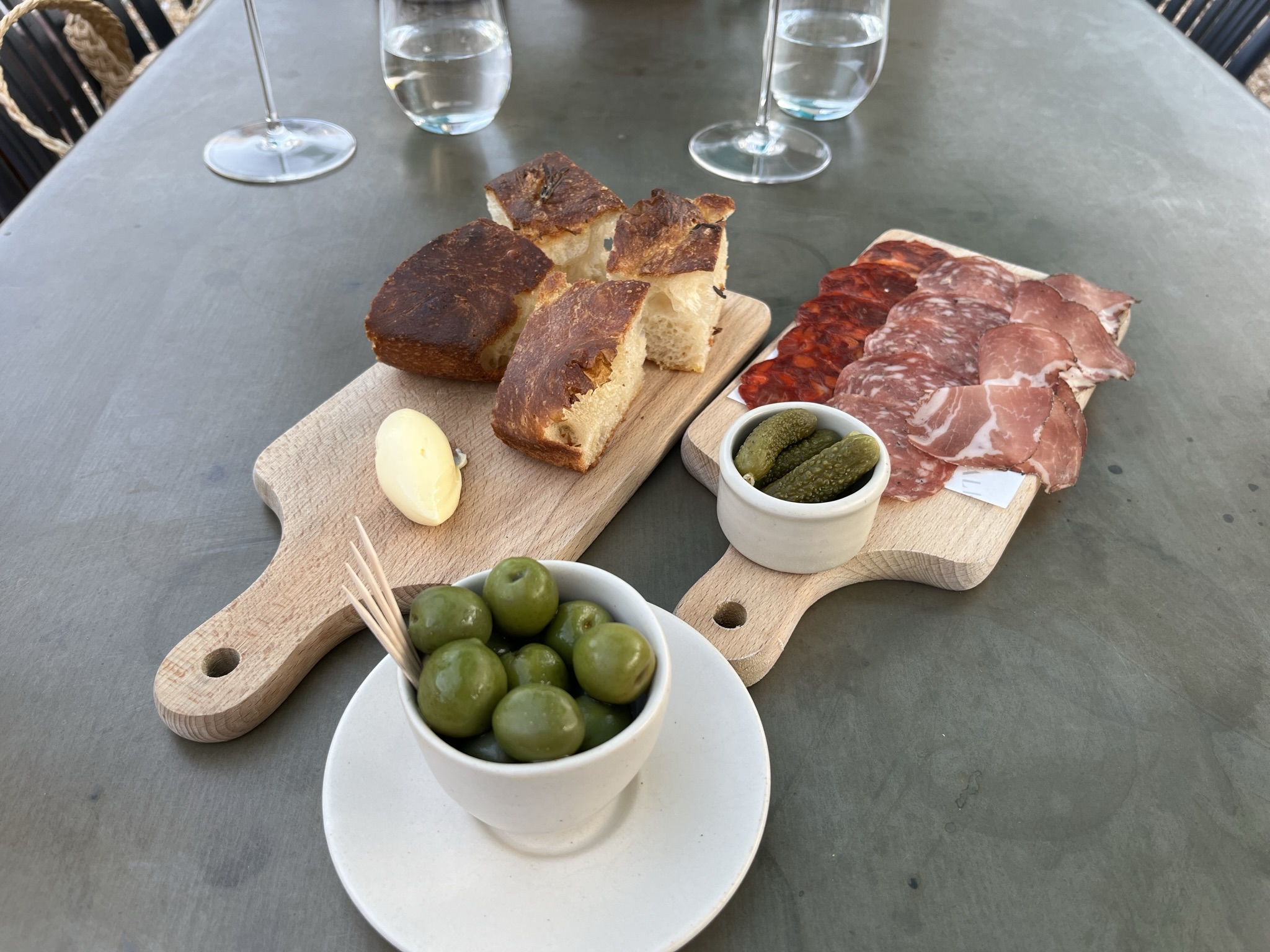
OK, lobbying over…. We started with a few nibbles – some charcuterie, some delicious focaccia and a bowl of lovely plump olives. I tried going all Rubiyat of Omar Khayyam but “a loaf of bread, a platter of charcuterie, some lumps of focaccia and thou” just didn’t scan so I gave up.
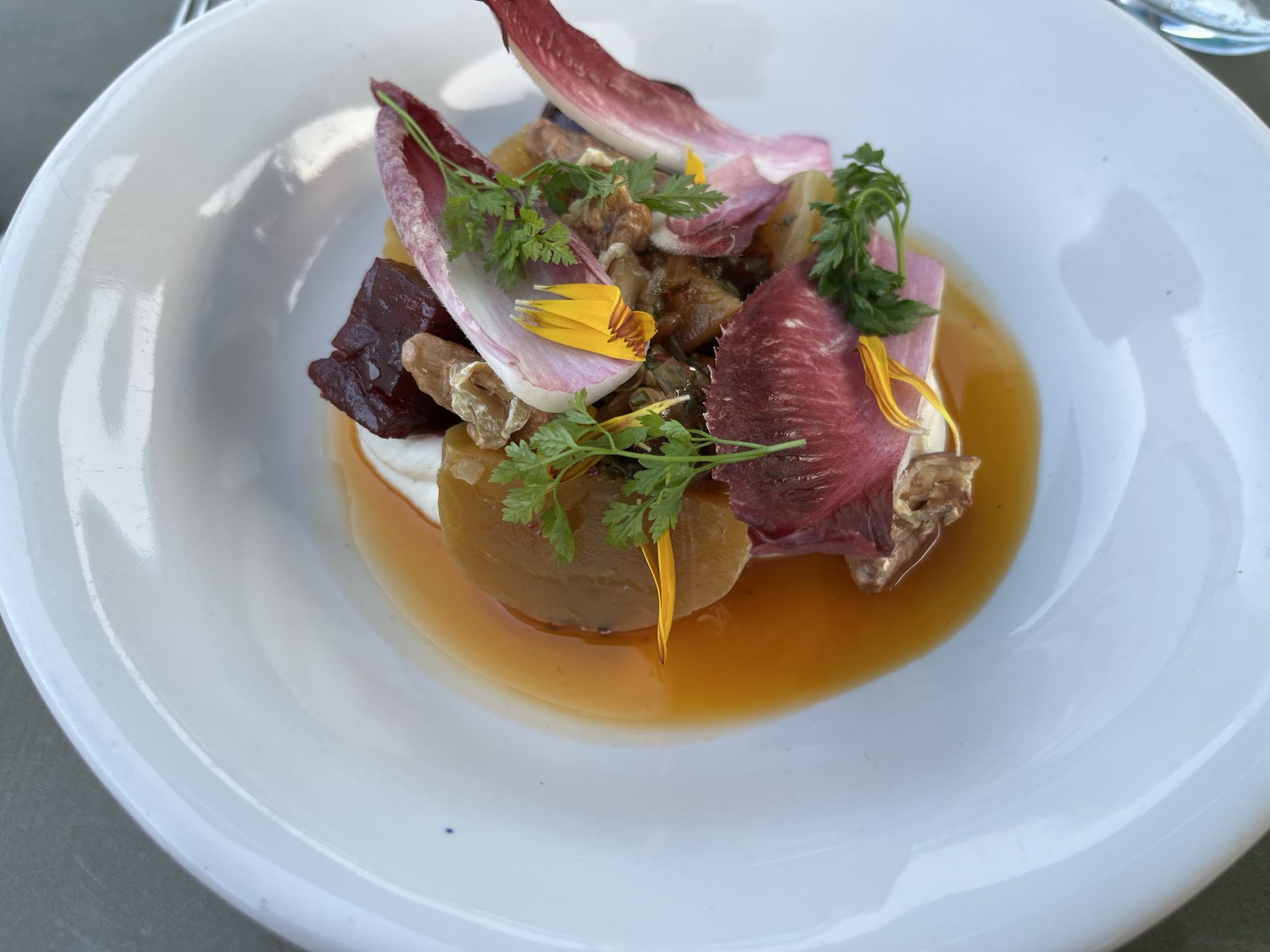
Then I had the heritage beetroot salad with smoked ricotta, walnut, caper and sultana dressing; the beetroot didn’t have a lot of flavour for my palate, but everything else was really gorgeous and perhaps that was the point.
The other two starters on our table were juniper smoked salmon, horseradish crème fraiche and pickled cucumber, and chicken liver parfait with brioche:
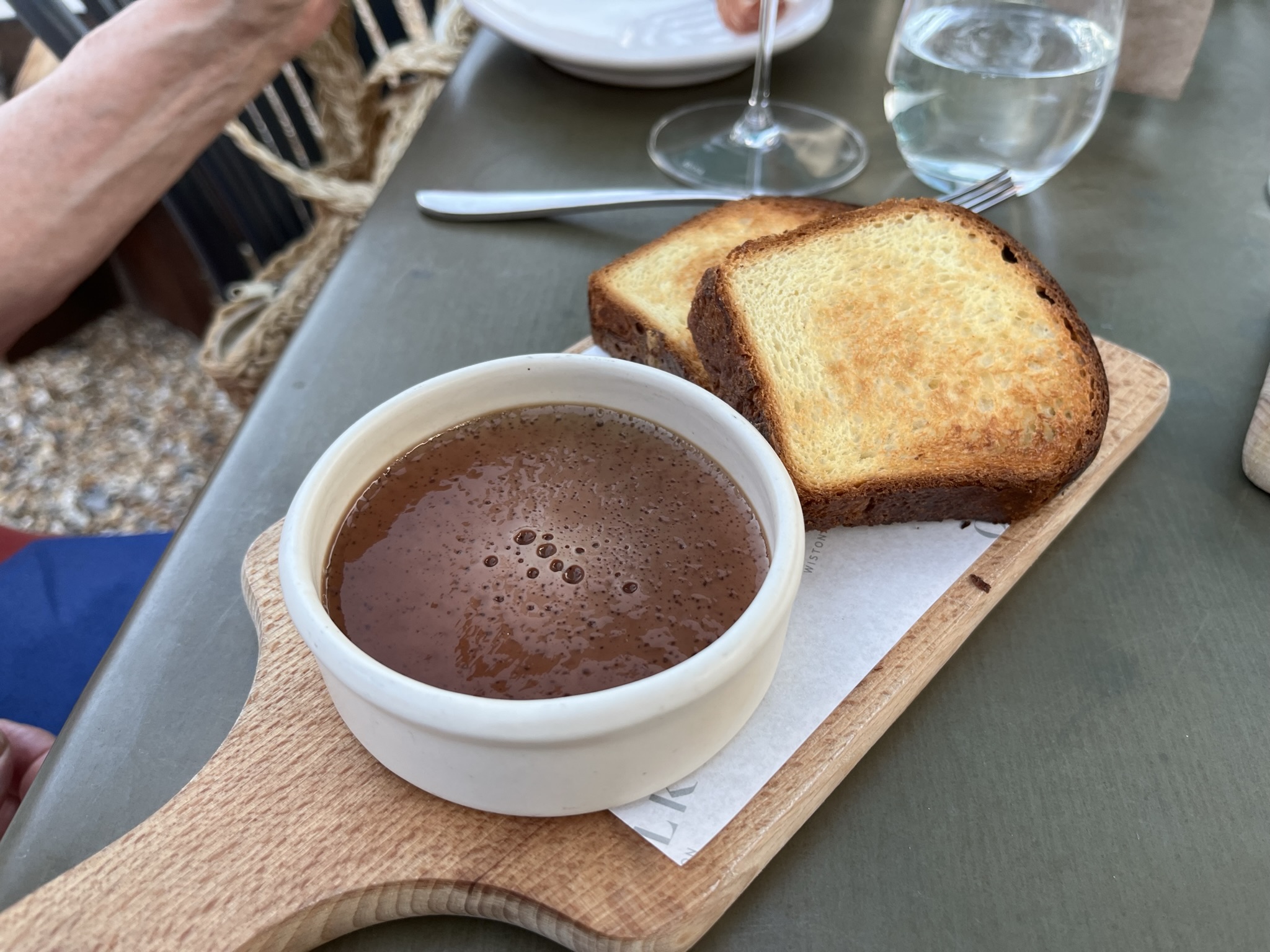
Both of those were really nicely prepared and presented, and both were very tasty.
For our main courses – again, like the starters, from a choice of just 4 dishes – we had butter poached cod, confit tomato, Gordal olive and courgette/basil purée of a striking fresh green colour and zingy taste:
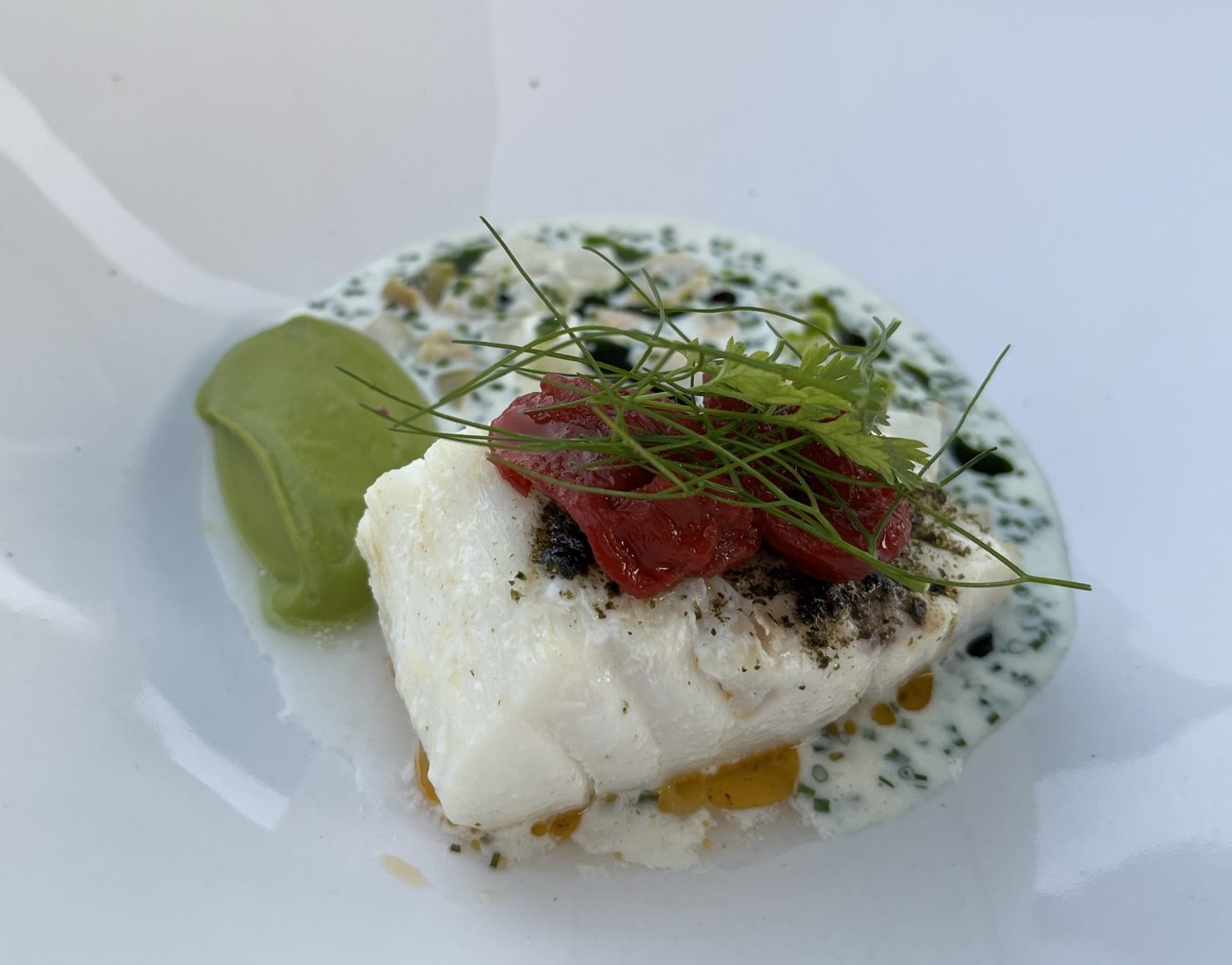
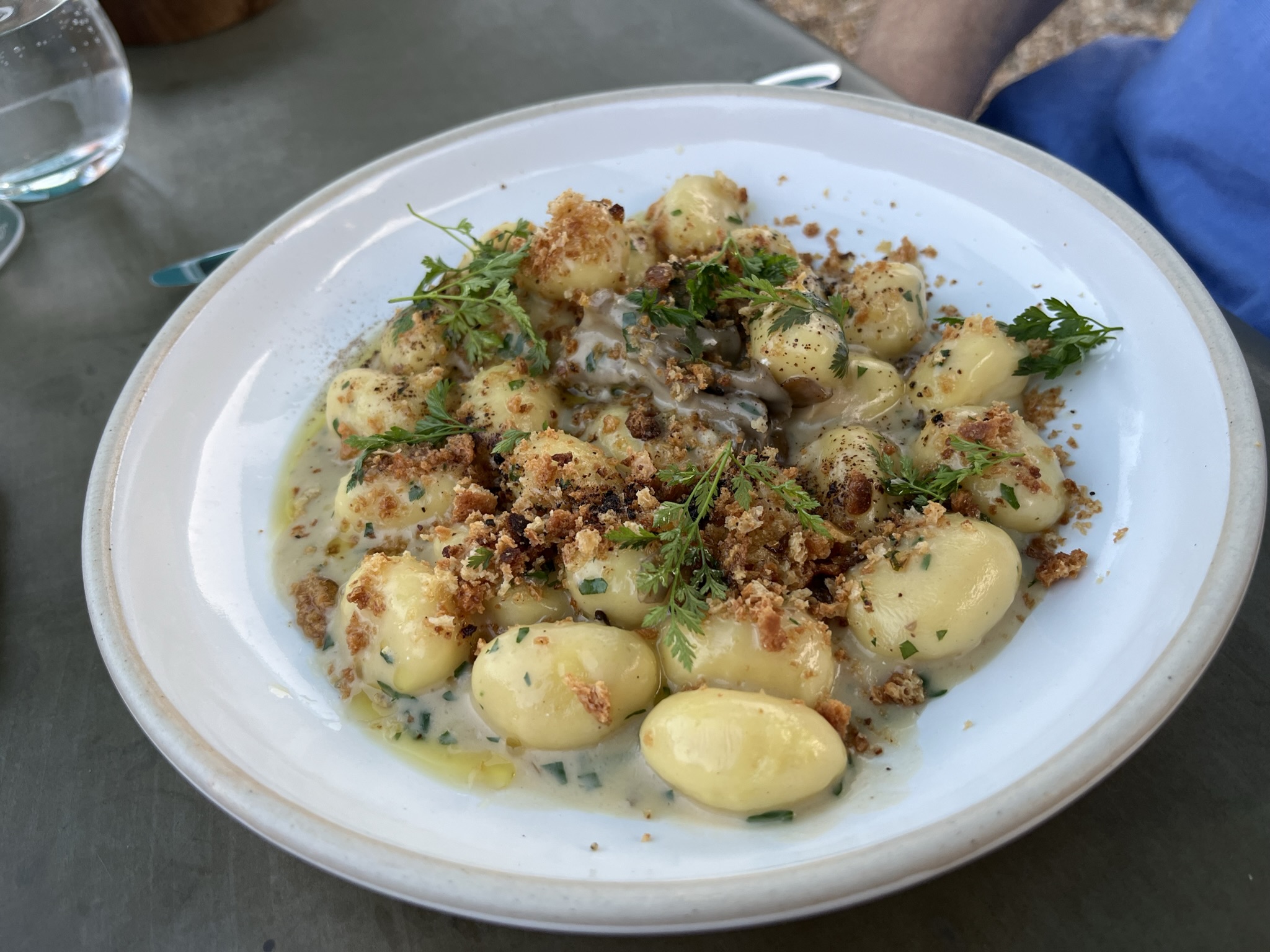
… then two of us chose vegetarian dishes. So often now the vegetarian dishes have had to be thought through really creatively in order to make them interesting and they definitely succeeded here. Firstly there was “hen of the wood” (a mushroom that grows at the base of oak trees in this country; also known as maitake mushrooms) gnocchi that was seriously delicious:
And finally there was roast Hispi cabbage, celeriac purée with hazelnut and kohlrabi cream. I have had the fantastic roast Hispi cabbage at the fabulous Corkage in Bath so I hoped this was going to be as good. It was.
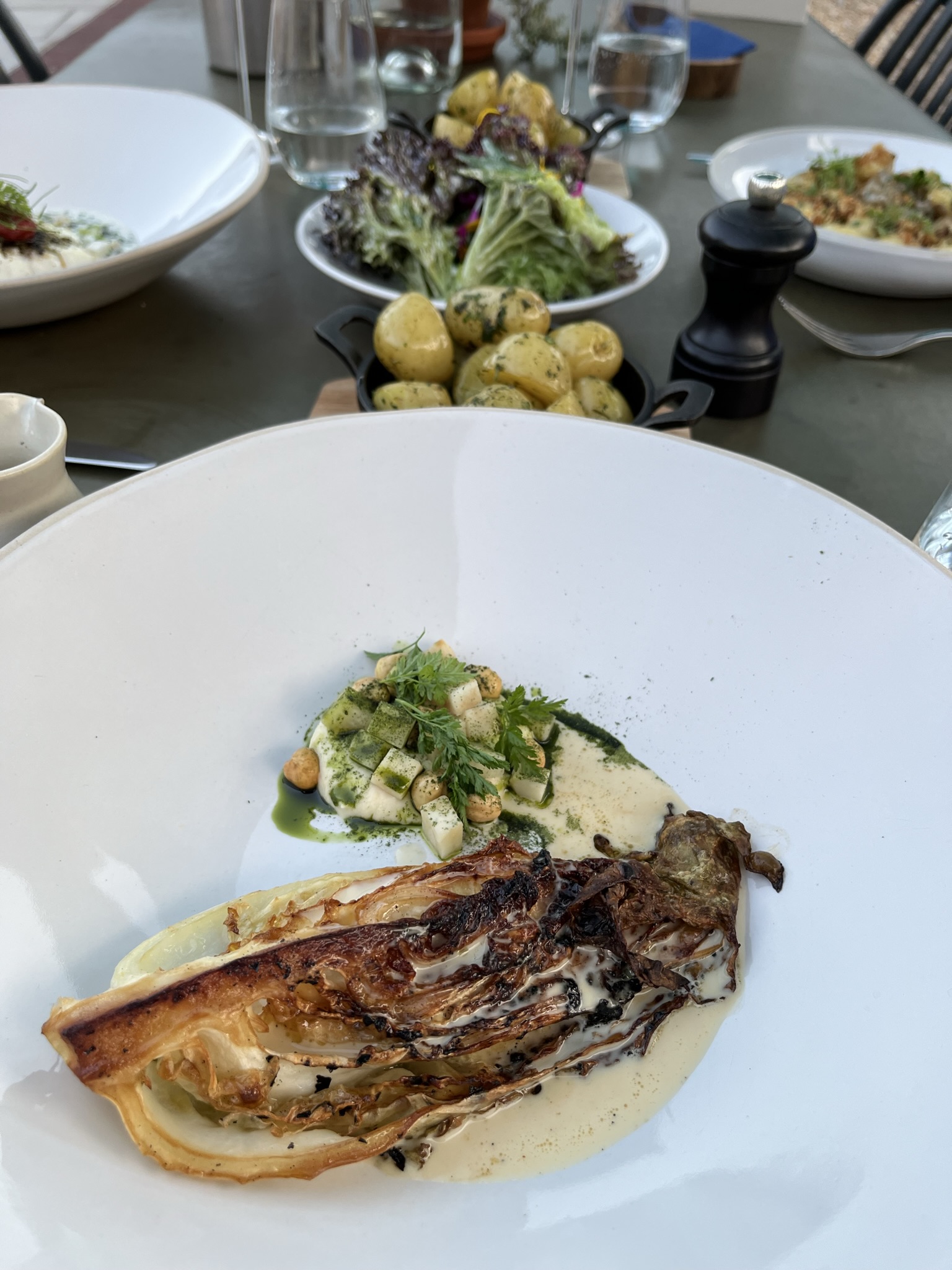
At this point I’m going to introduce a slight quibble (“Hello lovely readers, allow me to introduce young Miss Quibble”). The food was delicious, and the sauce in each case was particularly delicious. So why serve it all in what is effectively a bowl, meaning your knife and fork cannot scoop out all the deliciousness?? Of course we should have asked for spoons. But hello, this was not a cheap diner – is it not incumbent on the restaurant staff to help you enjoy your food to the max? There was still some focaccia left, plus some lovely new potatoes so we spent a mildly resentful few minutes mashing potato into sauces so as not to miss any of them rather than waiting for someone to bring spoons and allowing the sauce to cool. Full marks for the cooking, not full marks for the crockery.
The quantities of all dishes were exactly right, and it had taken thought and skill to put them all together. We were also sitting in really civilised surroundings on a relaxingly warm summer’s evening and sipping a truly pleasurable wine. I did say it was just a “slight quibble”.
Ahem, I do have another quibble though – again, not about the food. Had I not been taken to this place as a guest of someone else I would probably have made this point forcefully because it irritated me intensely, and it seems unwise of a restaurant to irritate people near the end of a meal.
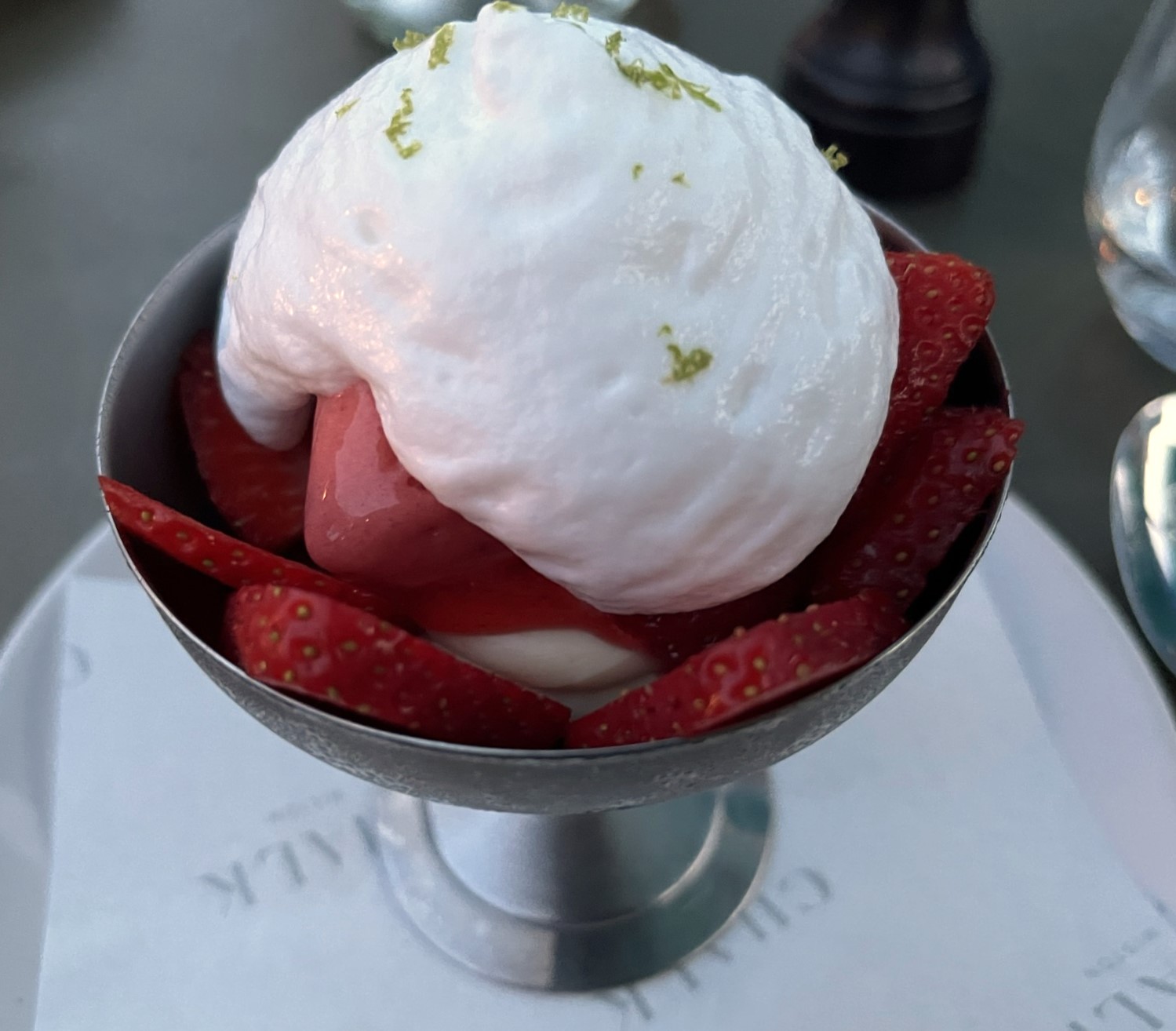
We all chose very light puddings – home made ice cream, and strawberries with coconut cream and white chocolate, what’s not to love there – then came hot drinks. The other two had coffee, but I prefer a tisane so I cheerfully chose English peppermint from the two “fresh herbal infusions” listed. I felt a bit silly asking, but I checked nonetheless “so FRESH means it’s actual mint leaves in hot water?”. “Oh yes,” came the answer. “Excellent,” I said, turning to the others and starting a reinforcing conversation about how delicious fresh mint tea is. The waitress began to look worried and said “I mean, they’re in tea bags but it’s fresh mint.”
Pause to absorb this information. More clarification needed. “You mean, mint picked from the restaurant’s herb garden?”. Pause for waitress to look confused then say “um, we get the tea bags from a company”. Crash of disappointment. There was only one other “fresh herbal infusion” on the menu and it was one I don’t like – I checked if by any chance there might be, for example, the odd camomile tea bag lying around? “Yes, we have camomile, look….” And she pointed to “jasmine tea” on the menu. Sigh. She must have learned how to read, and “camomile” and “jasmine” don’t share that many letters, so I can only assume she genuinely thought they were the same thing. She was a young waitress and very kind and efficient in other ways; in fact it was the word “fresh” on the menu that led to the disappointment.
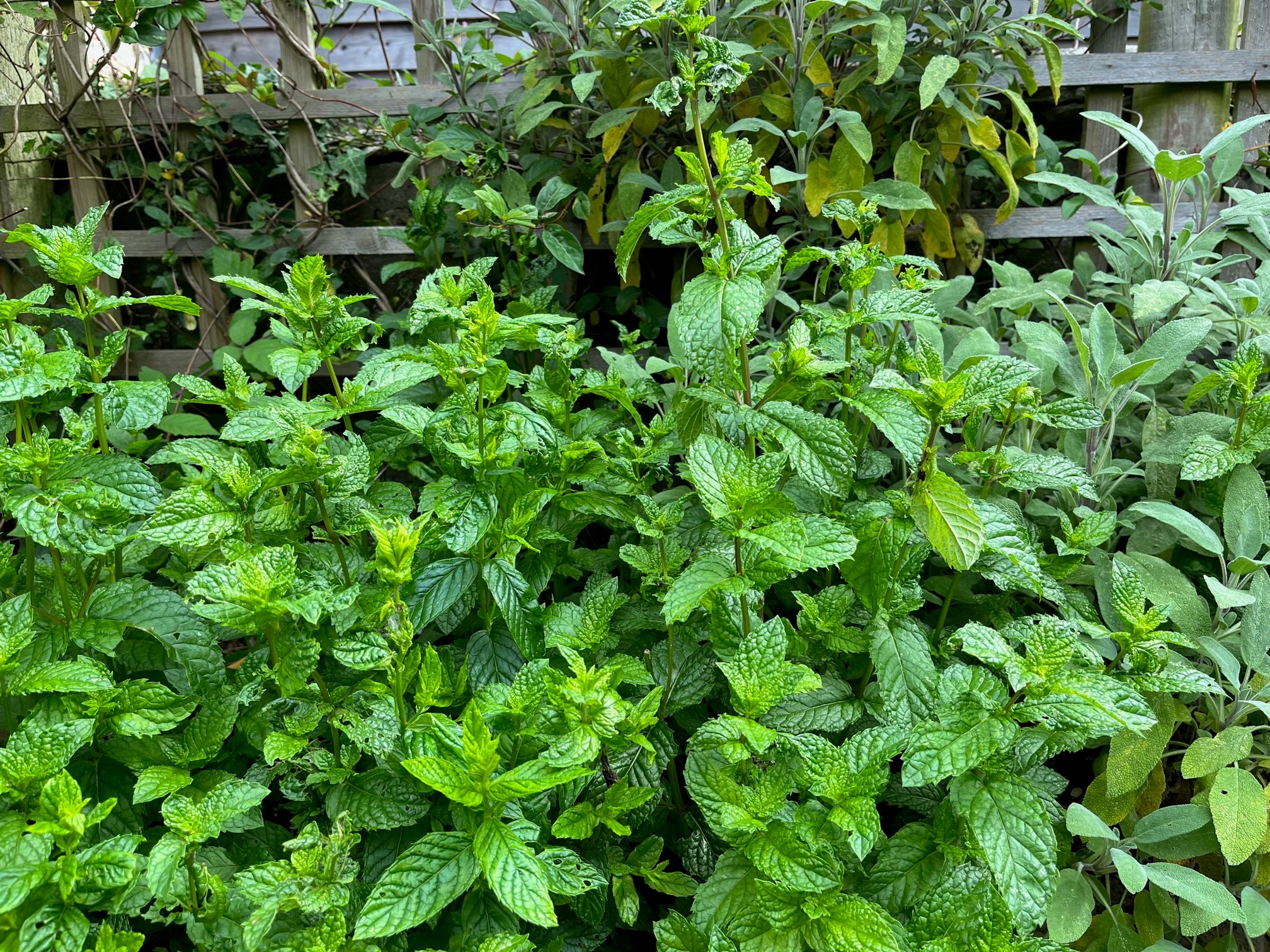
As one of my companions pointed out, mint grows like a weed in most gardens so surely they could be growing a pot of it? We definitely want to return here, and I heartily recommend it as a relaxing, charming way to eat of an evening, but next time we will bring a pot of mint with us for them to plant in one of their pretty borders.
Discover more from Wined, dined and rested.
Subscribe to get the latest posts sent to your email.


Looks fab!!B xx
Sent from Yahoo Mail for iPhone
LikeLike
Great write up – definitely one for the list! And yes, I’ve had Wiston sparkling and it delicious – much more giving than some other English sparklers.
LikeLike
Shame the lack of attention to some details and significant ignorance tarnished this experience
LikeLike