So many names ending in -ac….. as we drive down through France we go past Cognac, Jarnac, Jonsac, Clérac, Bergerac and the list could go on for hours and pages.
The -ac ending is an evolution of a Gaulish ending that indicated “belonging to” or “associated with”, roughly equivalent to “chez” in modern French.
Today I’m going to talk about two -acs. Well, three really since one is double-barrelled. Let’s start with Plassac-Rouffiac. This is a tiny village to the south east of Cognac, famous 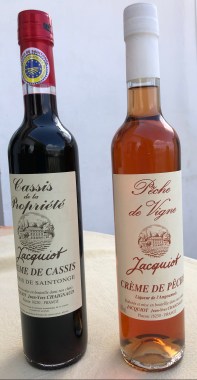 for two things.
The first is the most delicious farm-produced fruit liqueurs that we have found, made by the Jacquiot family on their historic farmhouse on the edge of the village – if you are ever in the region, make a beeline for the nearest supermarket that sells these elixirs of delight. Their framboise is full of deep, darkly sweet liqueur that just bursts into raspberry in your mouth, their pêche de vigne spreads tangy peachiness all around your palate (and is a must sprinkled on fresh fruit salad) and their cassis just turns your whole body into a blackcurrant receptor.
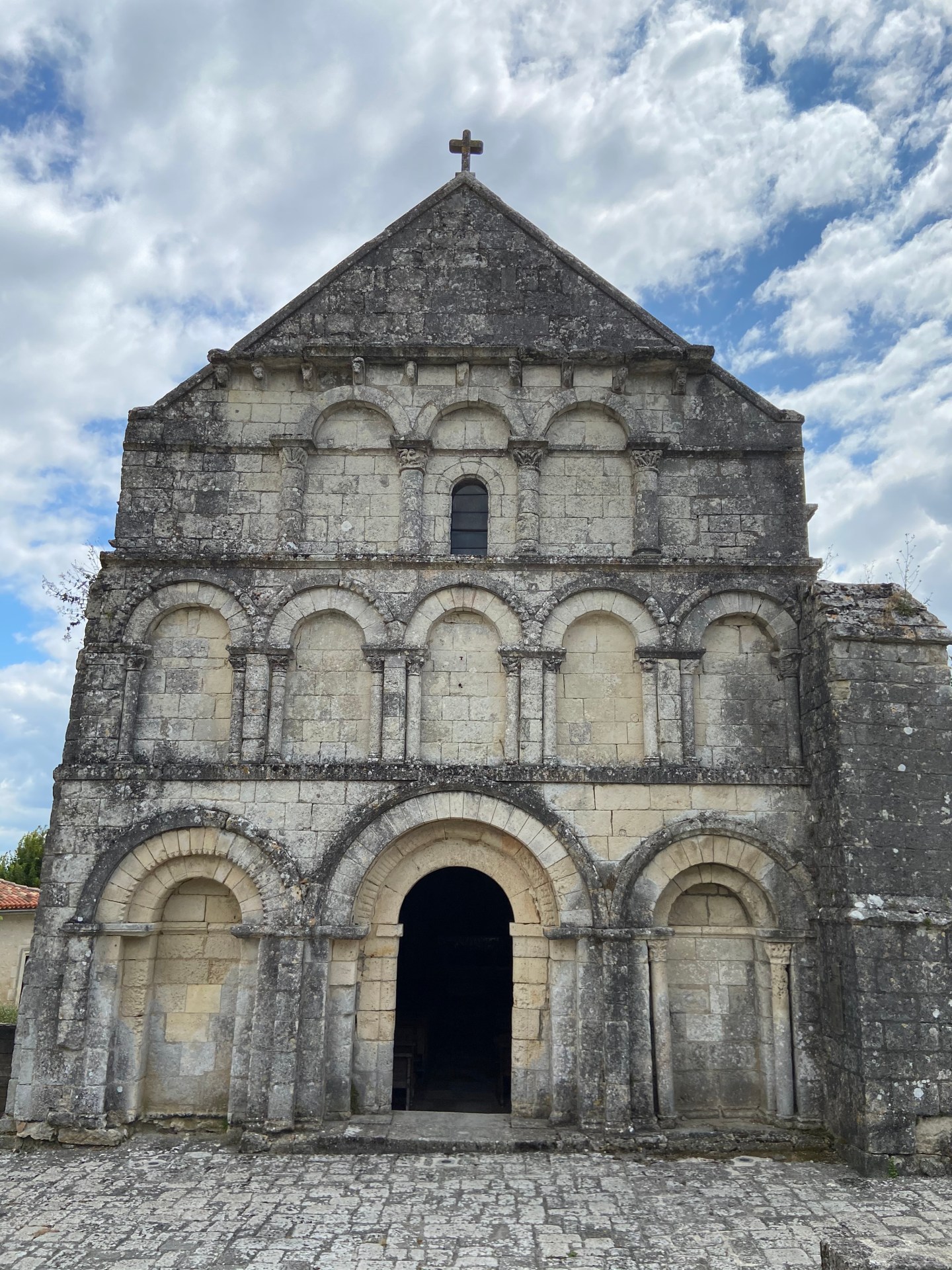
But the other thing that Plassac Rouffiac boasts is a beautiful little 12th century church, up on a gentle rise above the fields of vines and sunflowers. It’s meant to be the finest example of a Romanesque church in the region.
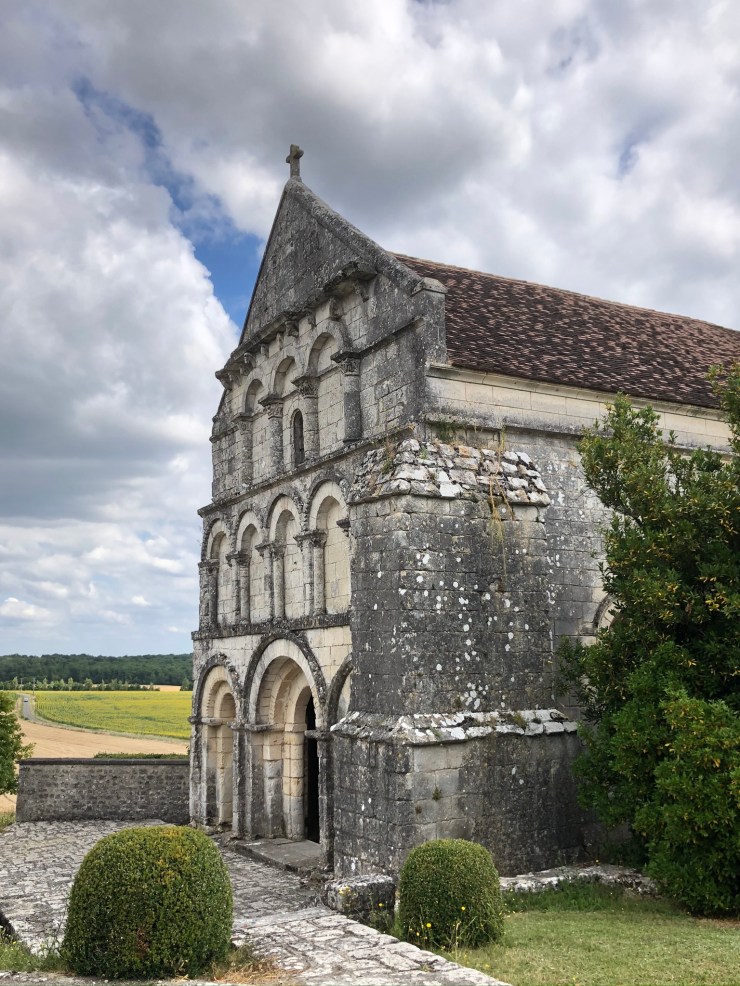
It sits serenely on its promontory, the conical roof on its tower presiding over the view and a handful of village houses.
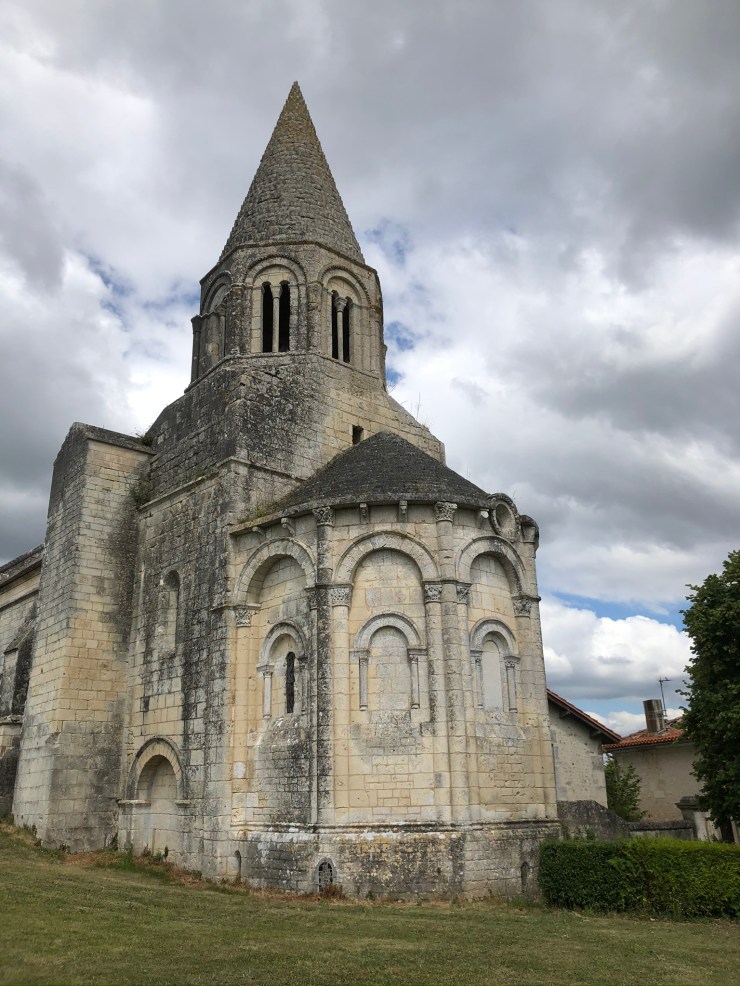
Its capitals are worn with age but clearly carved with attention to detail – I’m not an expert in any way at all, but I often wonder how those who restore such monuments decide whether to leave something in its original state, worn with the passing of centuries, or to restore the sharpness of the edges. I just love the way they look on this church, beautiful but also bearing witness to the passage of years. Mmmm, if someone says that about me one day I’ll probably be pleased.
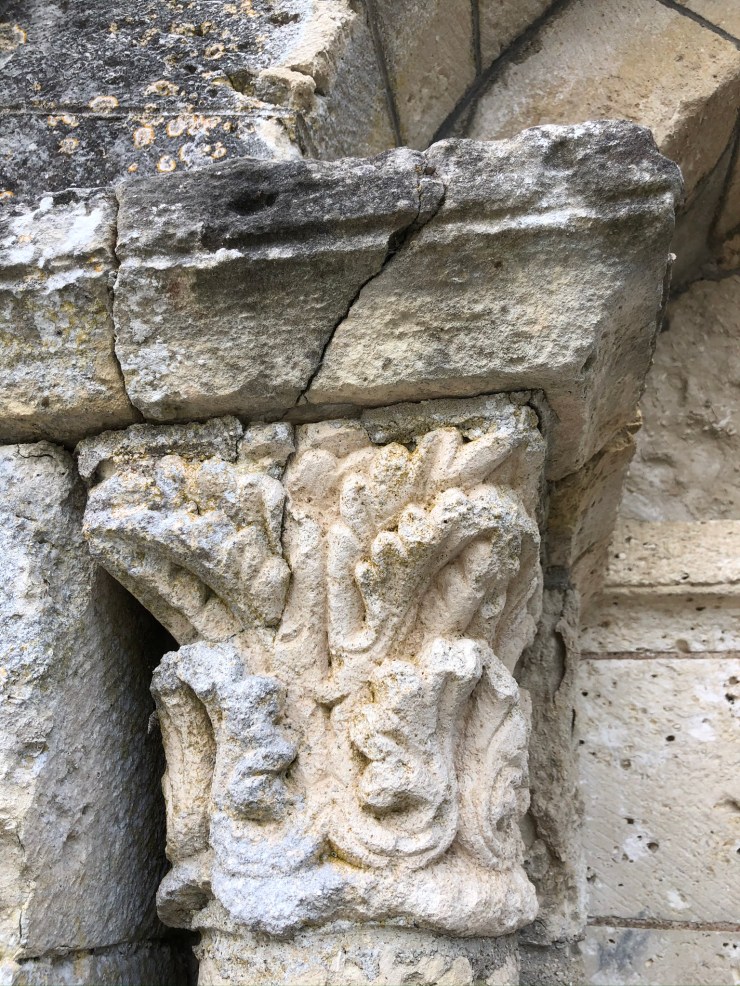
The church was open so we were able to admire the simple interior made from the same cream coloured stone as its much grander cousin the cathedral in nearby Angoulème.

The whole place gives off a gentle air of contemplation and patience; it is of course anthropomorphising to say it seems to be sitting out humanity’s various sillinesses and just waiting until it’s needed again – but that’s how it seemed.
Our other -ac on our way south was Cadillac, a small town south east of Bordeaux. Yes, you recognise the name – how American can you get? And yes, the car was – indirectly – named after this little town. The founder of Detroit was Antoine de la Mothe Cadillac, originally simply Antoine Laumet. Young Laumet sought fame and fortune in the 17th century in France’s new colony in what is now the USA, and having made his fortune there, apparently by selling alcohol and trading fur, he decided a grander name was in order and chose the last name “Cadillac” after the town near Bordeaux. He became governor of Louisiana at one point, although he also spent some time in prison for corrupting the native population by selling them alcohol….
Anyway, we were on our way from Cognac to the Pyrenees so we stopped only long enough to raid the lovely bakery in the centre of town for our picnic lunch, but we had seen reference to the “château of Cadillac” and wanted to see it before we left, even if just from the outside. Yup, well that part of our wish came true because it was not open at the time we were there but we read that it had been restored in the 1950s and 60s, having been a prison for about a hundred years. It is certainly an impressive building, although a glance at the English language version of its website tells me that it’s “one of the leading examples of French-style architecture” which leads me to wonder what other style of architecture one would automatically expect to find in France? I think it may have lost something in translation.
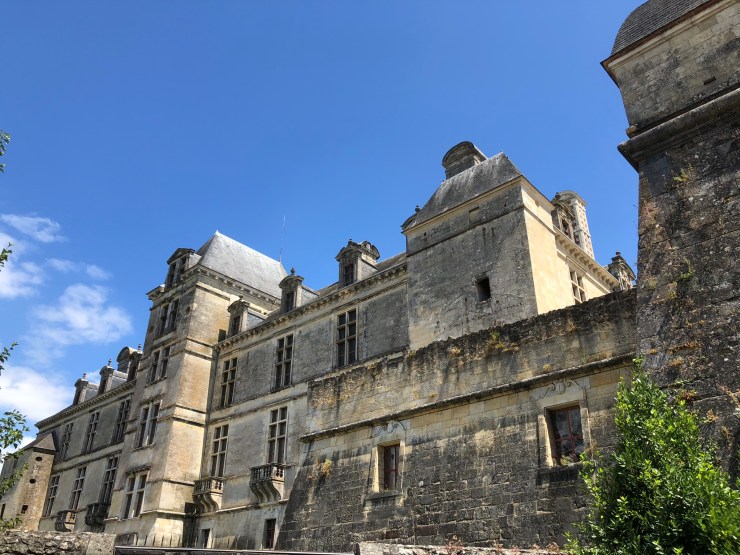
Since this is a rather waffly post today, I will end on a thought that this castle evoked in me. So often in France historic buildings and country houses have been turned in to prisons – the glorious Fontevraud Abbey, for example, near Chinon in the Loire valley, and worse still the great abbey of Clairvaux, a famous Cistercian house that to this day houses a prison – whereas in the UK they are have often been turned in to schools. What does this say about our relative cultures, I wonder?
Discover more from Wined, dined and rested.
Subscribe to get the latest posts sent to your email.
 Wined, dined and rested.
Wow. Enjoy. Hope you are relaxing. B xxx
Sent from Yahoo Mail for iPhone
LikeLike
“one of the leading examples of French-style architecture” is the equivalent of “Greek-style cheese”… trying hard, but still not the real deal?
LikeLike