Finding and talking to people who are passionate about what they produce is one of the great privileges of travelling, and recently in a little white village in the hills behind Marbella I met a lady who, with her family, harvests honey from their 250 hives and sells jars of this truly delicious golden liquid from a small shop underneath her flat.
We had been told years ago that the honey from the hills between Ronda and Marbella had health-giving properties, and have often bought it. But then a friend told us about this particular outlet which is hidden, mostly closed and you can only really find it if word has passed in your direction.
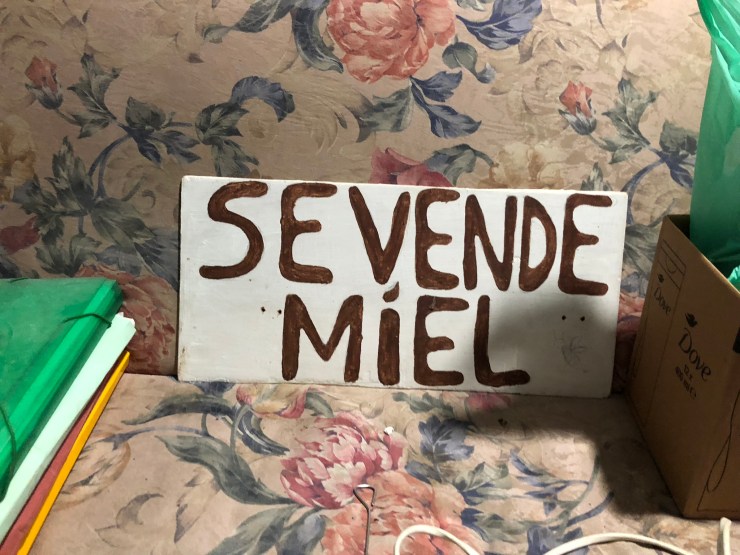
The premises are not prepossessing, and marketing is clearly not a highly-developed skill here; even once you’ve been told where to go, and when you’ve spotted the MIEL sign, the locked iron grille and the equally unwelcoming closed grey metal blind do not shout “Hello! Buy me! I am probably the most delicious honey you will ever eat!”
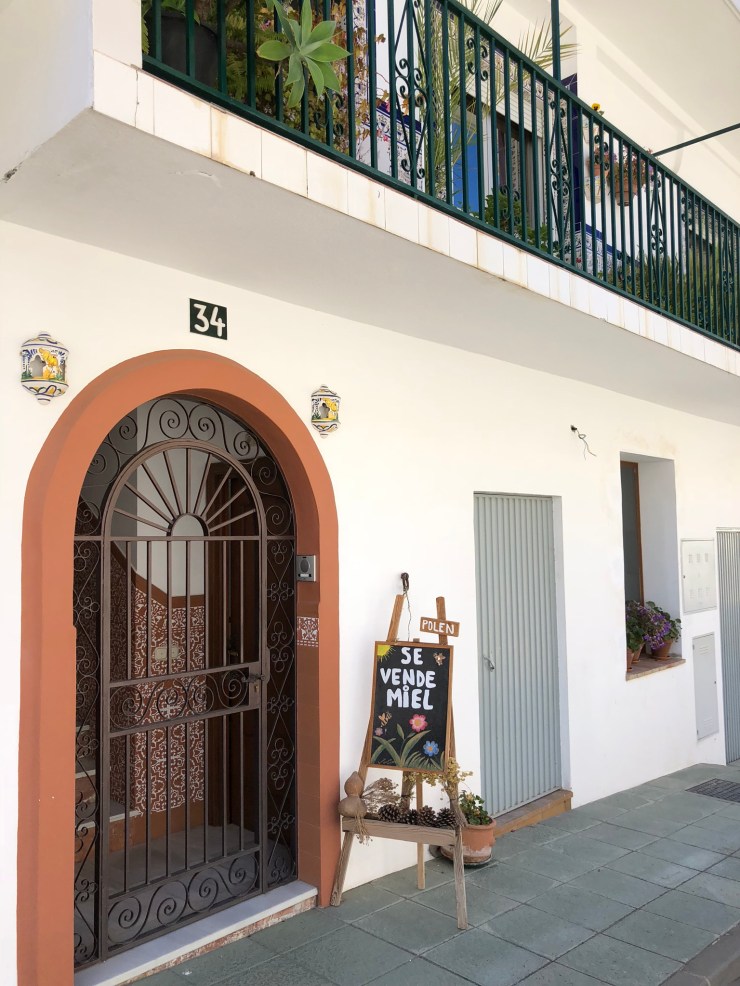
But we had Inside Information – we rang the bell and a charming lady appeared and opened up for us, and what a delight the whole experience became.
The almost complete lack of decoration (part of a tree trunk in the corner of a room painted white doesn’t really count) was unimportant the minute this scion of honey started to speak.
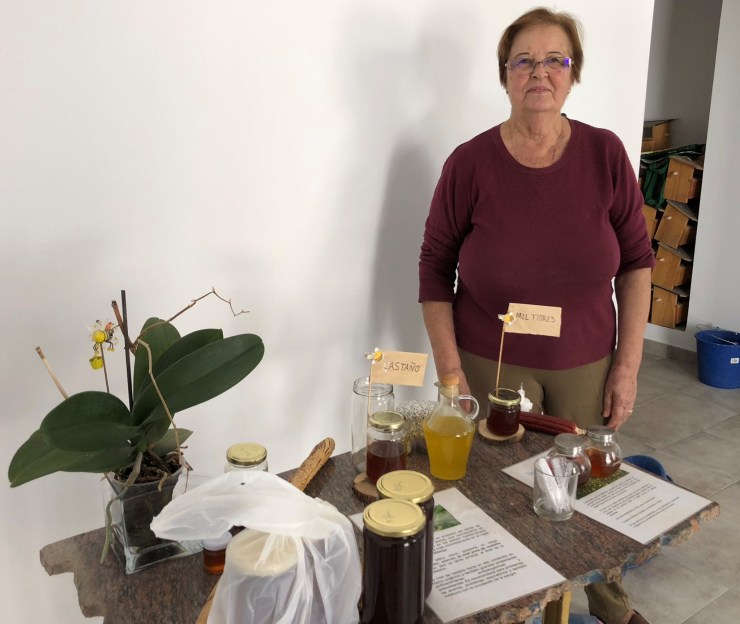
She started to explain that they were selling honey of three different types- from chestnut trees, from broom and from mountain flowers. I was then able to ask a question I’d always wondered about. How can you possibly know where the bees have been sipping their nectar? Nano tracker devices on each bee? Every bee on a retractable lead?
Of course not – but every time I see labels on jars of honey claiming to be “rosemary honey” or “manuka honey” into my head pops the scenario of the Queen Bee standing at one end of a room with all her workers around her, and she’s saying something like “All right you horrible lot, it’s rosemary honey today. Check you all have the maps of rosemary.” Pause while every little worker bee unrolls a microscopic map, or the more technical ones fire up Google Maps on all six of their little smart watches (one for each wrist). “Any questions? No, so buzz off the lot of you – and be careful, it’s a jungle out there.”
Well, our lovely Spanish lady stopped my question halfway; “Wait a moment, I’m about to tell you.” Perhaps others had asked this question before me……
She explained that the family has 250 bee hives, and according to the season for each plant they physically move the hives around to where there is a concentration of that particular plant. I tried to stop the image of DHL trying to pack 250 beehives into 250 irritating plastic bags – would the DHL personnel assigned to this job have to wear yellow and red beekeeping overalls?
Fortunately the reality was far more interesting – this lady’s husband transports them from mountainside to broom fields to chestnut groves, and to avocado groves in spring, using a trailer that can take just 18 hives at a time. The poor gentleman must spend most of his life taking beehives around Andalucía.
Anyway, we tasted all of the honey on offer – and it was fascinating to be able to compare flavours in that way, they really were very different. We chose what we wanted, and then it all became even more fun. We had noticed that there were only 4 jars of honey in this whole, empty white room; this is because you are taken into the inner sanctum, well a series of inner sanctums really, all of them white and featureless, well apart from an aged sofa in the middle of one room, with a reminder of why we were there in case we had forgotten,
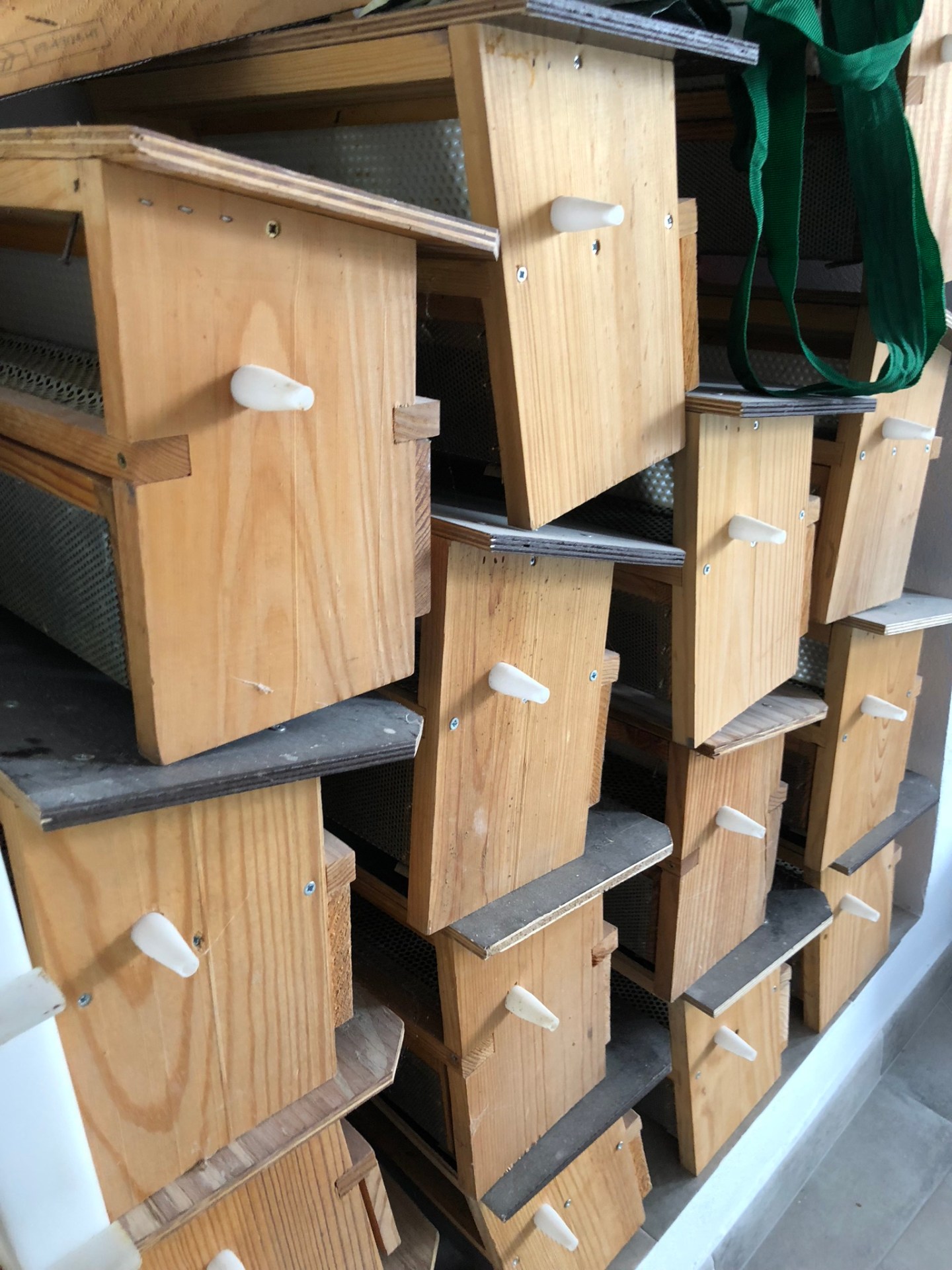
piles of sections of beehive lining the walls,
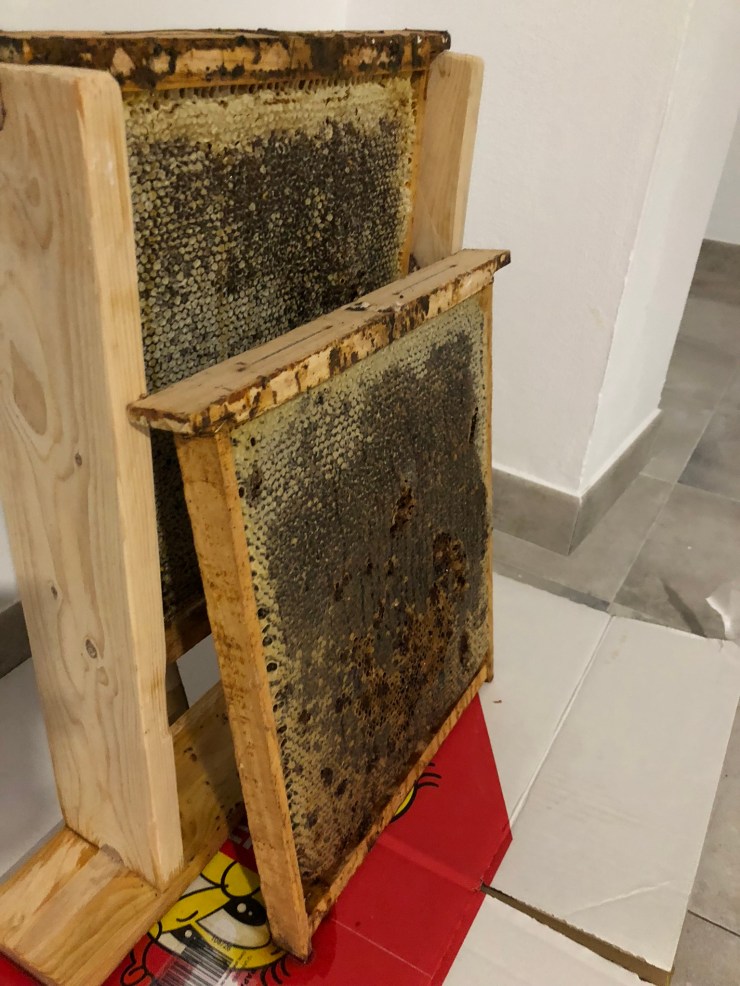
and what must have been replacement parts for other beehives

and finally……
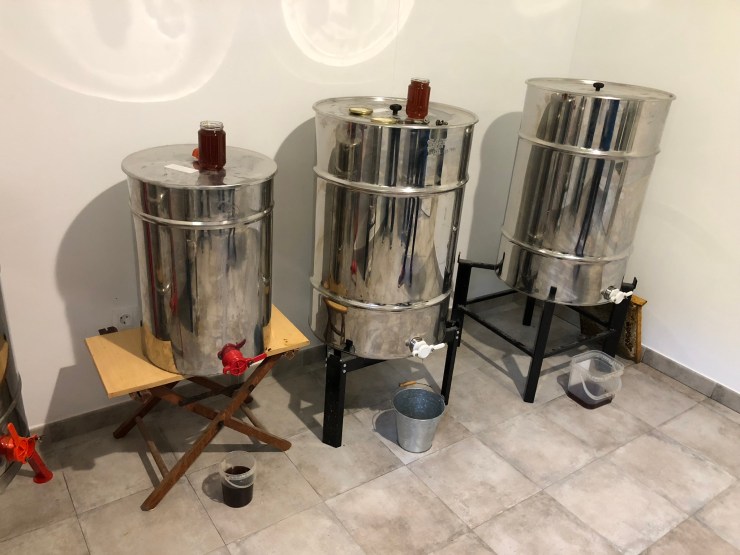
a room with large metal urns which, it turns out, are full of honey. Our guide grabbed an empty jar, bent down to the tap, moved a flap of plastic aside and thick, golden, gorgeous honey started filling a jar.
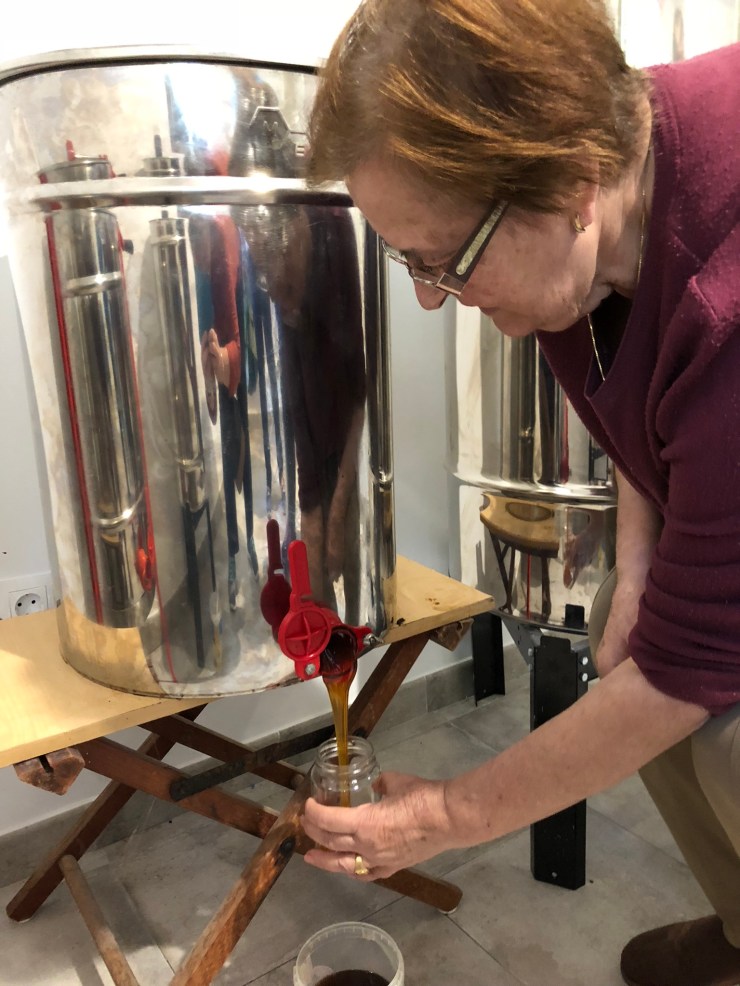
She did one, pointed out which urn was which honey and then said “You can see what to do, would you mind if I just go back upstairs and finish giving my daughter her lunch, then I’ll come down again” and off she went.
I was ridiculously excited to be doing this, although the responsibility was heavy on my shoulders. What if I spilt some? What if I didn’t close the plastic flap in time and – oh the disgrace – she tutted at me when she returned?
Amazingly, it all seemed to go well, the señora returned from having given her daughter lunch (not a small child, as I had supposed, but a young lady who had a job on the coast – how supportive is a Spanish family!) and seemed to approve of my handiwork.
We paid €37 for 3 one litre jars and 3 half litre jars……. WHAT?? I felt almost guilty. But not so guilty that I didn’t skip back to the car having had a full, multi-sensory experience – and as the metal shutters crashed down behind us and our new friend scampered back upstairs presumably to make her grown-up daughter a nice cup of coffee before she was chauffeured off to work, I gave silent thanks to that Queen bee and all her workers with their map-reading talents.
Discover more from Wined, dined and rested.
Subscribe to get the latest posts sent to your email.
 Wined, dined and rested.
Yes I have had many a fun time buying honey from those same metal barrels. The shop has become so much more organised over the years and I am thrilled that more people are discovering the delicious honey from our area. I hope your excellent post gets read and more folk ring that bell and get to meet that senora and buy her honey.
LikeLike
I have been eating Istan honey for years but, until this year, I had no idea that there were different flavours until Julia was given 3 different jars for her birthday. And, after all these years, I have not visited the senora to have a tasting and to hear how they go about it. Thank you for the photos and your enthusiastic explanation. Next year I will have to pay her a visit.
LikeLike