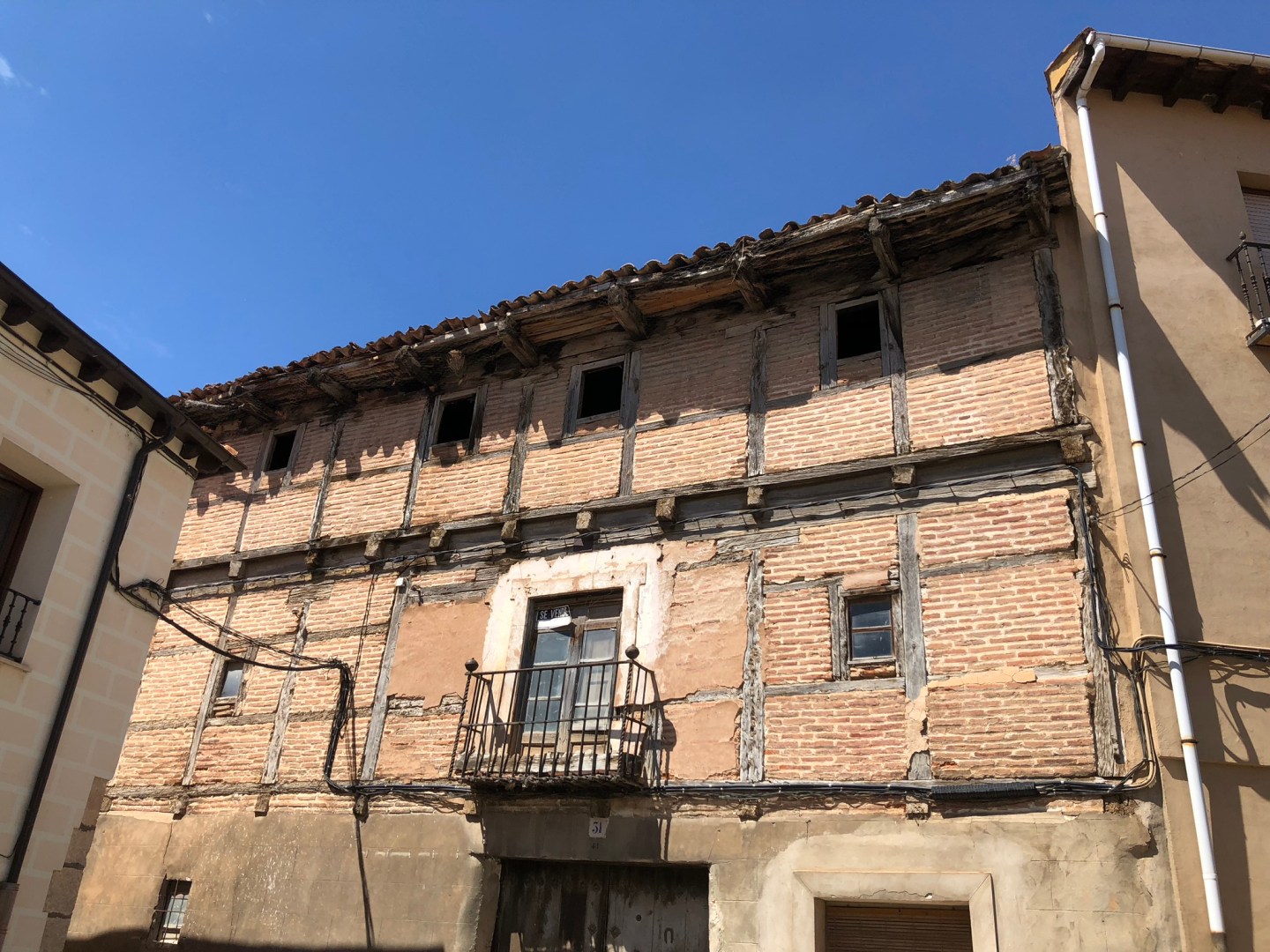
We are lucky enough to have Spanish friends in the province of Soria, a part of Spain that most foreign tourists never visit because it’s not on the road to any beaches or near airports. We’ve just spent some time with them visiting places that really everyone should know about…
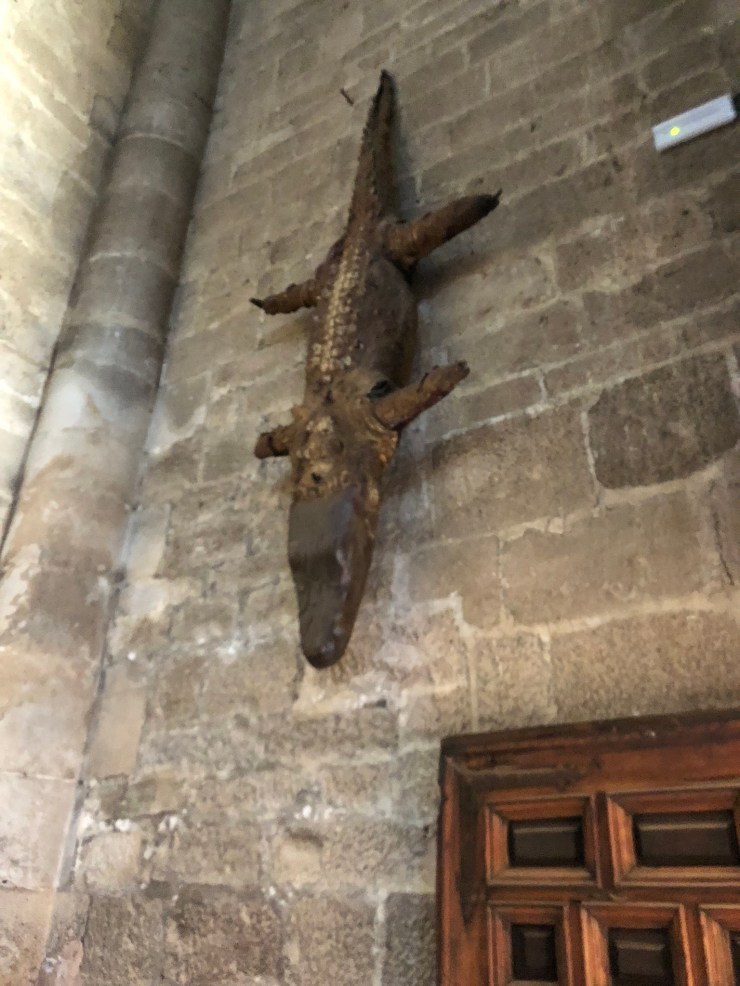
So, that crocodile. In a church. Really. Here’s a rather smudgy picture of it (there was a service going on and I could feel the fiery eyes of the parish priest on me as, naked-armed, I crept into the back of the church and took a quick photo in the gloom before exiting hurriedly).
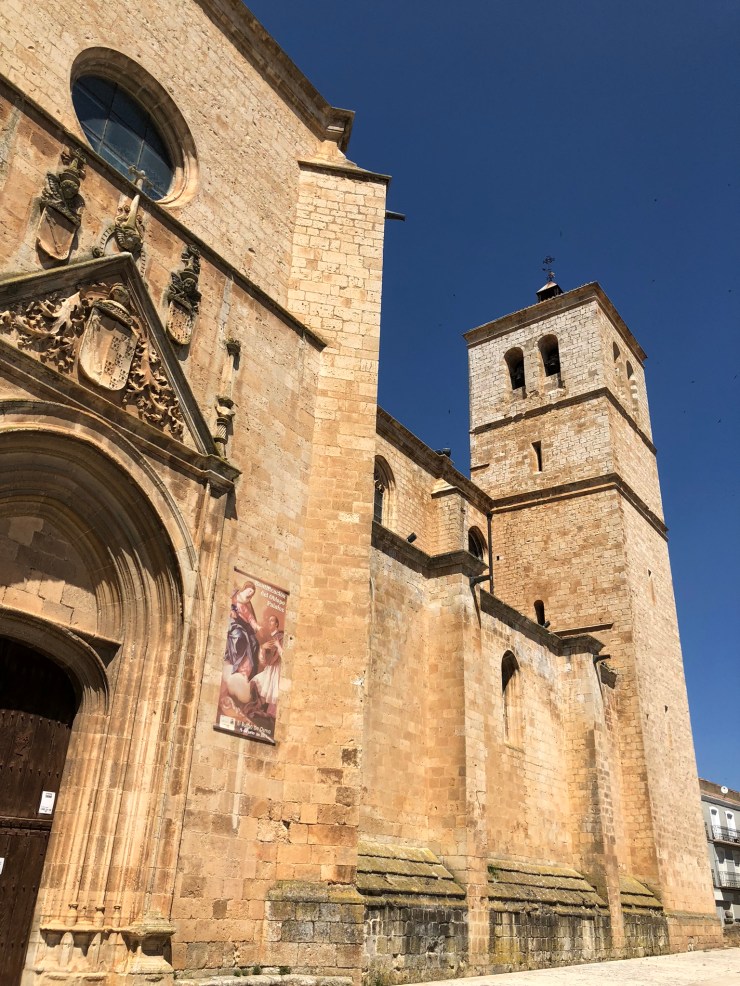
This church is in the village of Berlanga on the banks of the river Duero. In the16th century, at the height of Spanish exploration of the Americas, a Dominican friar from Berlanga called Fray Tomás travelled to Panamá as a missionary. I’m ashamed that I knew none of this, but Fray Tomás was really important historically……
For a start, on the way to Panamá his boat got blown off course and they found themselves on a group of islands whose main feature appeared to be large amounts of tortoises. The ancient Spanish word for “tortoise” is “galápago” so, rather unimaginatively, obviously in a rush to get on with the really important job of bringing Catholicism to the American natives, Fray Tomás decided that the islands would be named after these animals. I can picture him standing on a rock trying not to get wet and tapping his foot impatiently, brushing aside the sailors begging him, the king’s representative on board, to name this place for Spain. “Yeah, yeah, whatever, they can be called tortoises. Now, hurry up and get me to Panamá”.
Once in Panamá he became Bishop of Panamá and got to work. Amongst other things he suggested building a canal across the narrow region (the suggestion was put aside because it would have been too expensive), he was sent to settle arguments between conquistadors in Perú, but most famously of all (if you are a native of Berlanga) when he returned to his native village he brought with him a live cayman. You have to wonder how, and why….. Anyway, although it quickly died once in Berlanga, a legend grew up around it, to do with the mauling of the village’s virgins at midnight – you can fill in with whatever devilish details you want, because that is what the villagers did. Once dead it was stuffed and hung on the wall of the church, I think to prove the supremacy of the church over the devil. Oh, and it wasn’t stuffed with just anything; it was stuffed with old clothes from the village’s remaining virgins. Well, that showed it who was boss……
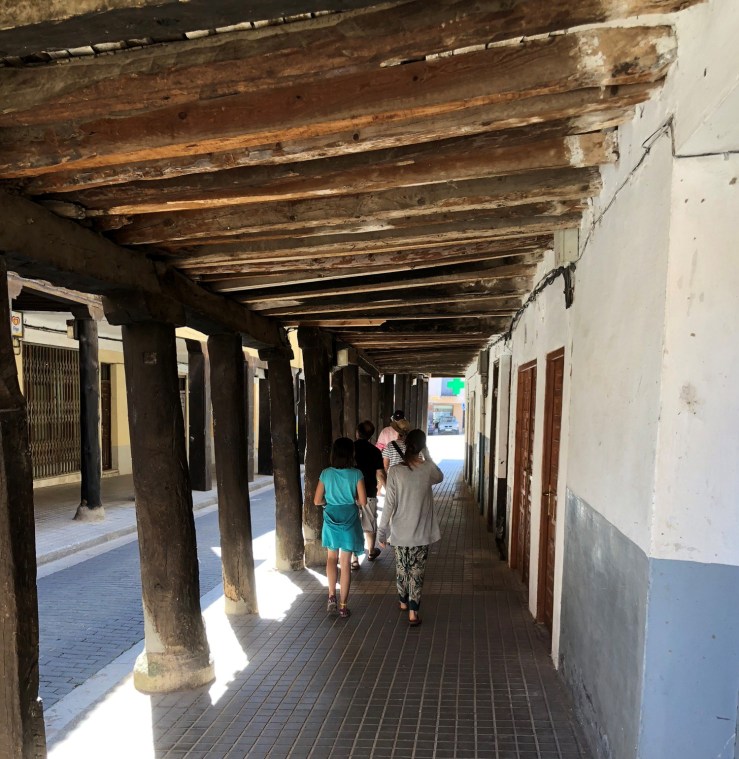
The old town of Berlanga is pretty too, built like so many of these Sorian towns, from brick the yellowy-orange colour of the land there and with arcaded streets to protect inhabitants from the relentless sun.
At the entrance to the town is an attractive small chapel called Ermita de Nuestra Señora de la Soledad (“Our Lady of Loneliness”) where travellers could stop to pray before undertaking the next stage of their journey across these ochre-coloured lands where footpads and highwaymen were always waiting to attack unwary travellers.

Above the town there is the imposing outline of the Castle of Berlanga, mostly now in ruins.
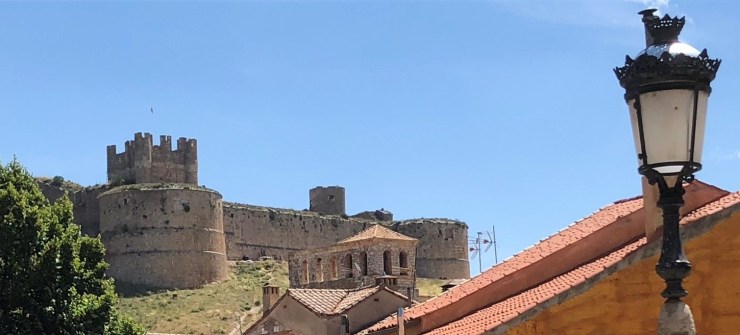
It started as a Moorish fortification in the 10th or 11th century, then was re-taken by Spanish nobles and continued to be altered, refurbished and re-purposed until in about the 18th century it simply fell into disrepair. You can visit the remains of it, but our hosts were taking us next to a different castle, the imposing Castle of Gormaz not far away (see next blog entry) and they didn’t want us to have castle-fatigue. We’ll have to return.
I love learning new things, and it is particularly true of the regions of Castilla y León (where Soria is located) and Aragón (where Zaragoza is located) that time and again I am astonished that I didn’t know the really important historical details that pop up wherever we go! How did I not know how the Galápagos were named? How did I not know about the stuffed cayman in a church? More, give me more…..!
Discover more from Wined, dined and rested.
Subscribe to get the latest posts sent to your email.
 Wined, dined and rested.
Soria is full of magical barely known spots where, as the song goes, “el tiempo pasa cadencioso y sin pensar”
For us, the few lucky ones who know about them, it’s a sheer pleasure to share them with such good tasters of life like you.
LikeLike