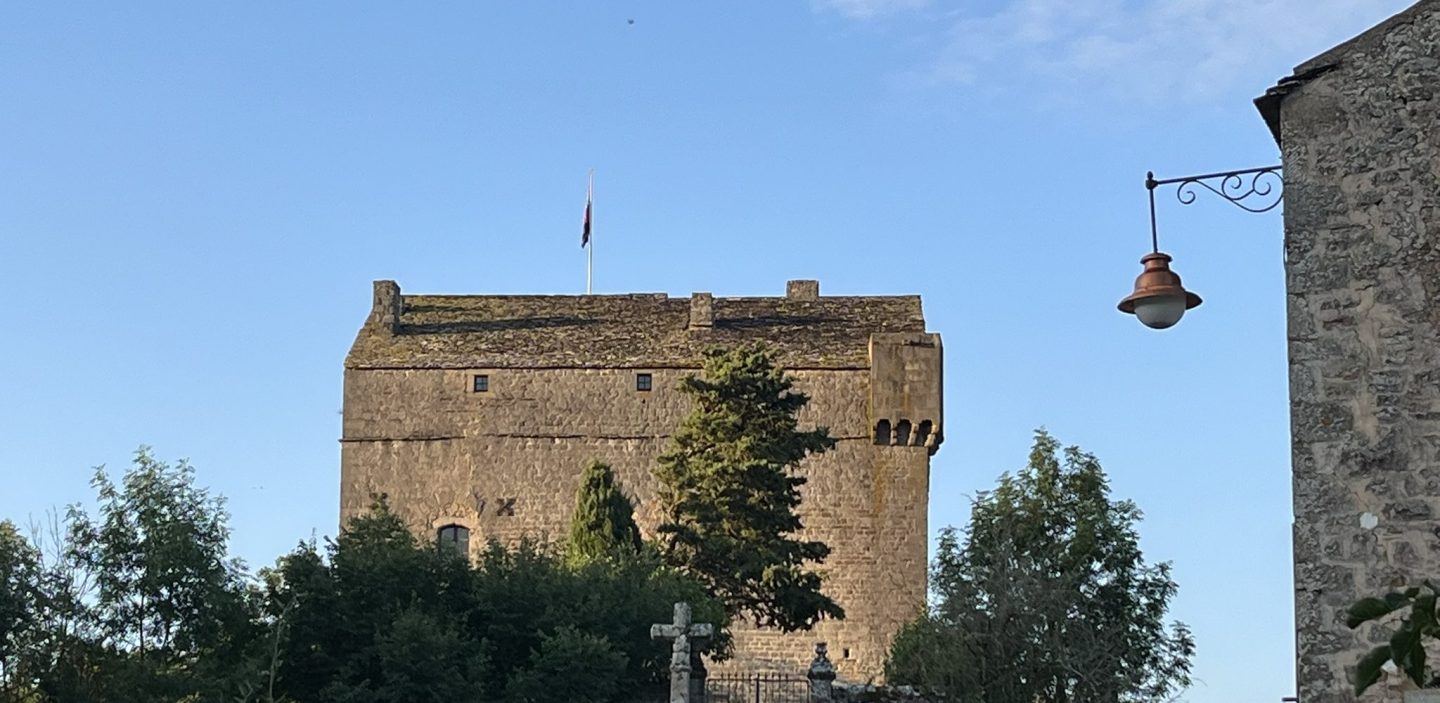
We had booked to stay in July in a former curé’s house which was within the grounds of an “eco museum” set up among the buildings of an abandoned village in remote Aveyron in France. We had no idea what might constitute an “eco museum” (solar panels on the roof? A wind farm in the curé’s garden? Exercise bikes that we would have to use to power the cooker?) but one of the other buildings nearby was the restored remains of a medieval castle. It sounded wonderful, just our kind of place.
Aveyron is a mostly rural area in the south of the Massif Central, difficult to access without your own transport so we were feeling quite smug as we drove our English car ever further into the deep red-orange land of Camarès and eventually spotted the outline of a castle high on a hill ahead. We drove up the narrow approach road, parked in the shadow of the high keep and found one of the on-site volunteers to show us to our house next to the little church. What a lovely, unspoilt place it was. I felt that the curé had just ambled out to see one of his parishioners and that if I touched his leather chair I would find it still warm from where he had been sitting annotating a sermon.
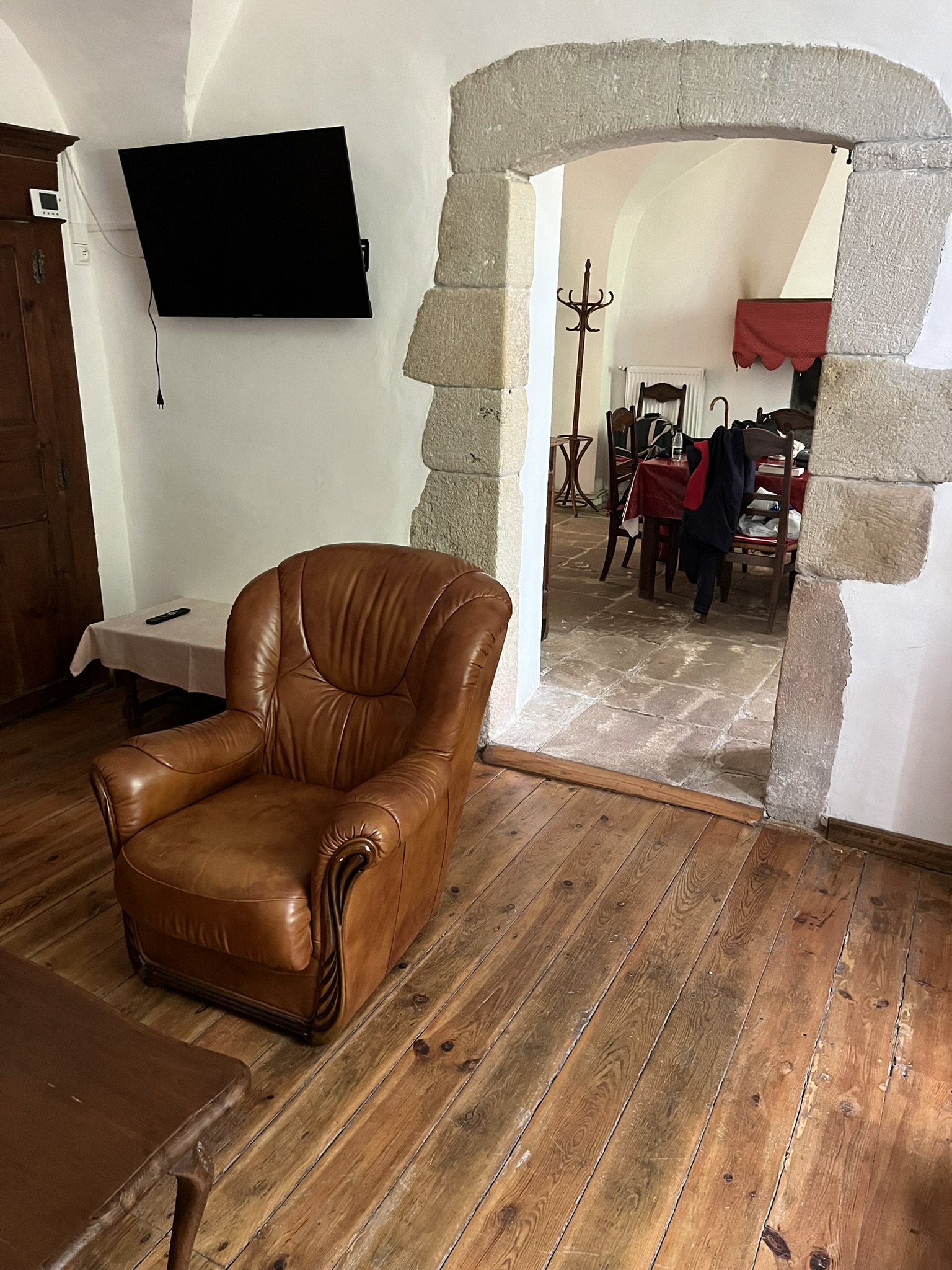
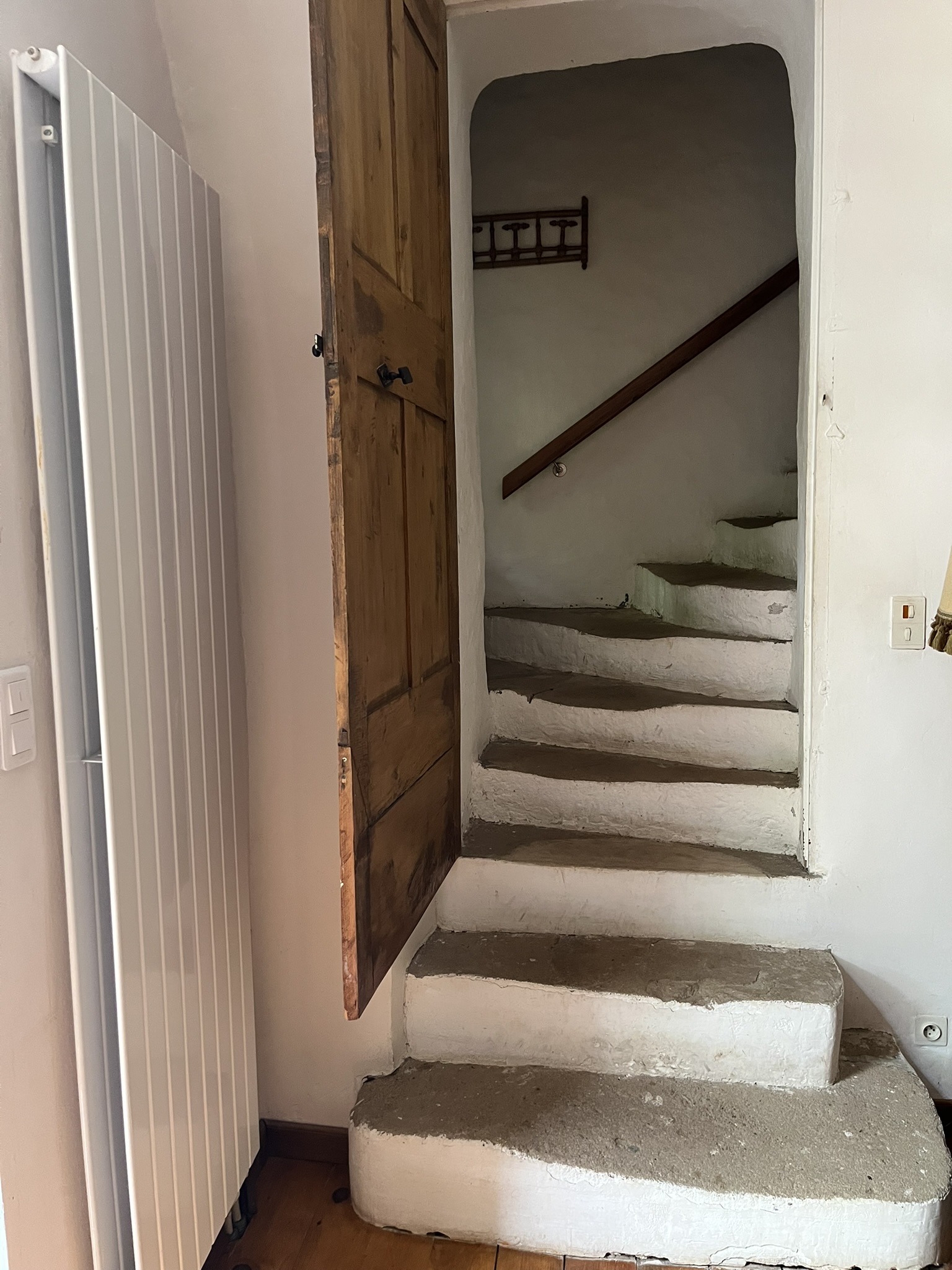
We ate at his refectory table in the main room, and reached our bedrooms by climbing stone stairs worn by his – and his predecessors’ – feet and onto the creaking wooden landing floor with three sparse but perfectly comfortable bedrooms off it.
The décor has been kept minimal – none of those appalling photographs on the wall of zen-style stones (we found a series of those in another medieval building we stayed in once, along with a plastic decal of sunflowers) or faded prints of impressionist paintings.
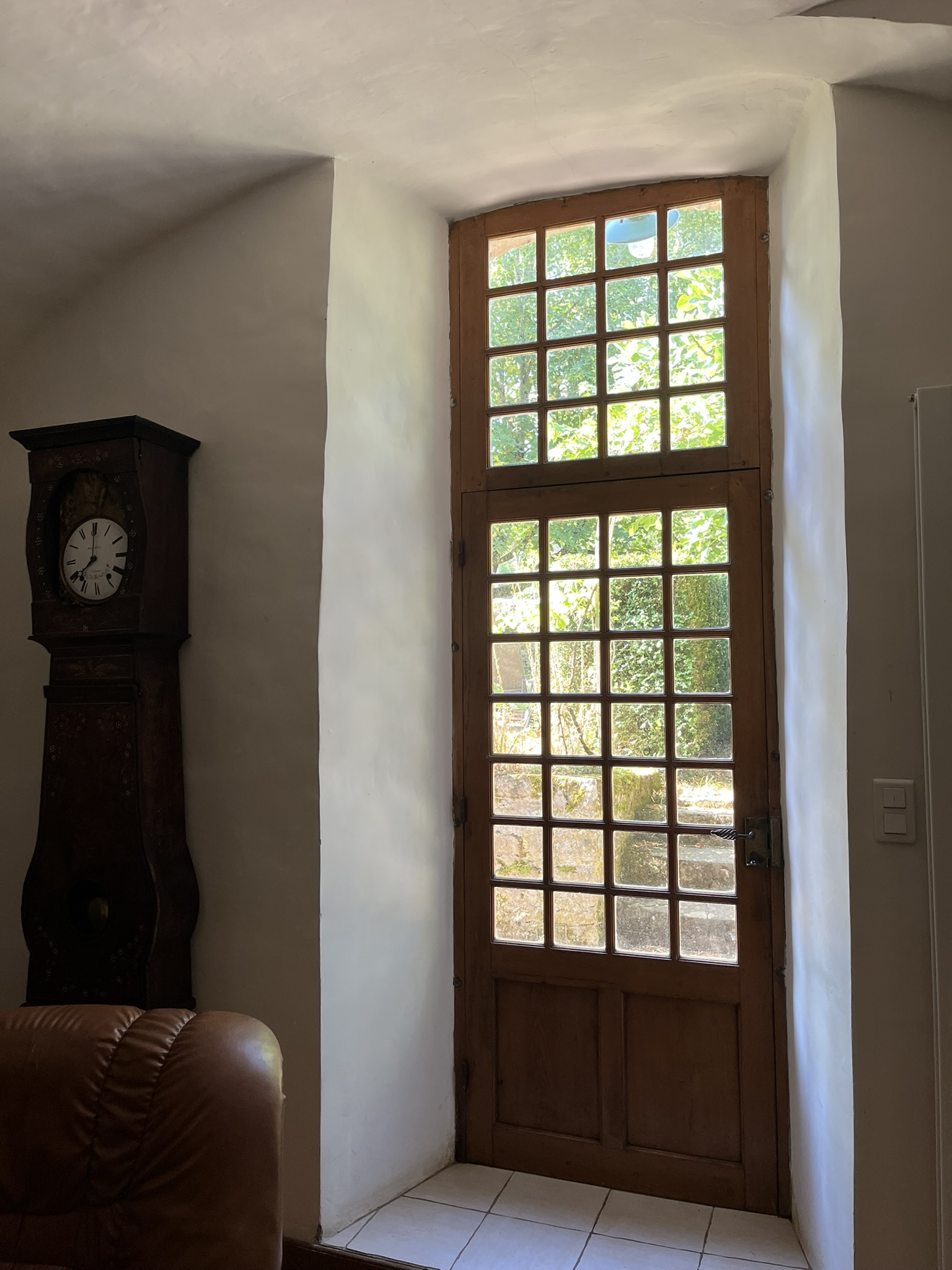
And we also had the run of his walled garden, complete with apple trees, assorted other plants, and a table and chairs.
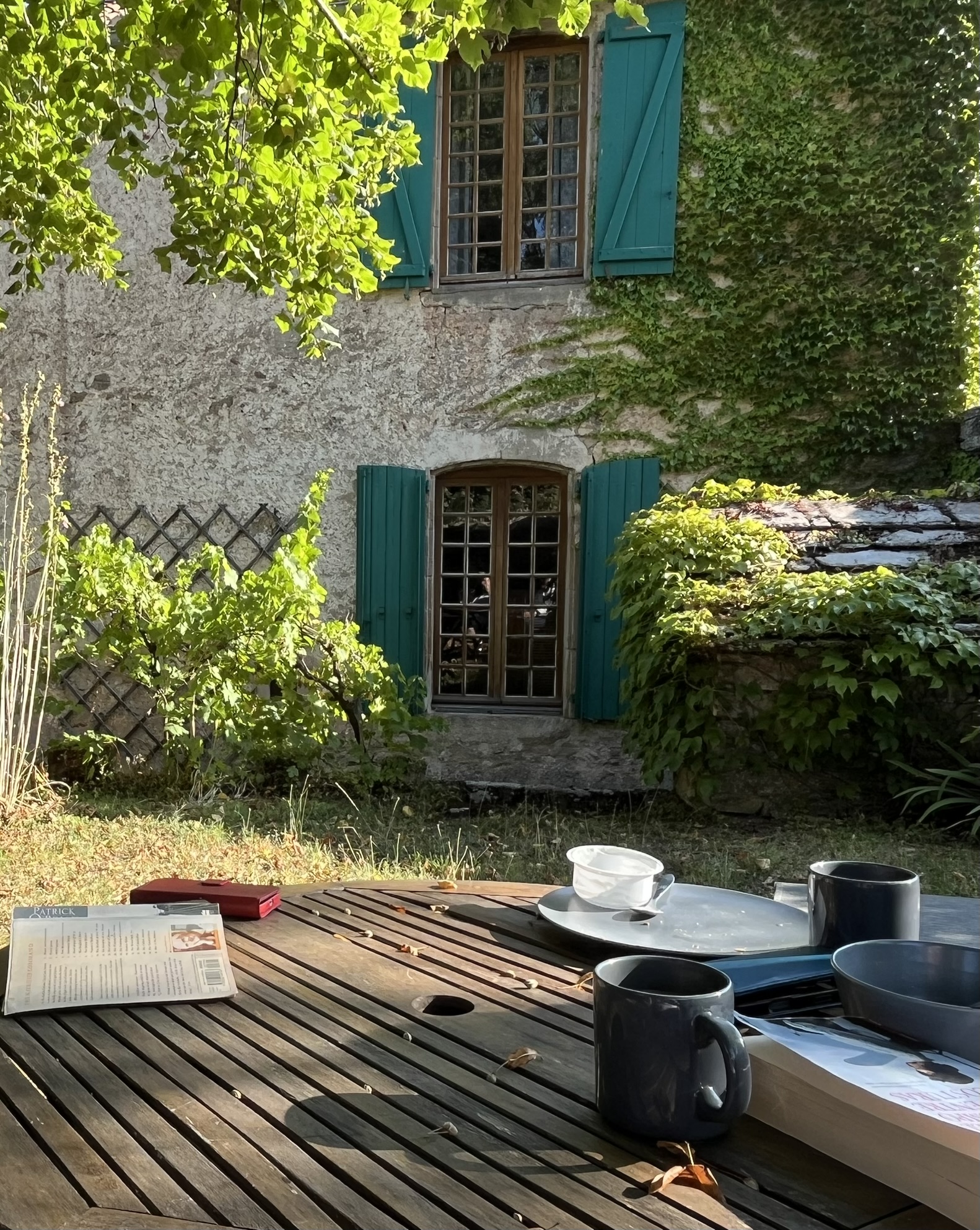
What a complete joy, I’m smiling just thinking about it.
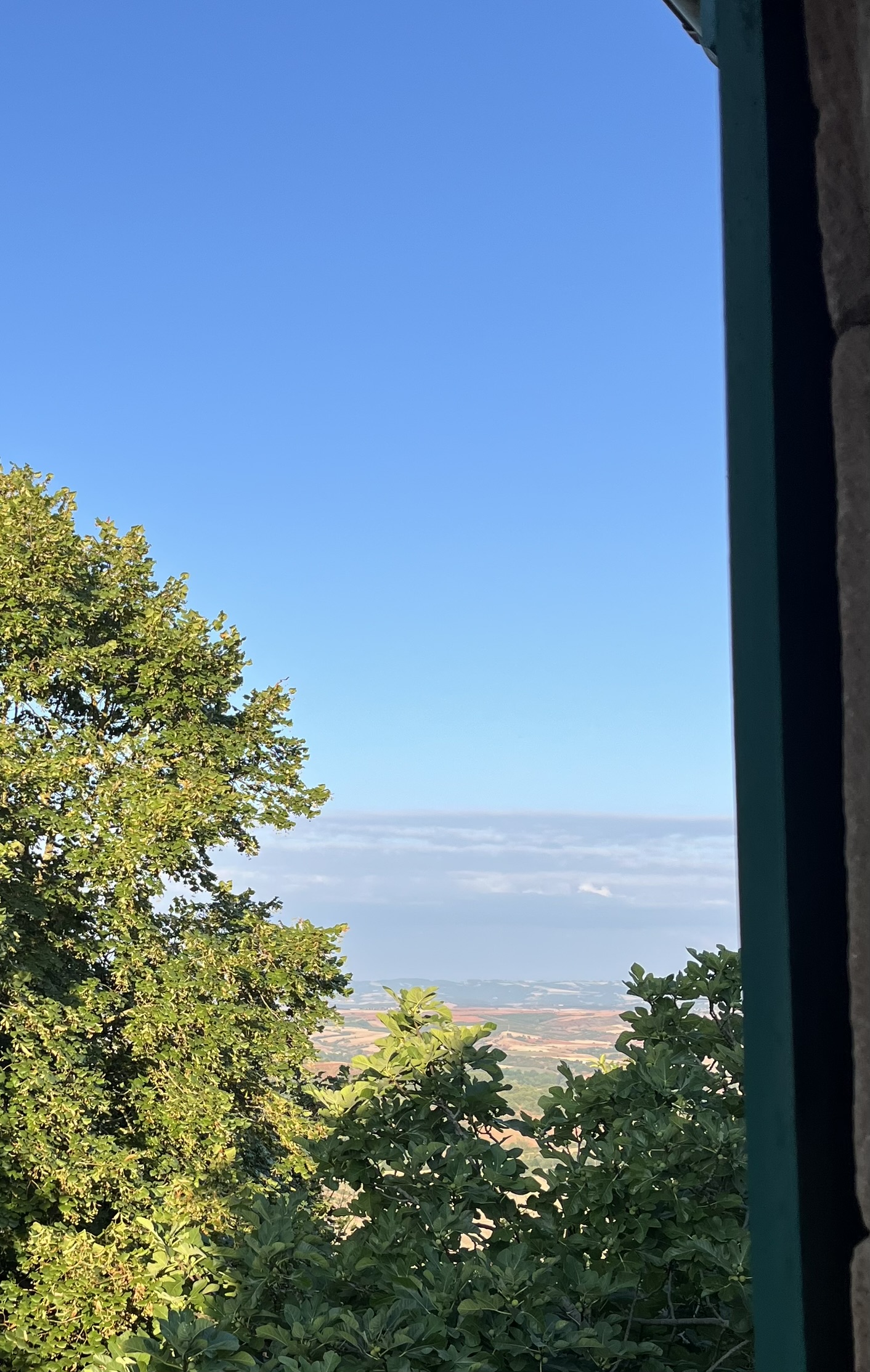
The surrounding village of half a dozen houses is indeed abandoned. It has been restored to a period around 1914 and attempts to show the steady trickle of visitors what rural life was like in a remote country hamlet one hundred years ago. You can visit the old school house, where the schoolmistress lived in, sleeping upstairs, and the village children were taught in a single classroom. You can visit a farmer’s house, complete with chickens in the yard, you can see some of the farming implements that would have been used at that time, and all the while you are aware of the stunning views across the countryside below.
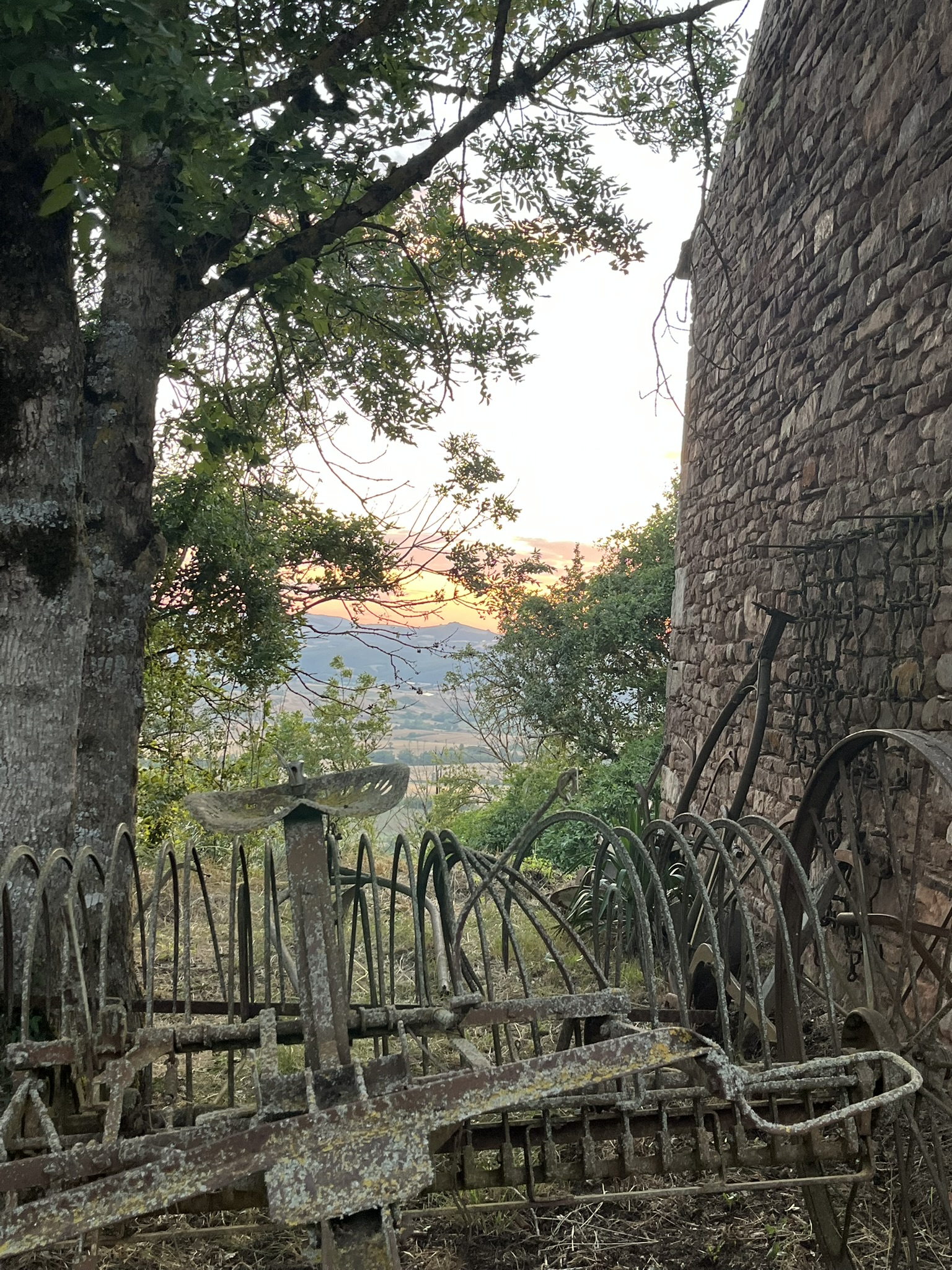
The château and village have been restored over a period of about 30 years by the Association of Friends of the castle, and what an amazing job they have done. There had been a castle on this promontory since the 10th century, and the castle had remained in private hands until it was abandoned shortly after the second world war.
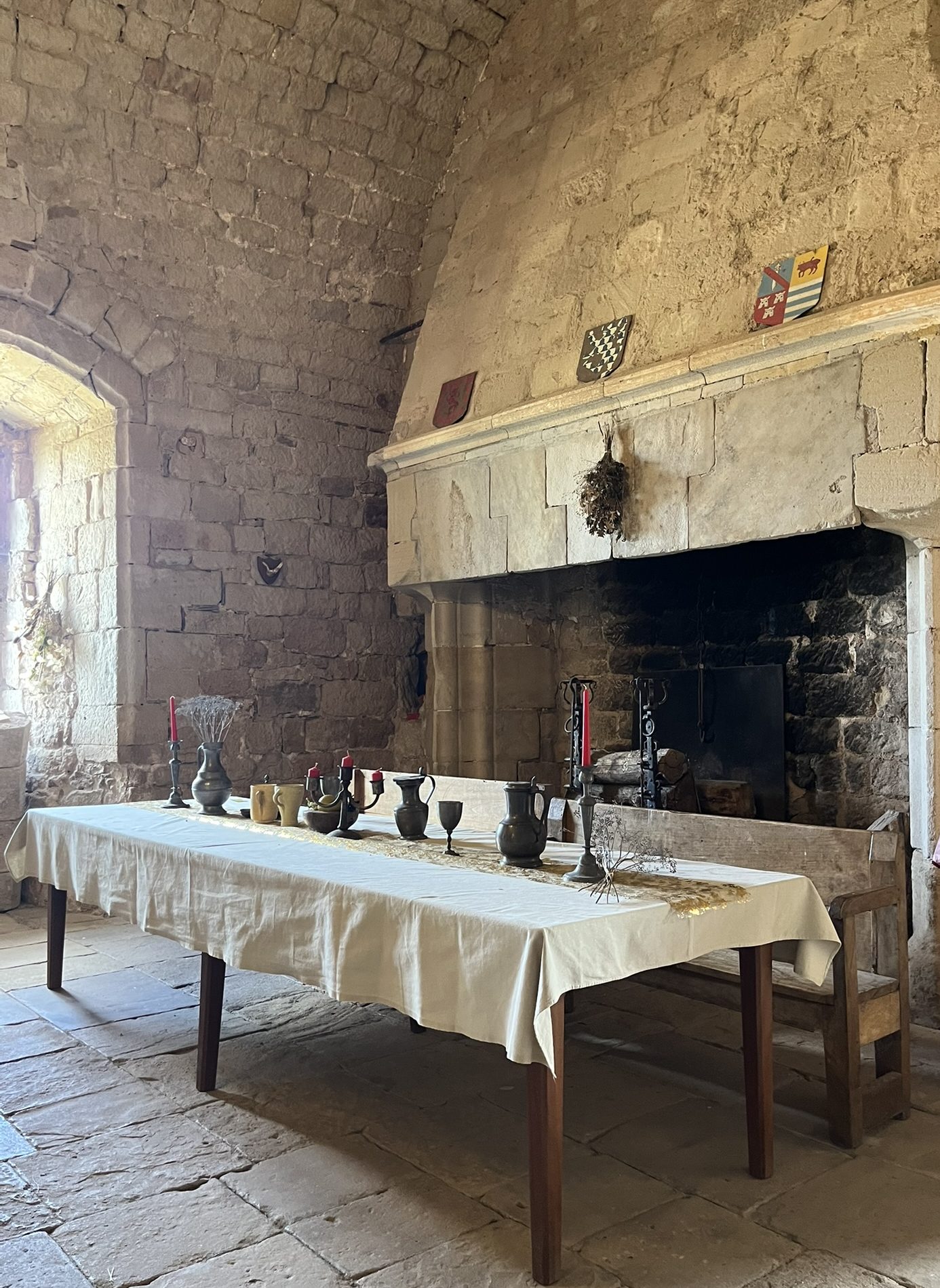
There are some genuinely interesting displays on all floors of the castle, with some rooms being furnished in medieval style to create an idea of medieval castle life.
So where is the weird, I hear you ask. Well, in historical buildiings that have the money for it, you often find actors dressed in period costume who explain the history and/or the customs of the time to you. Hampton Court Palace just outside London is a particularly good example of that. This charming castle clearly doesn’t have that kind of budget. There are several delightful volunteers around, but they are involved in running the little café and doing the odd guided tour. So I’m guessing someone came up with the idea of getting hold of some mannequins, putting them into medieval-style clothing and placing them in strategic positions in various rooms. Yes. Now, I know that the medieval period was full of things that we might today consider to be horrific or terrifying, so I wonder if that was the motivation behind the frankly traumatising figures dotted around the otherwise fascinating château fort.
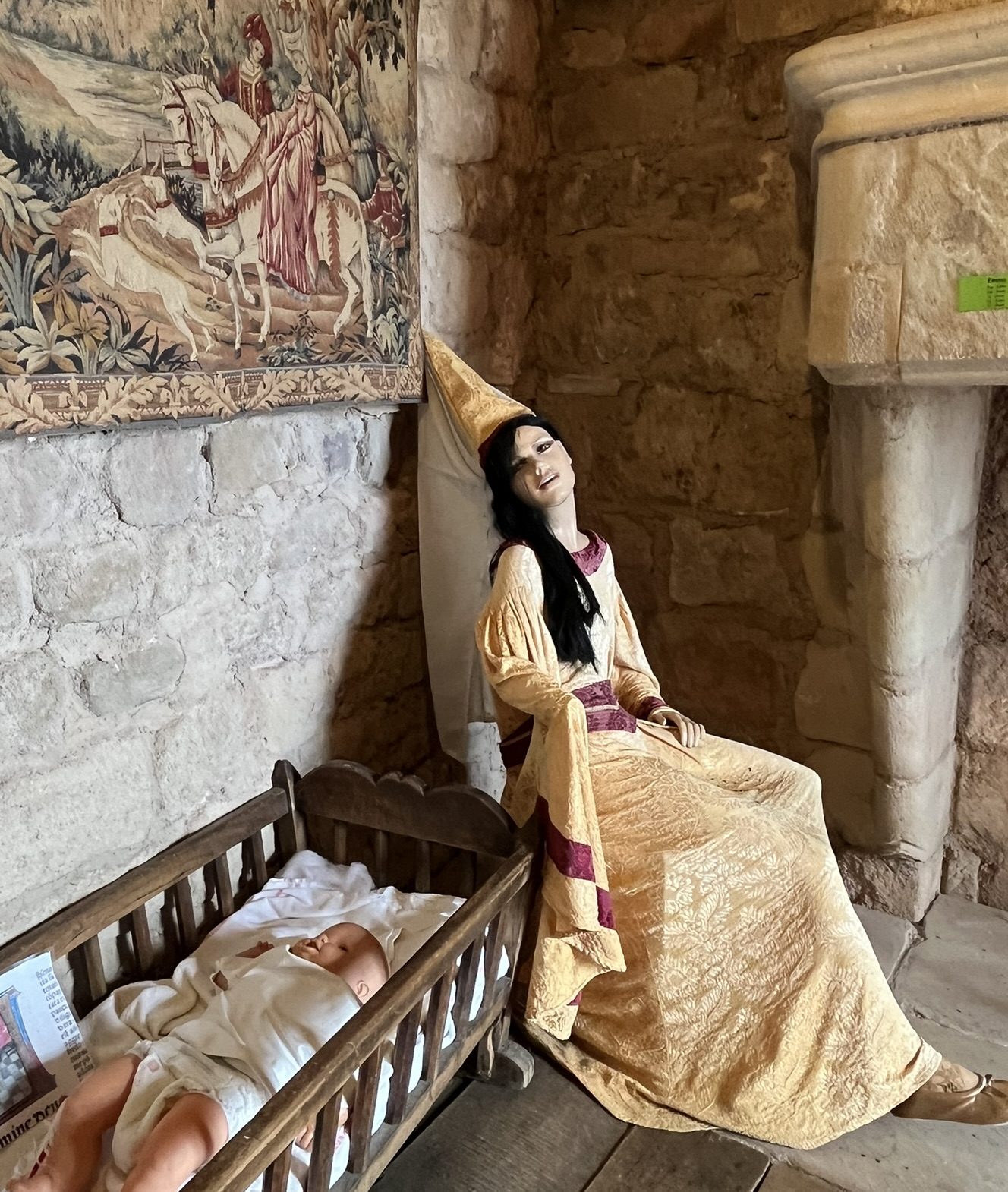
I couldn’t decide whether the mother (is it?) wearing a dunce’s cap and sitting beside a baby’s cot was grimacing maniacally, giving birth to a second baby as we watched, or faint with pain having just lost her right arm below the elbow.
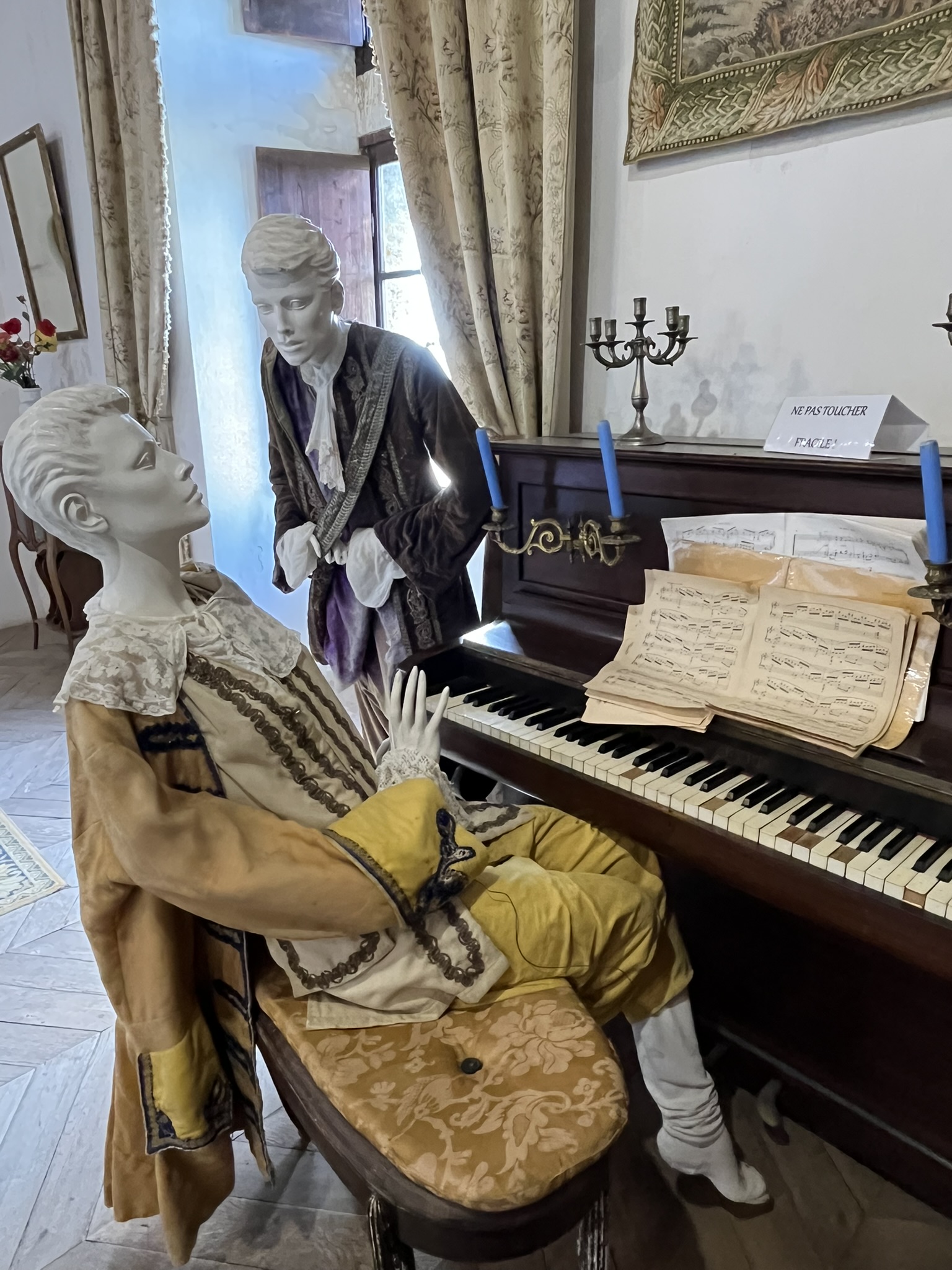
The androgynous characters flirting beside the piano were disturbing for other reasons. The one in the blue coat appears to be examining the unlikely cheekbones of the one in the yellow coat who is more concerned with how he/she is going to play that complex piano piece with nails of such impressive length. That would explain why we are told by the sign on the piano that they are both feeling rather fragile.
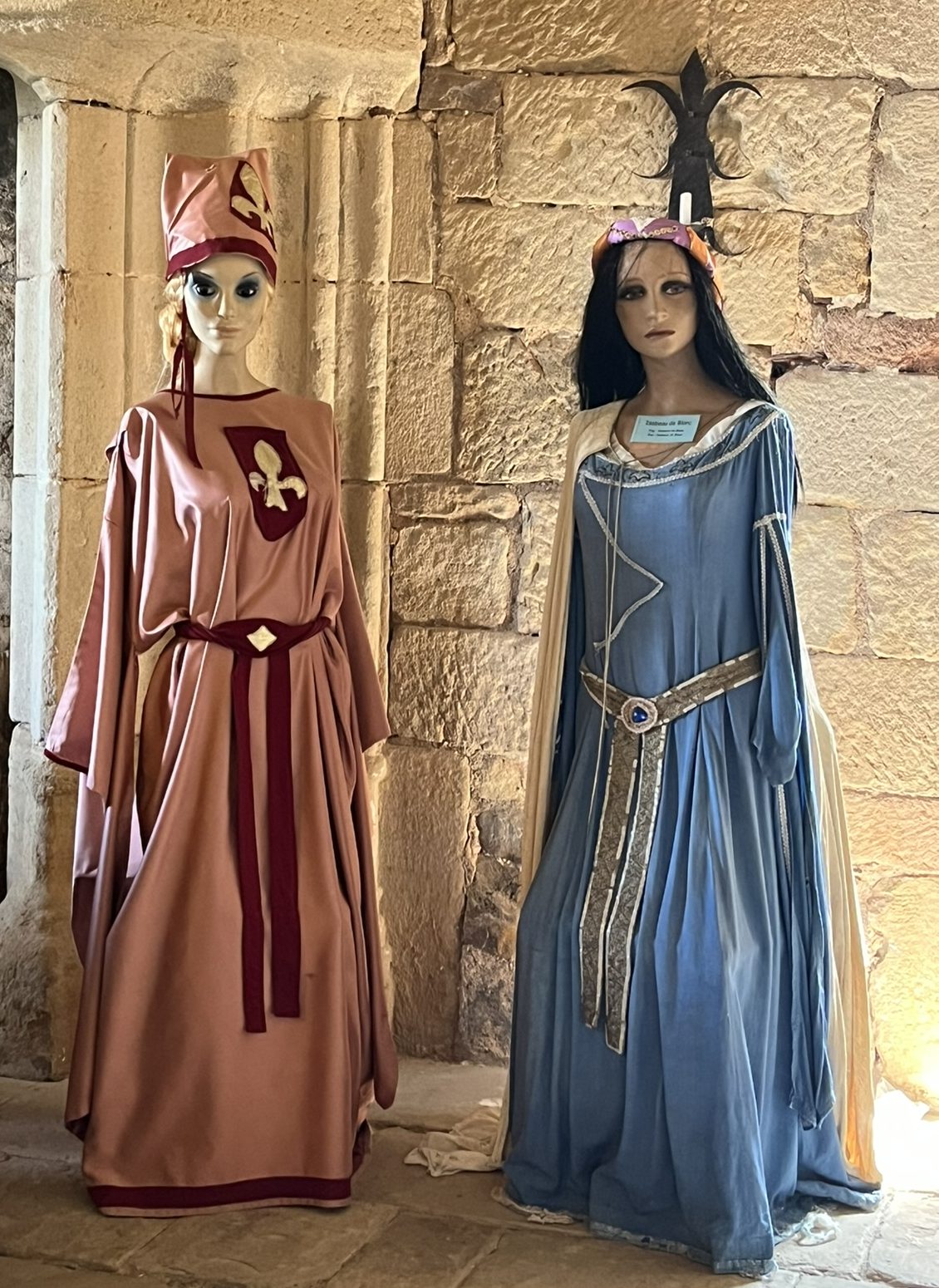
But the two I found most upsetting were two more figures standing by a chimney. The one on the left is obviously planning a horrible slow death for the dress designer who gave her a dunce’s cap that doesn’t even stand up, while the one on the right is looking justifiably distressed because she, like her companion, has just walked into a door and hasn’t brought enough make-up with her to cover up all four black eyes.
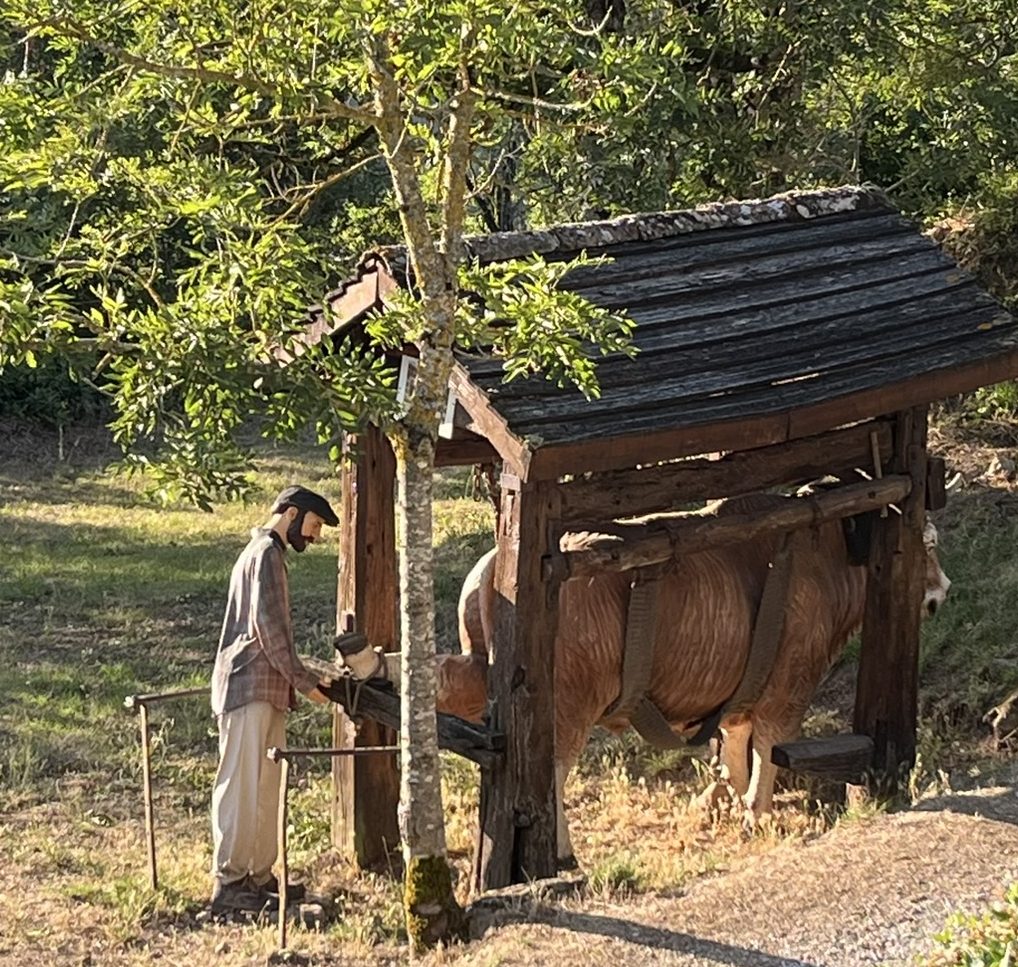
I was quite happy to return to our lovely curé’s house and sit in the garden with a cup of tea to calm my nerves, and I wasn’t at all concerned that the man who had been trying to shoe an ox outside the garden wall when we walked up to the castle, was still trying to do so.
If I remove mannequin-trauma from my experience, this was probably one of my favourite places to stay ever. I really didn’t want to leave, it was quirky and unpolished in all the best ways, and as we sat playing cards at the curé’s refectory table on our last evening I felt he really woudn’t have minded us being there.
Discover more from Wined, dined and rested.
Subscribe to get the latest posts sent to your email.
 Wined, dined and rested.
Leave a comment