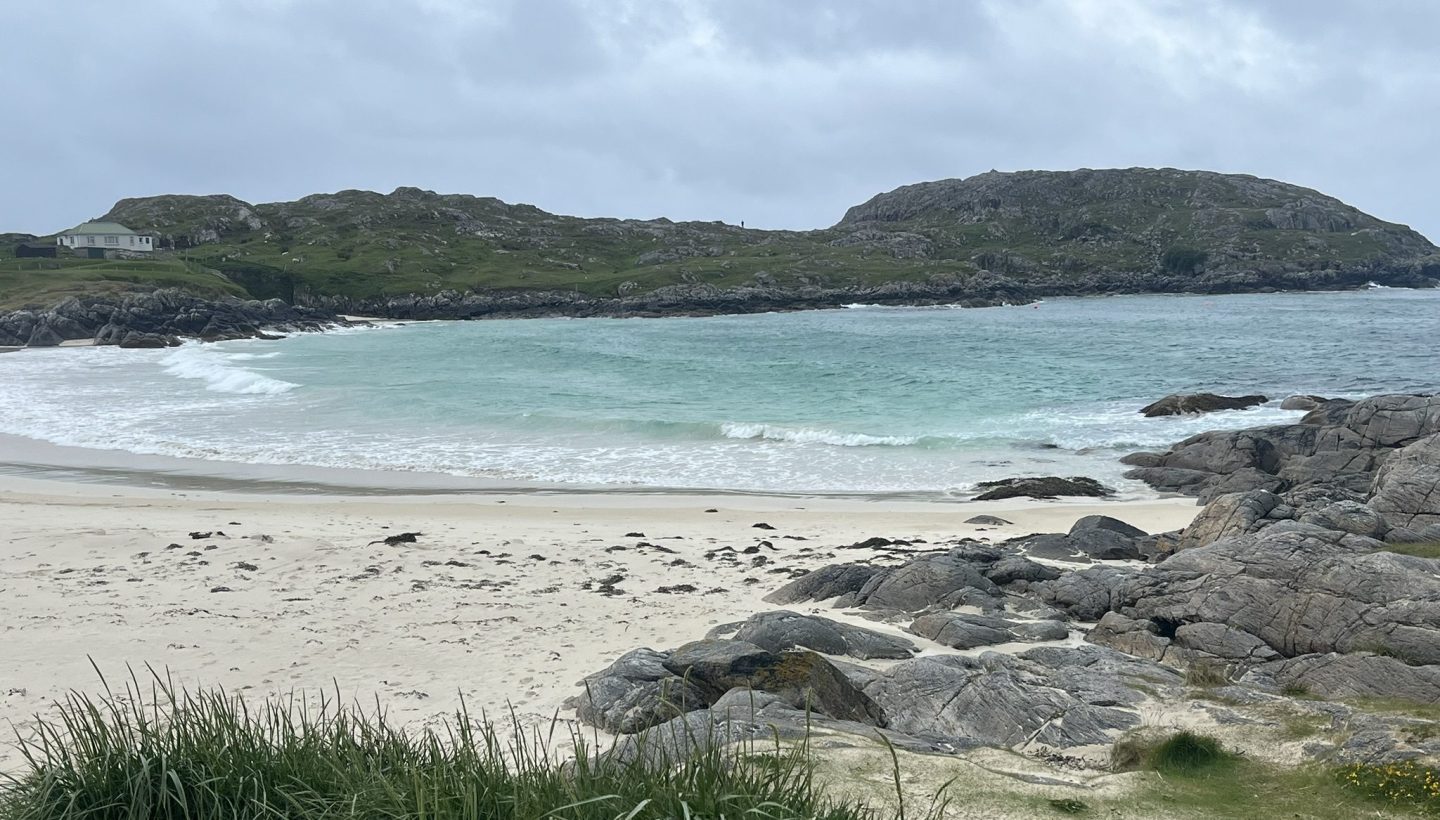
I suppose I must have read about the colours and scenery of Lewis before going there. So why was I so overwhelmed and unable to stop ooohing and aaaahing about it all? Maybe there is usually enormous emphasis on the rain, cold, wind; maybe the word “bleak” is overemployed. Maybe my avid reading of Peter May’s Lewis books, with their murders and angst-ridden ambiance, had influenced me. Maybe we were just lucky (thank you, climate change) that our visit coincided with several days of sun and therefore an infinity of beautiful blues.
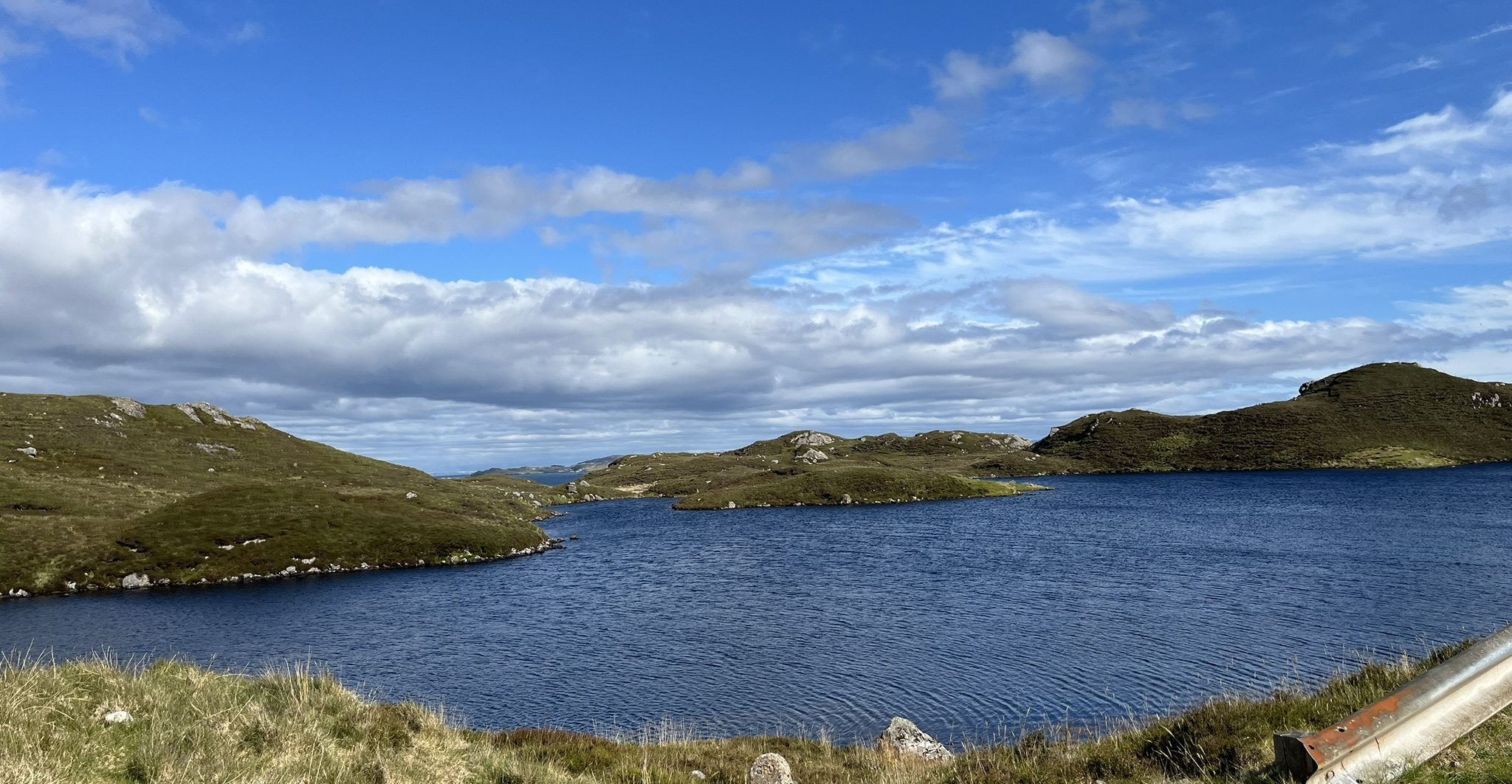
This view over Loch Direceit on the Harris part of the island was just the first of many. We were lucky enough to be taken touring around by someone who had lived and worked on the island for over 40 years, and he had planned the best itinerary ever. As we drove south from Stornoway on that first day our poor guide had to get used to the ever more hysterical squeaks from the back seat to “STO-O-O-O-P, what a view, wow that’s amazing!” and only the tiniest tightening of the cheek muscles suggested that he might have preferred to avoid screeching to a halt on narrow roads with other drivers glowering as they had to take evasive action.
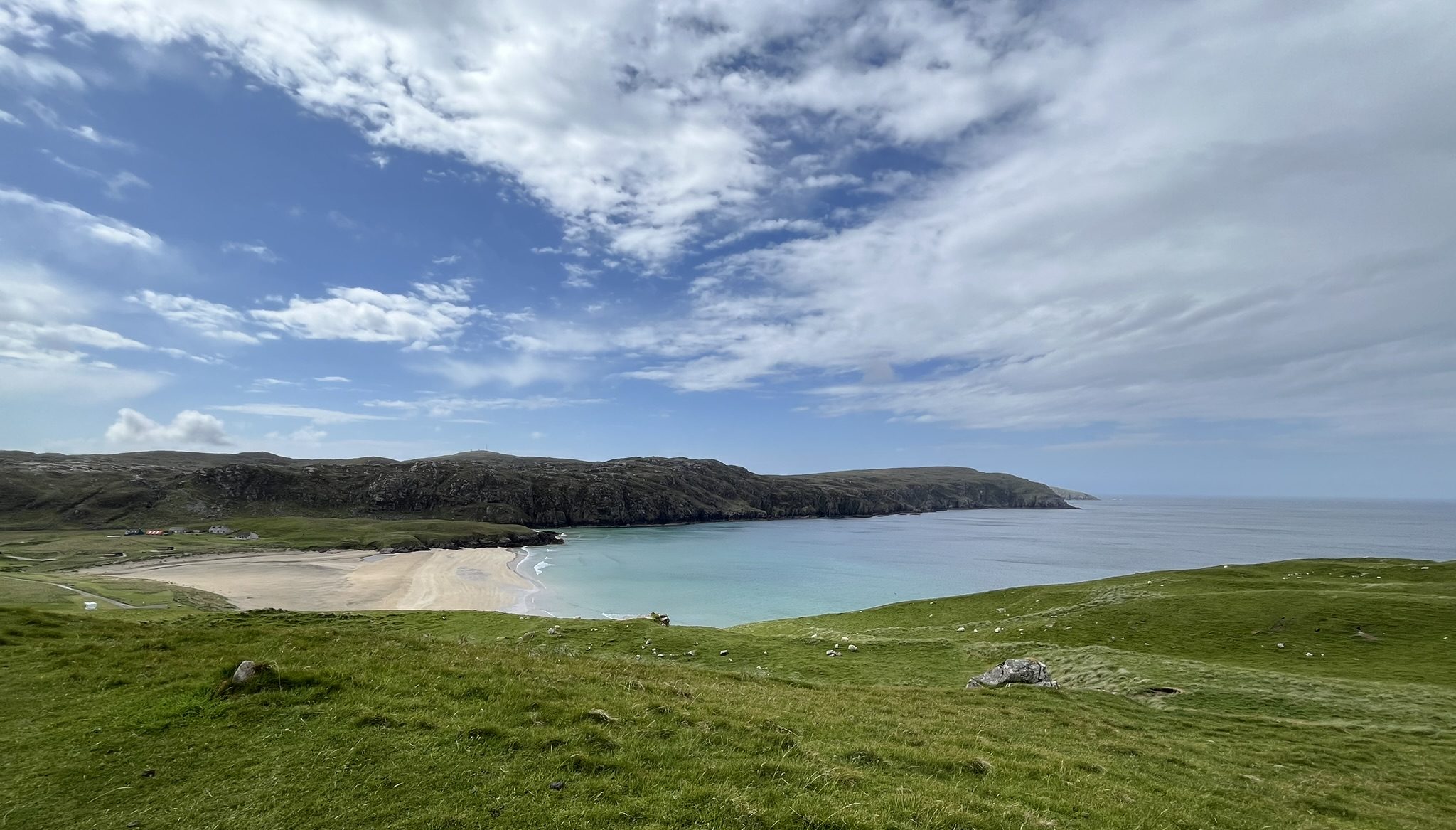
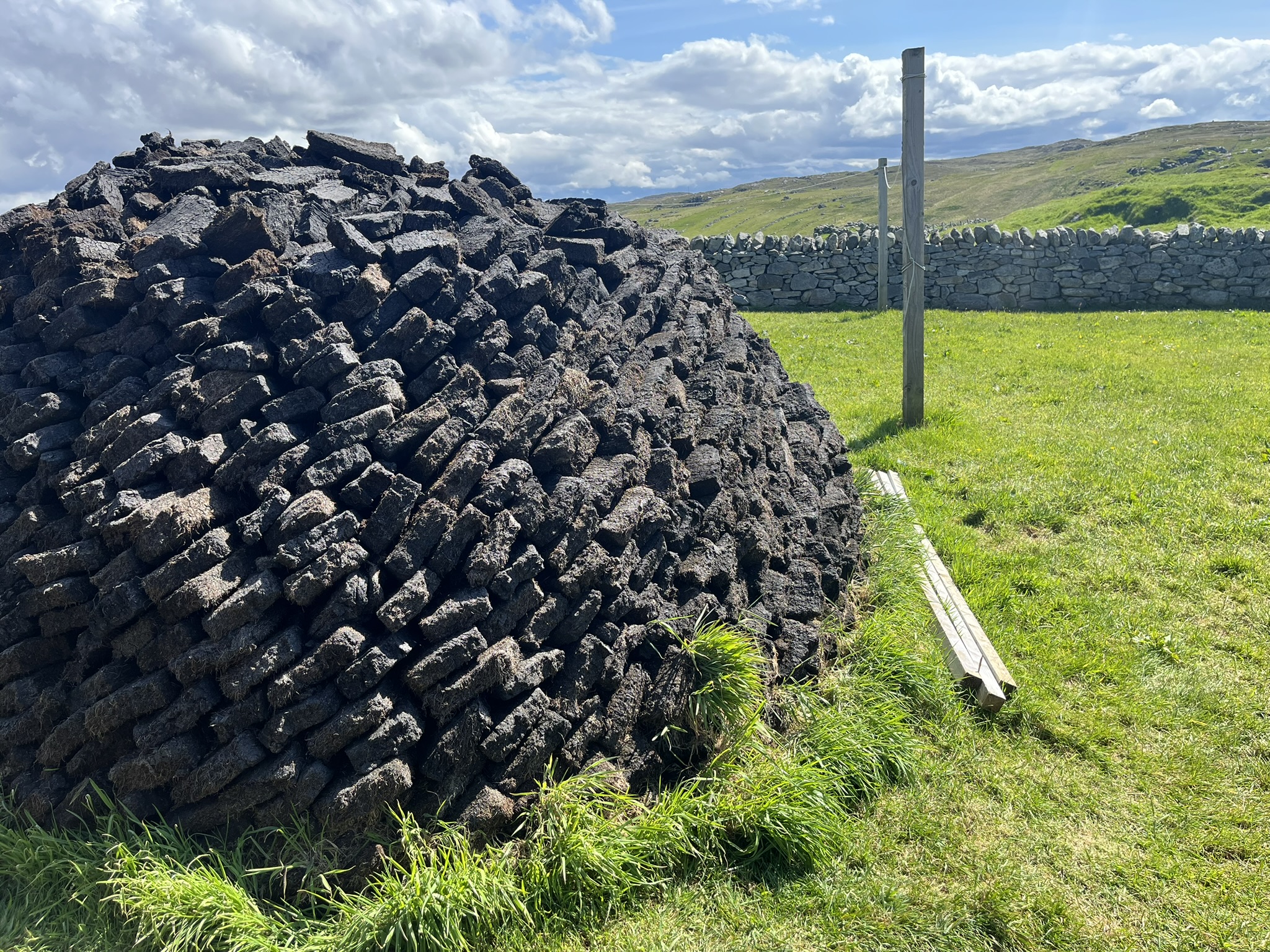
This was the view as we continued south on Harris, looking across the northern tip of Skye towards the main Scottish northwest coast. Kenny pointed out places dotted all over the landscape where peat had been, or was being, cut; to this day many islanders use peat to heat their houses. There is an art to the whole process, from the cutting to the preliminary stacking out in the open to dry to the piles of incredibly light little bricks of peat outside people’s houses. Here was a pile of peat outside one of the traditional black houses that we visited…..
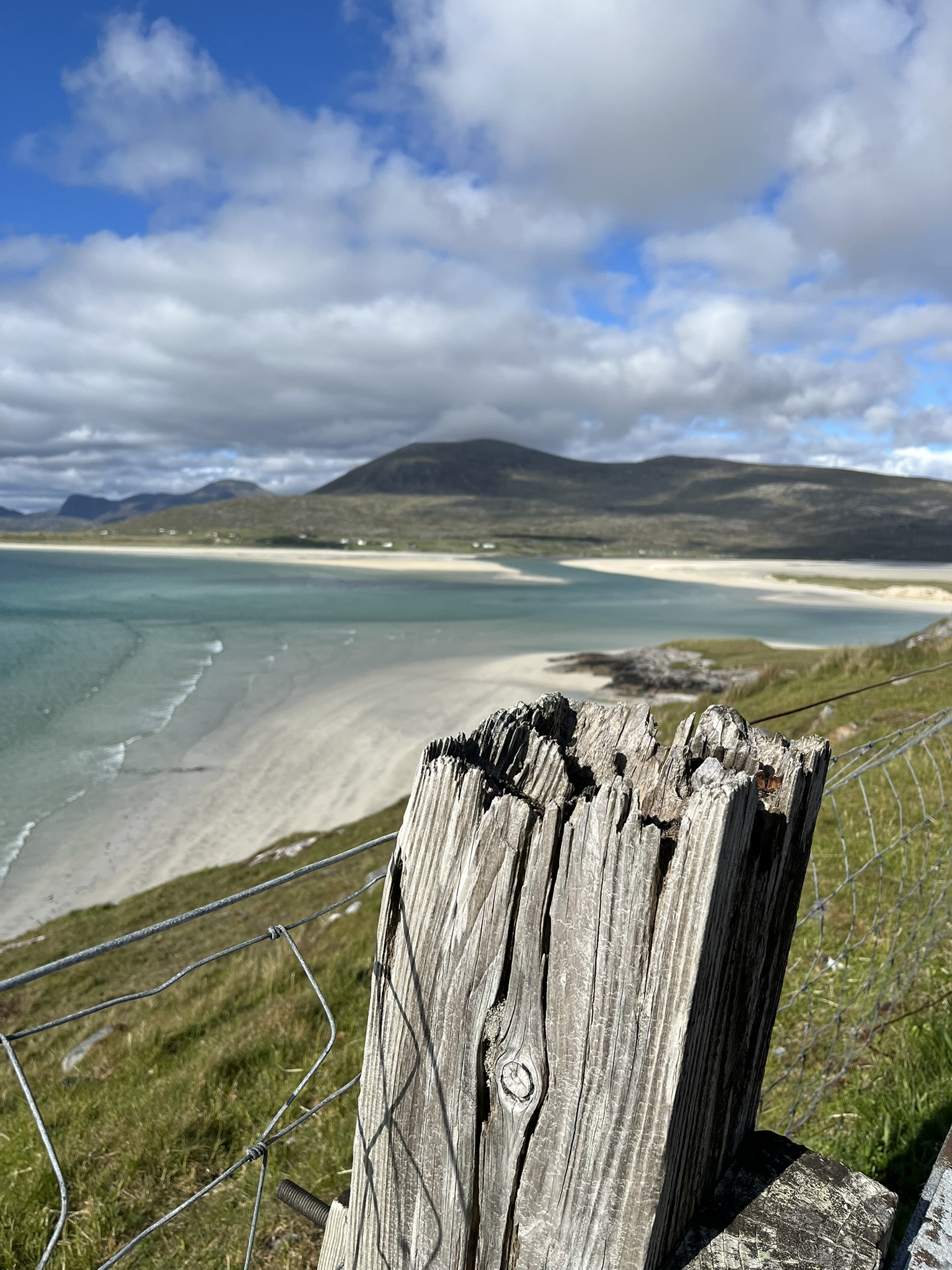
And round every bend in the road, it seemed, these panoramas of hills, water and white sand (oh and one rather photogenic fence post) spread out before us…
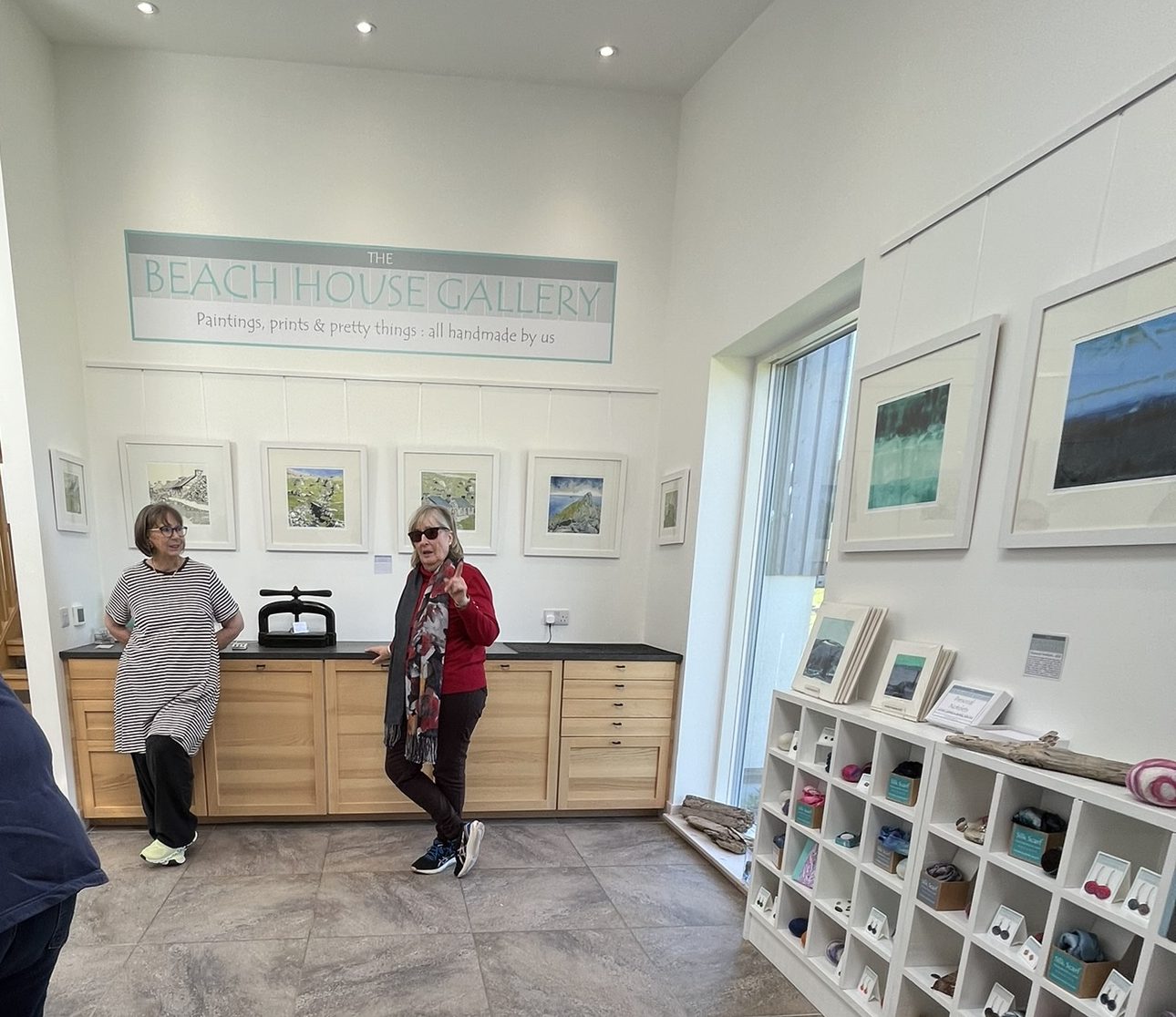
Water is everywhere on these islands, whether it’s the open Atlantic, the sea lochs, freshwater lochs and endless streams, and as you watch it reflecting, moving, changing colour and nurturing an astonishing range of wildlife you begin to understand why there are so many artists’ studios dotted around. There are so many talented painters, sculptors and artisans here it is quite remarkable. We stopped at many, this one – the Beach House Gallery – is in a stunning position above striking Dalbeg beach in the north west of Lewis.
Then there are the standing stones – the most famous ones are at Callanais, a little south of Dalbeg in the west of the island, and they are strikingly positioned on a slight ridge with panoramic outlook over sea and land. It is fascinating to think that the full height of these stones (the average height is around 3 metres) was hidden for centuries, if not millenia, until the then owner of Lewis, Mr Matheson, had 1.5m of turf removed from around them in 1857.
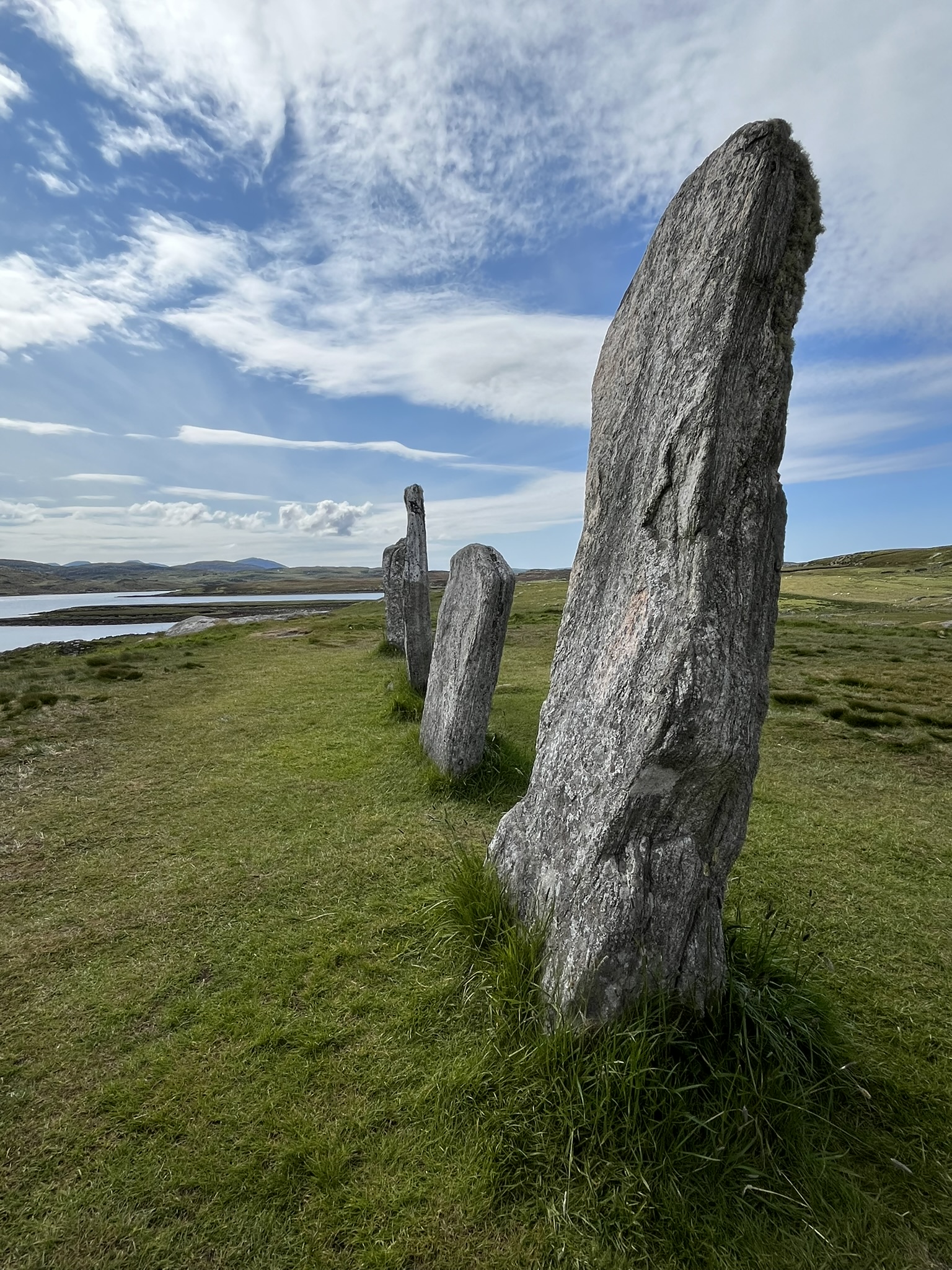
These stones apparently pre-date Stonehenge and there are several groups of them, indicating an area of huge religious importance millenia ago. My thought when I visit ancient stone sites like this – and they are always on high land, catching the worst of the weather – is how very cold those ancient people must have been, protected from the wind and rain only by animal skins. Freezingness is next to godliness?
As we marched back to the car after spending some quality time with these relics of the distant past, still cold and windblown despite the unusually blue skies and warmish sun, I reflected that it’s not just the Christians who have a history of welcoming hardship as a way to prove their devotion.
Discover more from Wined, dined and rested.
Subscribe to get the latest posts sent to your email.
 Wined, dined and rested.
Glad you are enjoying your visit. We are in Bangkok. Eating Thai curry. Yum!!😋
Sent from Yahoo Mail for iPhone
LikeLike