
On our journey through the Cuenca region of Spain this year we tried another Monasterio hotel – we’ve visited converted monasteries and refuges before, usually happily. You tend to get cloisters, which I love, an old-fashioned but peaceful atmosphere and locations off the beaten track. There are expensive ones and ridiculously cheap ones, ones that consider themselves still to be a haven for travelling pilgrims and ones that consider themselves to be a haven for free-spending young professionals.
This one leans more towards the ridiculously cheap, with a delightful Spanish breakfast included in the price. I feel the need to include the adjective “delightful” because I’ve read so many idiotic reviews on the internet of Spanish hotels, including comments such as “disappointing breakfast – no cereal or vegan options” or “breakfast was tiny, just coffee and toast and they didn’t even have Nutella”…. What is wrong with people? I constantly find myself wondering why they bother to travel at all if they are going to make no effort to find out a little about the culture in advance or to be prepared to try something new.
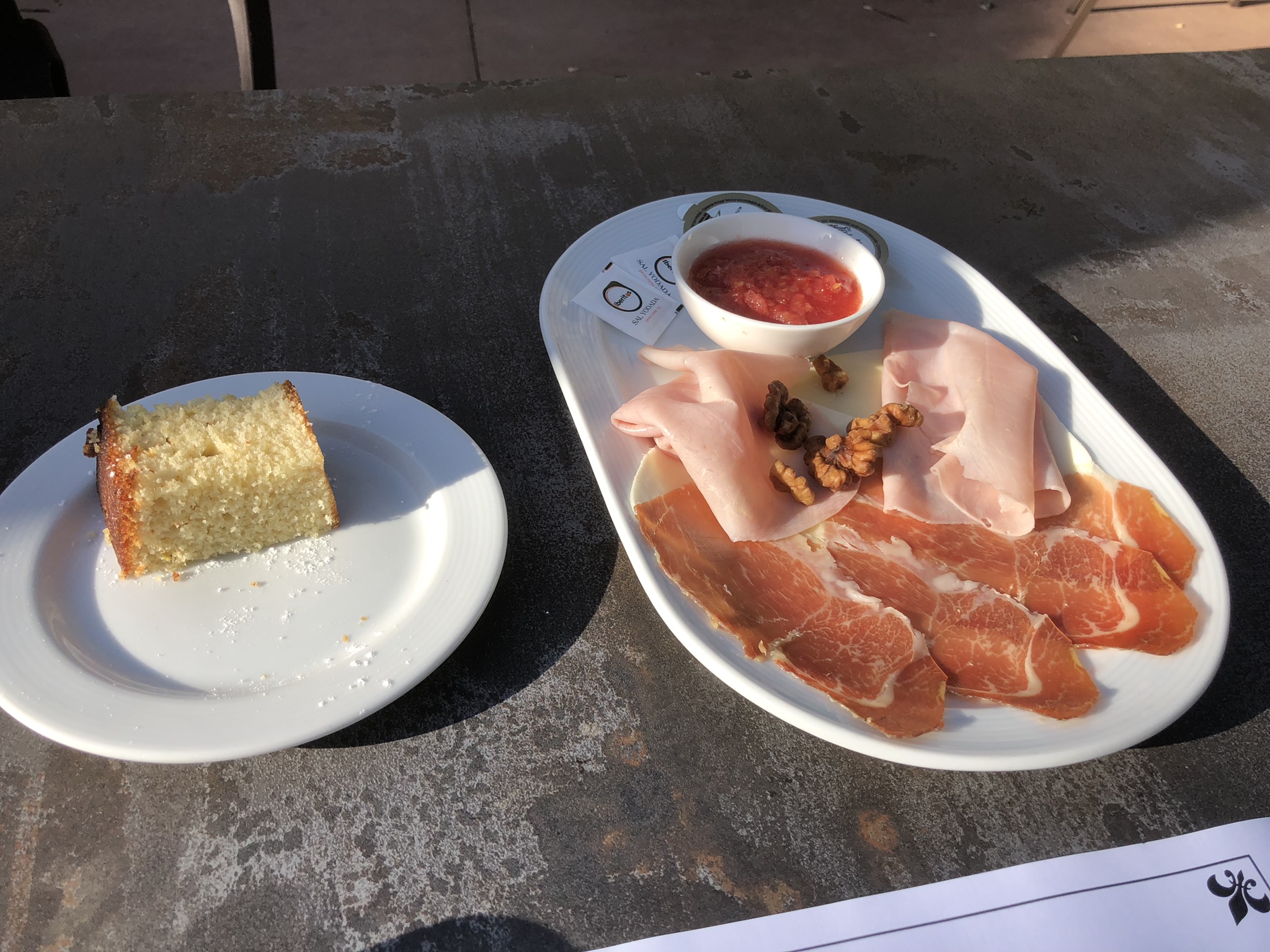
Rant over – I shouldn’t really be starting with the breakfast, but since I have I’d like to put on record now that it was generous and delicious, including both Spanish and “English” ham, slices of cheese, some home-made cake and (my favourite breakfast) grated tomato and tiny pots of olive oil for putting on a massive slab of toasted local bread. Oh and it was served in the garden.
The place is beautifully out of the way, while still being near enough to the route through to the south of Spain that it is entirely practical to use it as a stopover. It’s got those deserted little country roads you get in that hot part of Spain where you begin to wonder if you’ve driven back in time and any minute now you’ll overtake someone driving an ox cart or setting off for the Crusades.
The monastery is on the edge of a tiny town called Garaballa, with a car park from which you walk down a tree-lined path towards the monastery itself.

There’s a feeling of moving from the concerns of everyday life (e.g. your overheated car, overheated partner, overheated brake pedal foot etc) to the tranquility of a place of reflection. That’s a nice touch, and you can admire the well worked stone decorations as you stroll along….

Tejeda Monastery as it stands now is Version Two – version one was set up in 1205 very shortly after a local shepherd first saw the image of the Virgin in a yew tree (tejo in Spanish, hence Tejeda) and apparently less than 100m from where the yew tree stood. Not a wise choice, as it turned out, since it was by the banks of the river Moya and was soon washed away by a flood.
The current building was finished in 1581 and although it wasn’t washed away, it went through some rather major disasters in the 19th century – in the War of Spanish Independence (1808-1813) the monks were thrown out and the building converted to a field hospital, then a few years later in the short-lived “Trienio liberal” from 1820 to 1823 presumably the ruling liberals didn’t take kindly to religion so the holy brothers were thrown out again, then between 1835 and 1837 the monasteries were all taken over and privatised, but some religious people must have made their way back to Tejeda because during the Spanish civil war (1936-1939) they were again thrown out and the monastery returned to being a field hospital. These monks, part of the Trinitarian order, must have been particularly tenacious in their belief.
The Trinitarian order was set up in France during the time of the Crusades to negotiate the release of Christian prisoners across Europe; I would say that this seems like a particularly useful purpose for a religious order, and as an ignorant outsider I wonder if their skills could not be revived in our modern times.
But back to the hotel. The building has been beautifully restored, the bedrooms are simple but discreetly well-equipped.


.. again (sorry, mini rant alert….) I’ve read comments about this very hotel with travellers complaining about the size of the rooms. When you stay in a former monastery the rooms were once monks’ cells, and the number of 17th century monastic residents with king size rooms, mini bars and en suite luxury bathrooms was probably limited.
So the rooms are not large, but they have lovely en suite bathrooms with – we loved this touch – a pack of ‘sustainable’ bathroom essentials, including bamboo toothbrushes and paper-wrapped little eco-soaps.
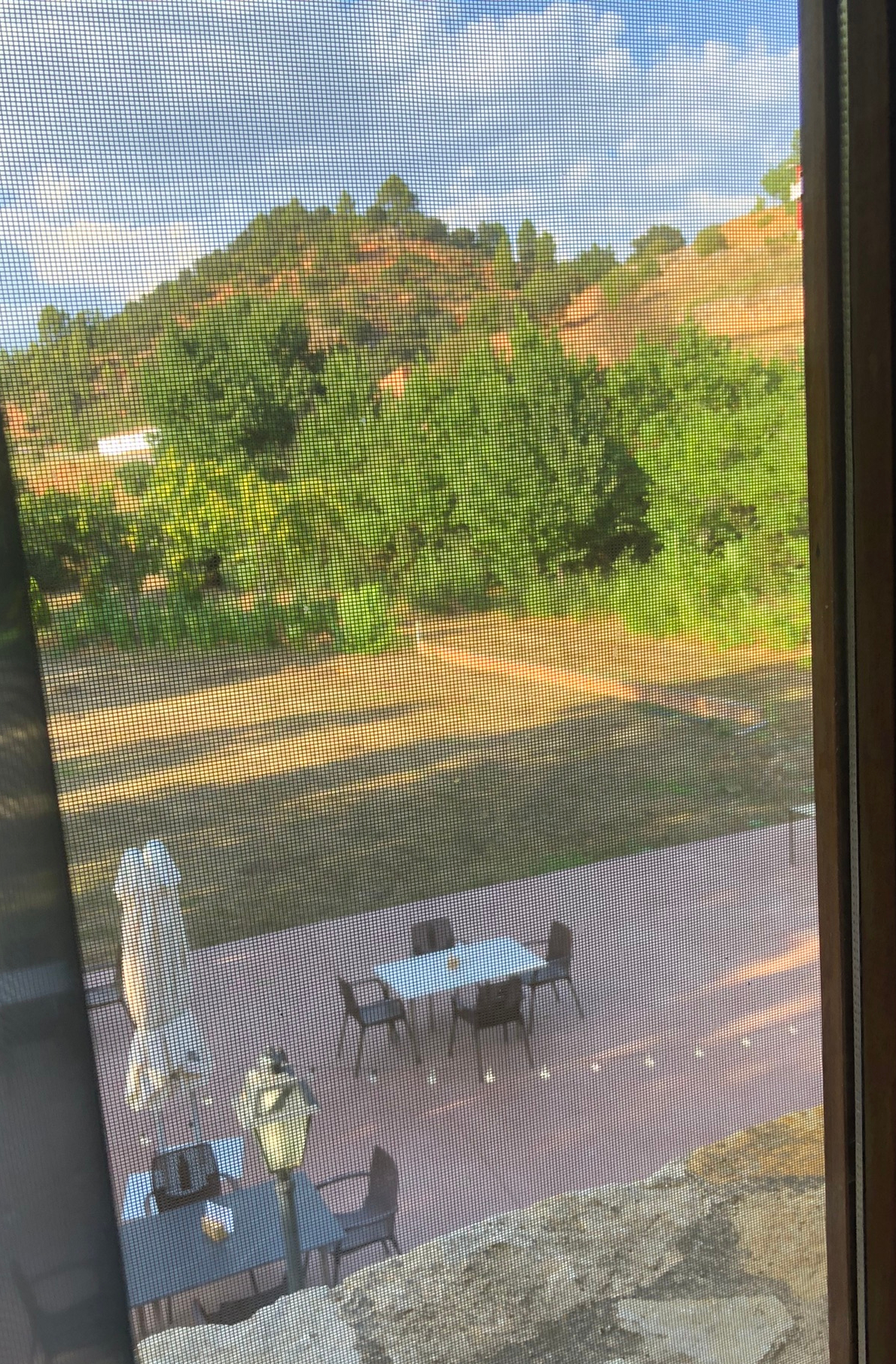
There is a simple and pretty outside terrace where you can brave the flies and have a drink or a meal. We had a lovely drink outside before supper but despite using our best Rafael Nadal forehand swings every few seconds the flies continued to throw themselves at us so we retreated indoors for supper.
The food was very simple Spanish country food, nothing exceptional but tasty and reasonably priced. The waitress was charming and chatty – she asked if we were eating inside to escape the flies which she said were like helicopters, and leaned in to whisper “they’ll all be in within the next few minutes”, pointing to the other optimistic travellers on the terrace swinging their arms like some crazed aerobics class. And she was right.
Finally one cannot talk about any of these monastery hotels without mentioning the obligatory and always extraordinarily ornate attached chapel which we have now come to expect but which can be a bit of a shock the first time you meet one. However humble the monastery or refuge in Spain it will have a chapel where everything that wasn’t actually moving when the place was built will have been covered in gold leaf. And if it had a chequered history, as this one did, every time the place is sacked, privatised, looted etc someone will come along and put gold leaf everywhere again.
Here it is, attached to a pretty but largely unadorned religious building where the main activities were meditation, prayer and prisoner exchange:
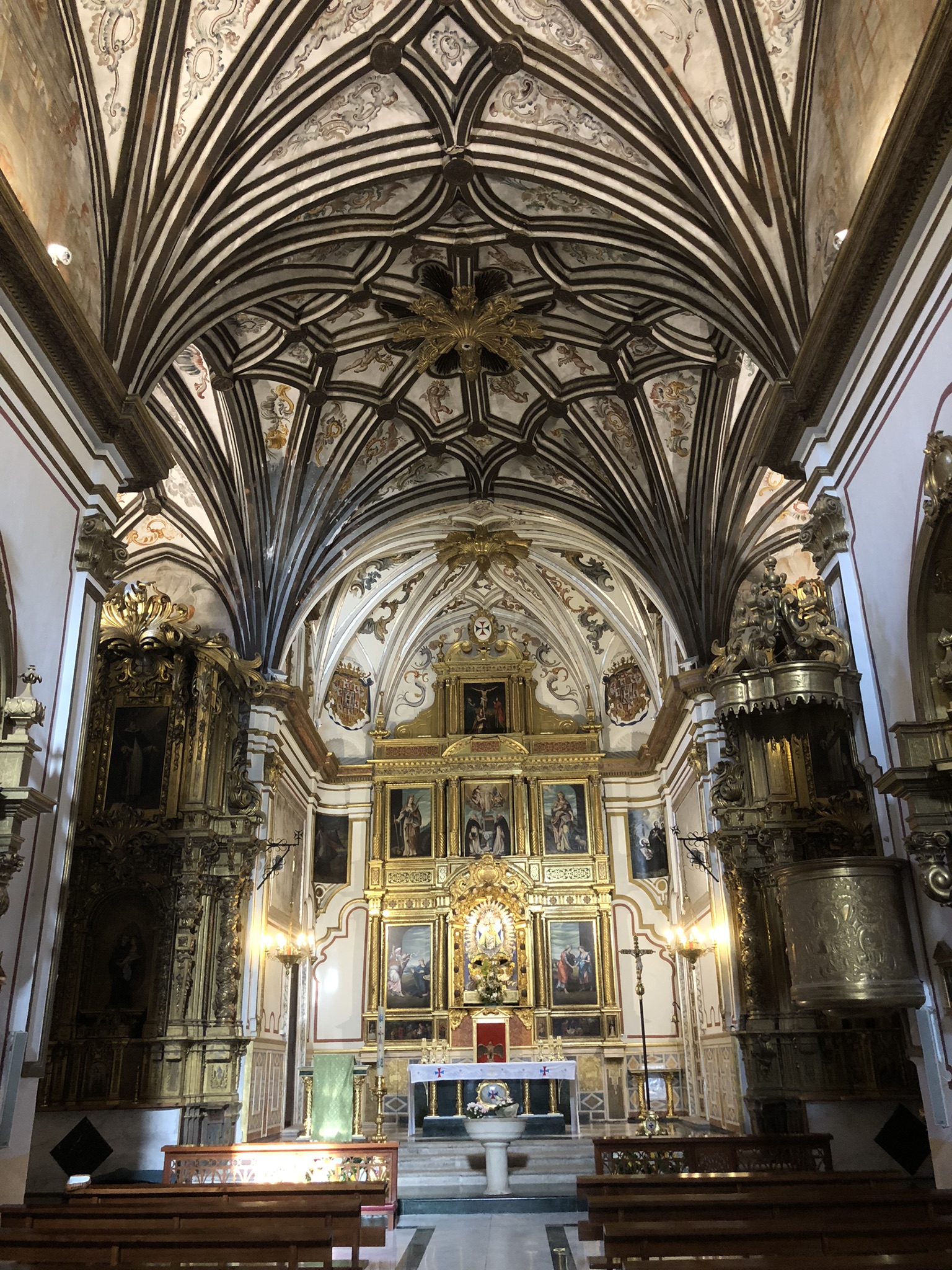
As I say, we expect this now, and it still is always something worth seeing. This time, though, there was something I’ve not seen before in such places:
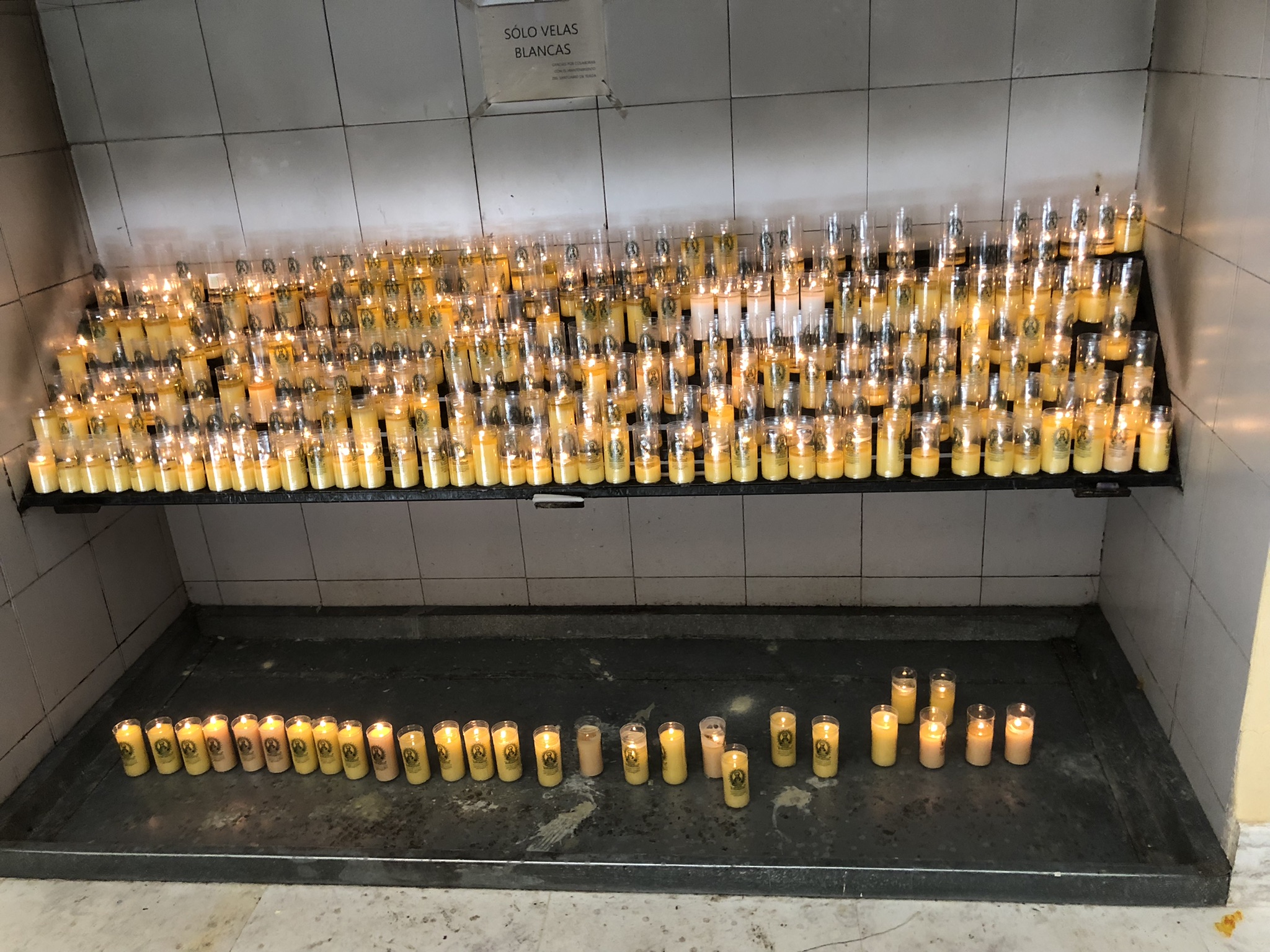
Of course there are candles in religious places, but SO MANY of them, and for a small monastery chapel with no monks? The building is still consecrated but it is attached to a hotel. Who lights them each day? There are no more monks here. Do people come in from the village on the way to work to light a candle? Is there a person in charge of lighting each one every morning – job description “clean the bathrooms, make breakfast and spend the afternoon lighting candles”? Because they are real candles, not battery-operated ones, and it must take a while.
This is one of the joys of driving through un-touristed areas. We had a lovely, relaxing stay after a long day exploring the centre of Spain; thank you, Monasterio de Tejeda, and we’d love to come back one day.
Discover more from Wined, dined and rested.
Subscribe to get the latest posts sent to your email.
 Wined, dined and rested.
Fascinating article with fabulous photos!
LikeLike