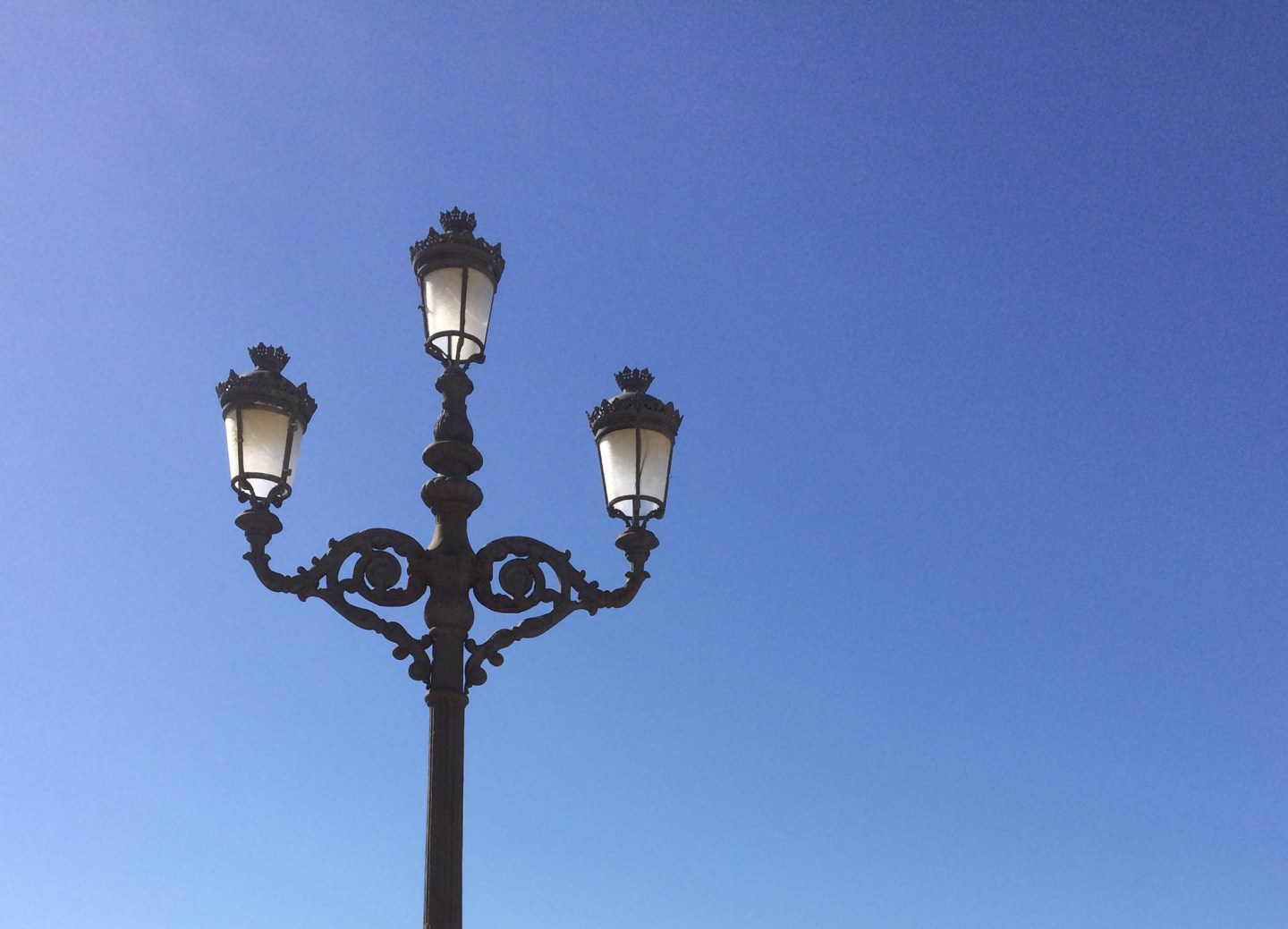
We headed down to Cádiz on a glorious sunny day in October, ready to have our (rather poor) impressions of the city some 30 years ago changed. I have vivid (albeit 30-year-old) memories of a long straight road into the old part, the blinding blue sky, a short crowded crescent of yellow sand, echoing the shining yellow dome of the cathedral, but also in my memory are smelly, dirty, hot back streets smelling of drains, and a slightly unsafe feeling.
Well, the sky is as blindingly blue now as it was back then, and the beach is still there, but everything else seems so much cleaner, fresher and less threatening.
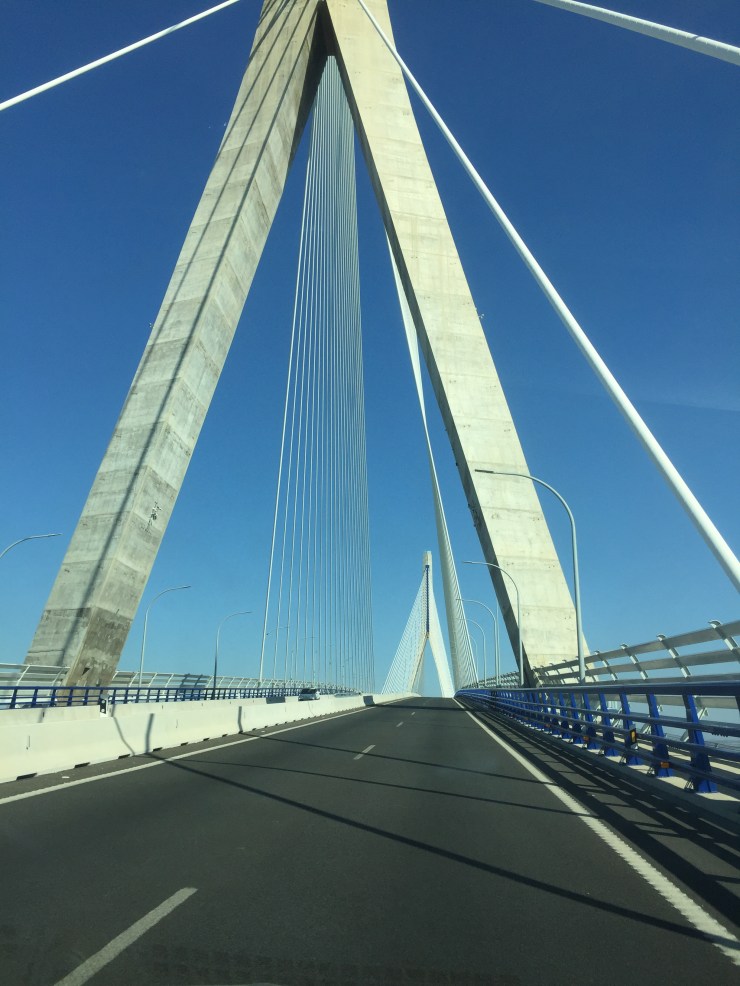
For a start, you no longer have to drive in along that long dreary road lined with 1950s and 1960s warehouses. In 2015, at a cost of over half a billion euros and having taken more than eight years to build, the bridge known as “La Pepa” finally joined Cádiz to Puerto Real. It was designed by a Spanish engineer, Javier Manterola, and is one of the tallest in the world; for example it is both taller and longer than the Golden Gate bridge in San Francisco. It is a really beautiful structure, visible from afar – here is a picture taken by Julia from the top of the Tavira Tower showing much of Cádiz, with the bridge in the distance.
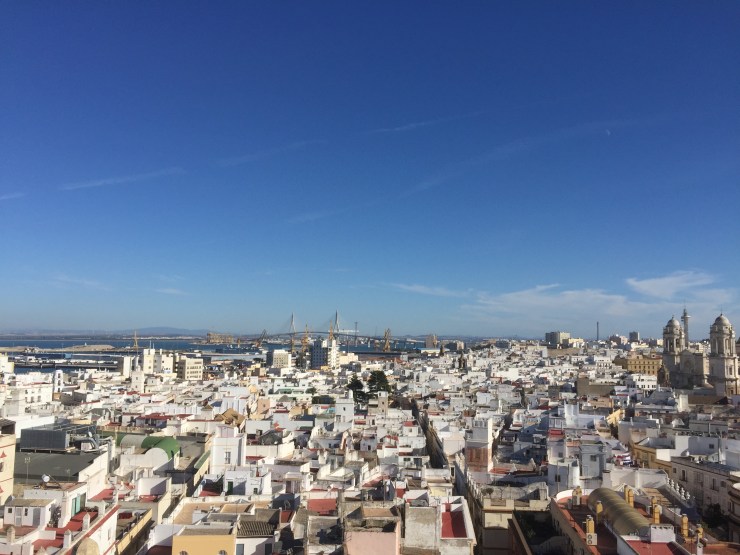
I should explain that the Tavira tower, one of many former watchtowers in Cádiz, now contains a Camera Obscura, a kind of giant pinhole camera like the one in Edinburgh, enabling one to see across a large area; I didn’t go up it, but the others in my party did.
The next photo of this magnificent piece of engineering was taken from our car as we left the city.
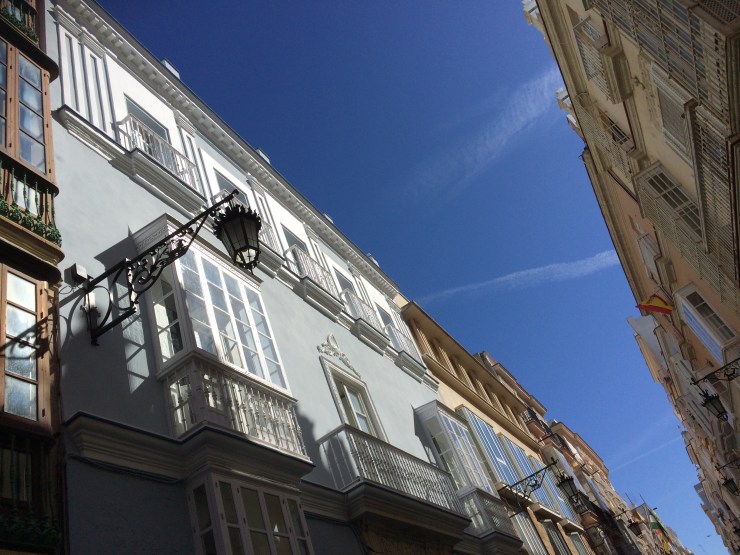
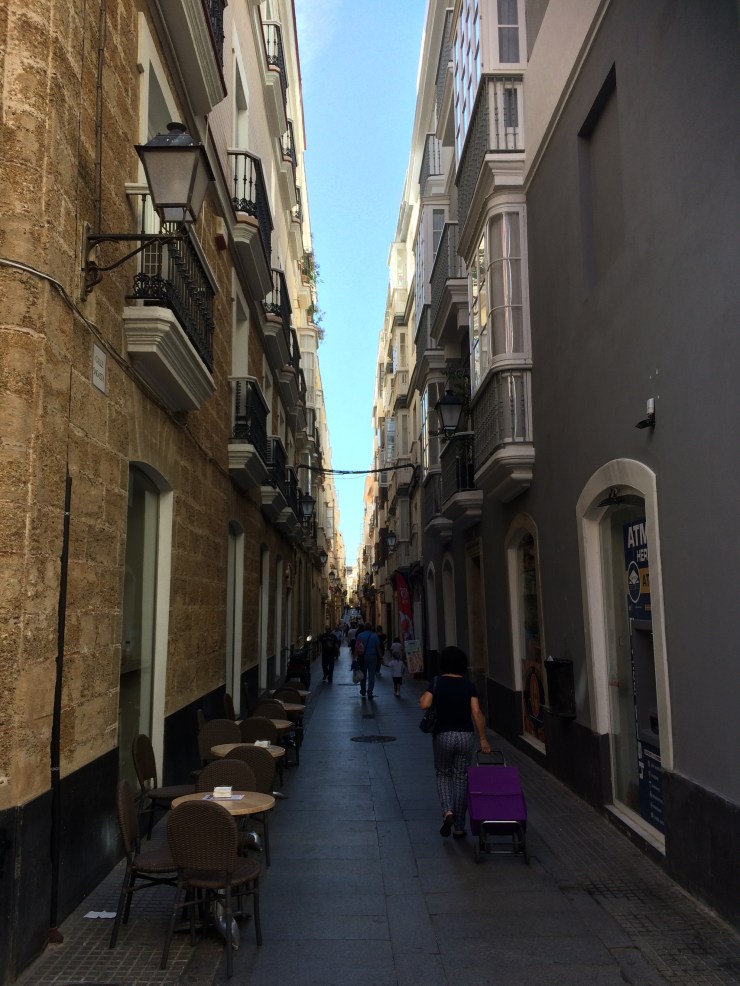
But once in the town itself, how thirty years ago did I not notice the beautiful architecture, tall-windowed pastel coloured buildings lining long straight streets running straight as an arrow across the part of the city that had to be rebuilt in the 18th century after a disastrous fire?

I suppose there may have been some painting since 30 years ago, but the elegant glass-covered balconies must have been there all along.
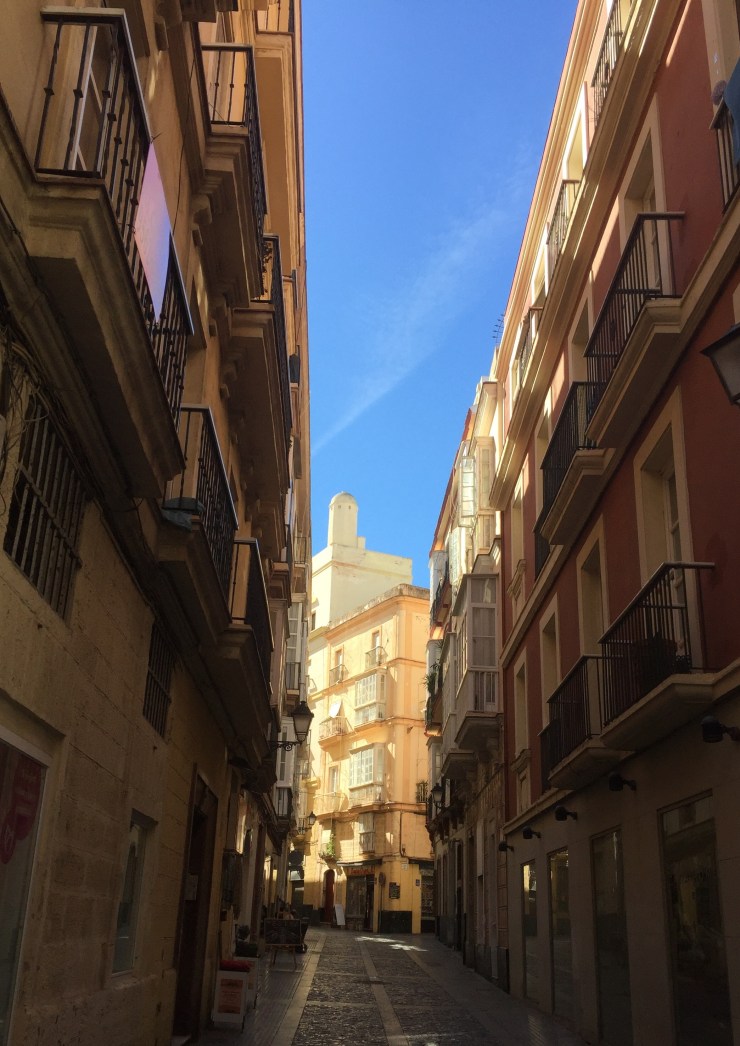
And the blue blue sky beams heat down at you as you explore street after street, creams and oranges and yellows and greys…..
… and from time to time you come to a square…..
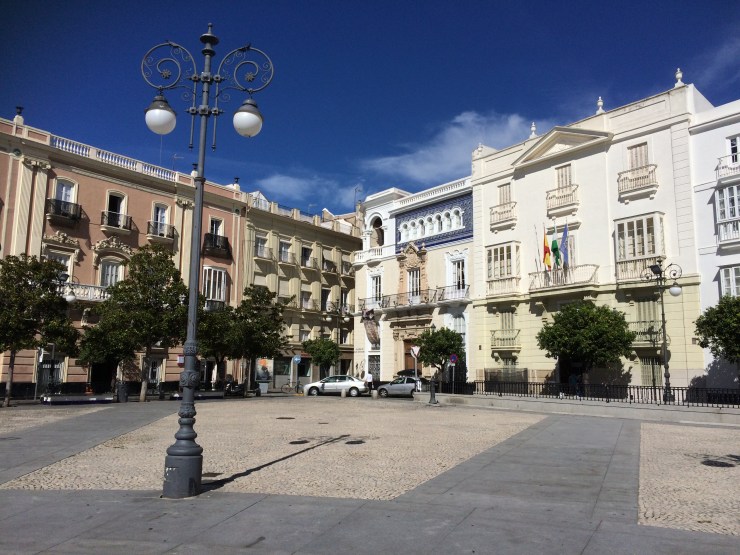
and a building that is clearly important but as a tourist all you want to do is admire its colour and proportion.
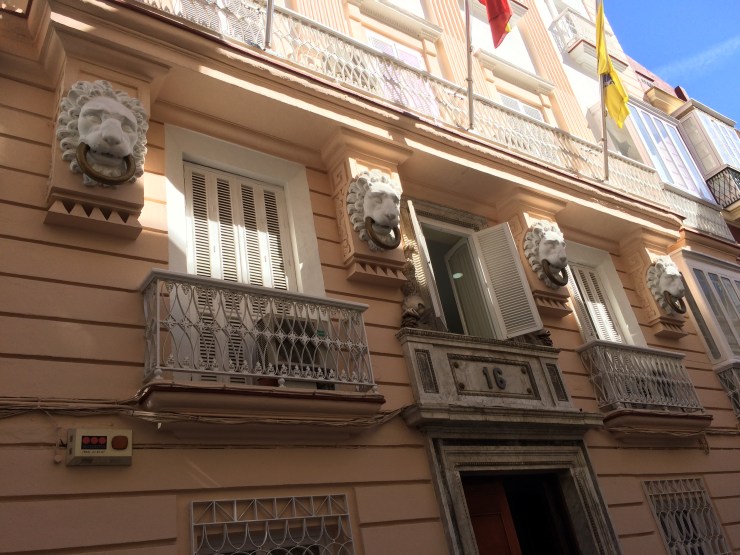
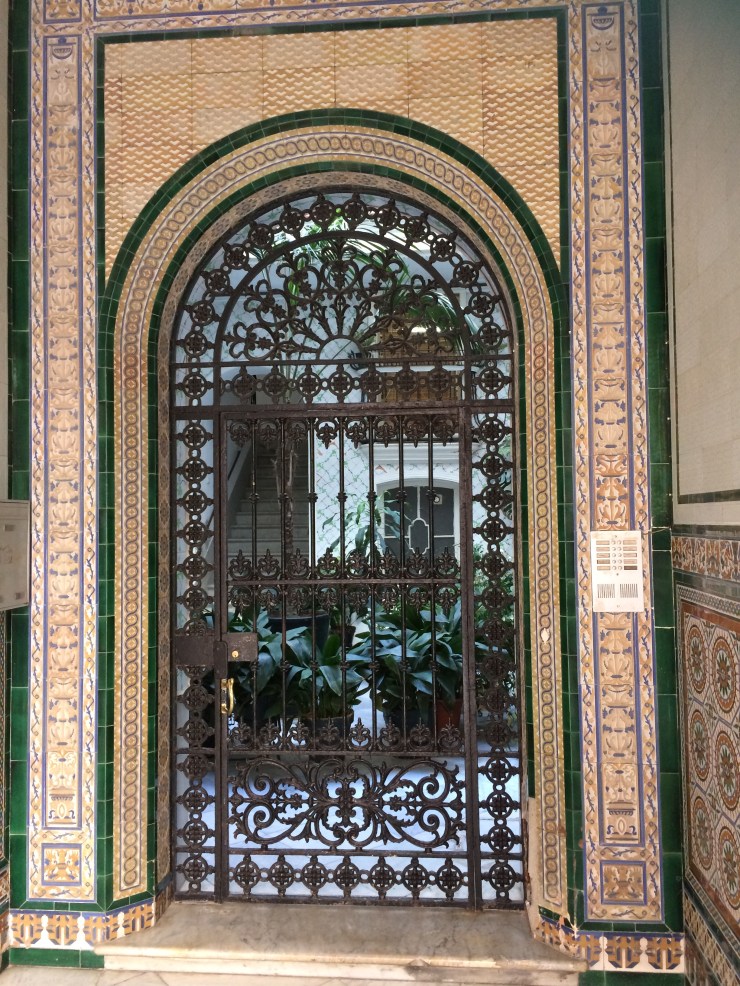
As in many southern Spanish cities, the inhabitants of Cadiz – known as Gaditanos, a reference to historical names of this ancient city – have built in features to keep them cool, such as dark corridors leading to inner courtyards, as here in the house where the composer Manuel de Falla was born.
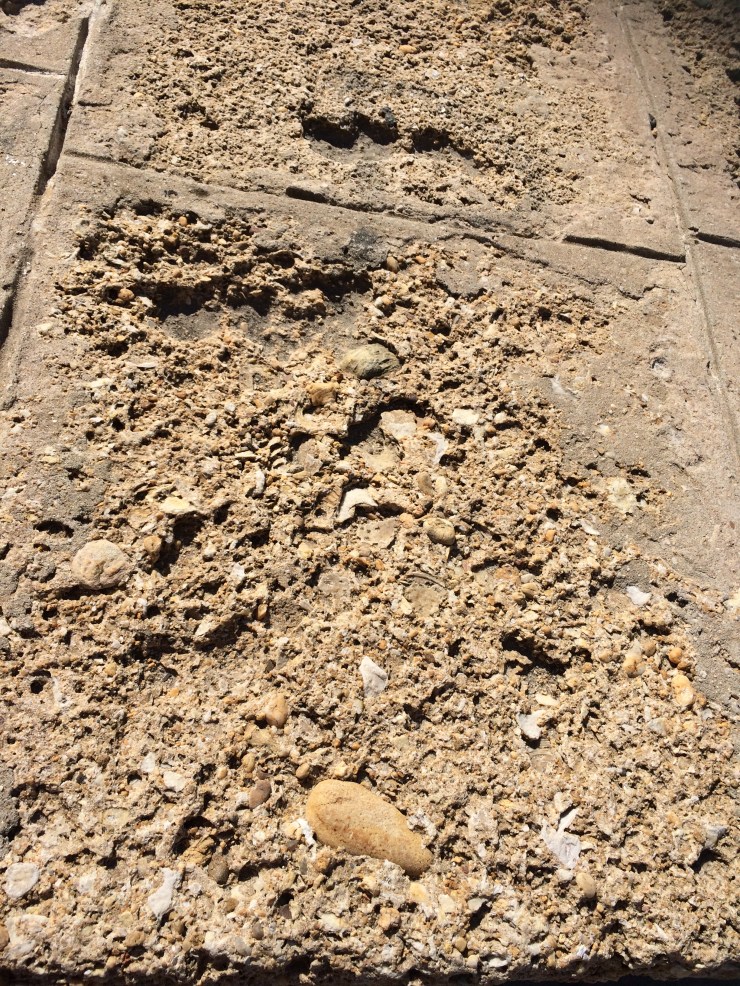
Another fascinating feature of the architecture of Cadiz is the stone used for so many of its buildings; this stone is a similar yellow to the sand of its beaches and is incrusted with fossilised crustaceans – locally this stone is known as “piedra ostionera” or “oyster stone”. Here is some from blocks making up the sea wall:
The stone has been used for houses, for walls, for churches, for much of the cathedral as well.

Even the ruins of the Roman theatre look as if they’ve been made from the same stone. This theatre was only discovered by accident in the 1980s after a foundry on the edge of the site burned down and when it was being cleared it became clear that there was most of a theatre underneath. It is under excavation now, and is beginning to look like a huge historical find. One of the information plaques told of how an influential Roman had seen the Cadiz theatre and been so impressed by it that he took the local artisans and builders to Rome where they built the “third” theatre for the Romans. This is definitely something to come back to in a few years, it will be splendid when excavation is over.
You’re never far from the sea in old Cadiz – I keep calling it ‘old’ because it is claimed that it is the oldest continuously inhabited city in Spain, possibly all Europe, despite occasionally being burned down and rebuilt, and on one occasion being besieged by Napoleon’s army for two and a half years.
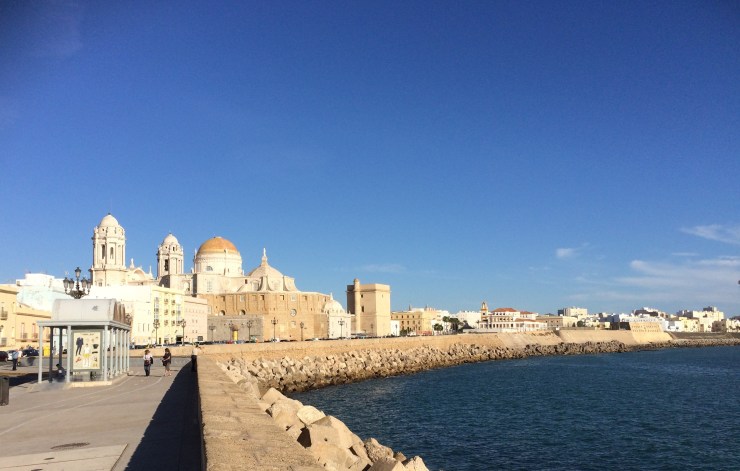
Its harbour has been used since before the Phoenicians, and its most famous views involve the sea in some way. The cathedral seen from along the sea wall known as the Campo del Sur combines all the blues, turquoises, ochres and yellows that are the soul of Cádiz.
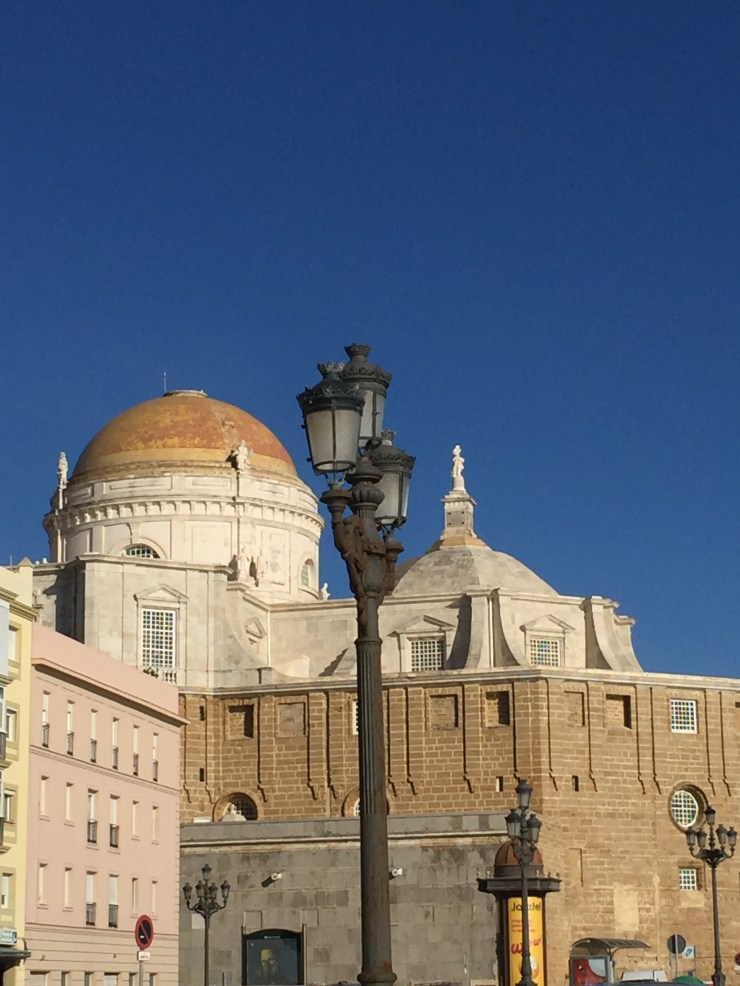
Seen from nearer, somehow the blue seems bluer and the yellow yellower…. The magic of Cádiz? Nah, probably just a better photograph (Julia’s of course).
We walked and walked and walked for two and a half days in this beautiful city – my phone informed me, surely reliably, that we did about 8km on each day. To the athletic amongst you that may seem little, but I assure you that for me this is not normal. On our final day we finished the circuit we had set ourselves of walking round the southern and western sides of the city, and as the afternoon ended we discovered the pretty, shady promenade which must have been a cool pleasure for the Gaditanos across the years.

From the cool of the dark green shade, as we walked for that last half hour in the late Cádiz heat, it was still a joy to look to the side and see the turquoise sea framed by the shadow and on this occasion with a fountain in the foreground.

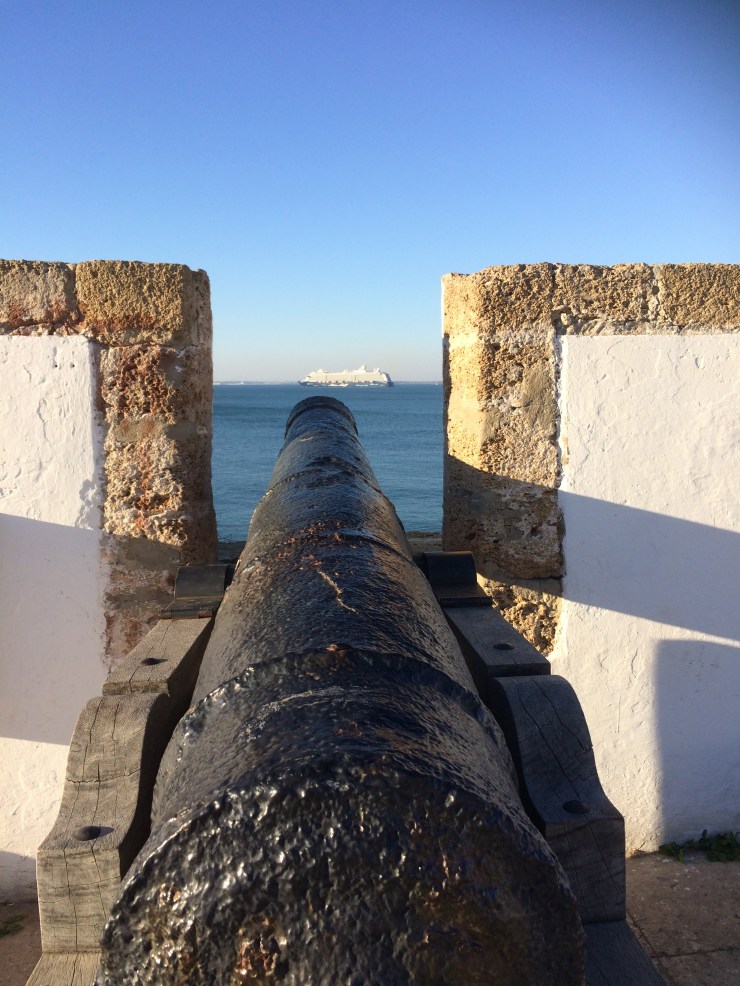
The very last part of our walk, before rejoining our car and returning “up-country” to Istán, involved climbing up to the higher part of the city wall where there are some usefully positioned canons pointing defensively out to sea. We had seen a very noisy German cruise boat leaving a little while before – why do they play extremely loud tinny music as they leave the harbour? And why do they have to be 6 storeys high? – so I made use of one of the canons to express my feelings….
Of the food of Cádiz that we experienced, more in another post – but in brief, it was GOOD…..
. 😋
Discover more from Wined, dined and rested.
Subscribe to get the latest posts sent to your email.
 Wined, dined and rested.
I love Cadiz and Costa de la Luz. Ask Jules if she remembers Mike Gibby from UWCSEA-he wrote a book about it!!
LikeLike